Natural product extraction and separation: a full analysis reorganized by source, compound class and separation material
The difficulty in natural product separation lies not in any single operation but in narrowing down, in a workable order, a system with many components, a wide polarity span and a low content of the target. The text follows one axis throughout: source → compound class → separation material. It first gives the five properties to establish before the column and the range of extraction methods, then works through the material sequences for 24 compound classes across plants, marine organisms, animals, and fungi and microorganisms, then explains the mechanism, scope, elution systems and practical points of ten classes of separation material, and finally arrives at the four separation stages, general selection rules, a review of published routes and the product mapping.
Summary Ten core conclusions
Most failures in natural product separation arise before the column rather than in the chromatographic conditions. Raw material contains water, fats, pigments and tannins, and the target is often below one part per thousand. This part deals with three things: judging the properties of the target, choosing the extraction method, and getting the extract into a state fit to load.
1Five property assessments before separation
The choice of separation method is determined by the physicochemical properties of the target. Published textbooks generally list five, and these five together determine the extraction solvent, the pretreatment route and the chromatographic mechanism.
| Basis | Basis for assessment | Effect on the separation route |
|---|---|---|
| Hydrophobicity / hydrophilicity | Partition coefficient and solubility behaviour in solvents of different polarity | Determines the choice between normal and reversed phase, and the solvent gradient order in extraction partitioning |
| Acid–base character | The presence and pKa of carboxyl, phenolic hydroxyl, amino groups and nitrogen heterocycles | Determines whether pH gradient partitioning can be used, and whether acid or base is needed in the mobile phase to suppress tailing |
| Charge | The net charge at the operating pH | Determines whether ion exchange is usable, and whether a cation or anion exchanger is needed |
| Thermal stability | Whether the structure contains a lactone ring, peroxide bridge, polyunsaturated bonds or glycosidic bonds | Determines the upper extraction temperature, and whether distillation, decoction and vacuum concentration can be used |
| Molecular size | Molecular weight and hydrodynamic radius | Determines whether size exclusion and membrane separation apply, and the pore size of the reversed-phase medium |
Mapping the five properties onto chromatographic mechanisms
- Hydrophobicity / hydrophilicity → adsorption chromatography (silica, alumina) and partition chromatography (bonded reversed-phase silica)
- Acid–base character and charge → ion exchange chromatography, with pH and salt gradients as the main variables
- Molecular size → size exclusion chromatography (gels, polyacrylamide) and membrane separation
- Thermal stability does not map onto a chromatographic mode directly, but it rules out whole classes of extraction and concentration schemes
2Extraction methods and how to choose between them
2.1 Solvent extraction
Based on the solvent's ability to dissolve the target, this is the most broadly applicable class. The five basic operations trade off temperature, time and solvent volume differently.
| Action | Temperature | Characteristics | Applicability and limitations |
|---|---|---|---|
| Maceration | Room temperature | Simple equipment, large solvent volume, slow | Suits thermally unstable components; extraction efficiency is relatively low |
| Percolation | Room temperature | The solvent is continuously renewed, maintaining a concentration gradient | More complete extraction; high solvent consumption, and the flow rate must be controlled |
| Decoction | Boiling point | Water as the solvent, with low operating cost | Suits water-soluble, thermally stable components; volatile and heat-sensitive components are clearly lost |
| Reflux extraction | Solvent boiling point | Organic solvent is recirculated, more efficient than maceration | Not for thermally unstable components; requires a condenser |
| Soxhlet extraction | Solvent boiling point | The solvent recirculates repeatedly, using little solvent and extracting completely | The sample is heated for a long time, so heat-sensitive components must be assessed; mainly a laboratory-scale method |
2.2 Other extraction techniques
Steam distillation
Suits components that are volatile, carried over with steam and unreactive with water — mainly essential oils and some small terpenoids. Note that at too high a distillation temperature terpenoids may rearrange or polymerize, so the product profile differs from that of the raw material.
Sublimation
Suits the few components that vaporize directly from the solid (camphor and some anthraquinones). Simple to run but narrow in scope, generally used as a supplementary method for particular components.
Supercritical fluid extraction (SFE)
Mainly with supercritical CO₂, adjusting solvating power through pressure and temperature, with ethanol or another modifier added to extend the polarity range. The operating temperature is low, which suits heat-sensitive and volatile components; the capital cost is relatively high.
Ultrasound-assisted (UAE) and microwave-assisted (MAE) extraction
Mass transfer is enhanced by cavitation or dielectric heating, shortening extraction time and reducing solvent use. The effect of local heating and mechanical action on unstable structures must be assessed.
Pressurized liquid extraction (PLE)
Above atmospheric pressure the solvent boiling point and penetration rise, giving short extraction times, low solvent use and ready automation. The effect of heating on heat-sensitive components must likewise be considered.
Solid phase extraction (SPE)
Strictly a separation rather than an extraction, but in practice often used directly to enrich and clean up dilute solutions; it is the bridge between extraction and chromatography, and can also serve as small-scale coarse separation.
Pretreatment of plant raw material
How the raw material is dried, how finely it is milled and how much water it contains affect the extraction as much as the extraction method itself. Too fine a grind makes filtration difficult and increases the release of gums; a high water content changes the effective polarity of an organic solvent. Microbial material also has to be divided into intracellular and extracellular components first: fermentation broth goes to clarification and resin adsorption, while mycelium goes to cell disruption and solvent extraction.
3Pre-column work: partition cuts and impurity removal
3.1 Gradient partition cuts
Loading the whole extract directly is generally uneconomical. The usual practice is a solvent gradient partition first, cutting the system into several fractions by polarity, and then running chromatography only on the fraction containing the target. The usual sequence for a plant extract is petroleum ether (or n-hexane) → dichloromethane (or chloroform) → ethyl acetate → n-butanol → water, corresponding respectively to fats and low-polarity terpenoids, low- to medium-polarity aglycones, medium-polarity phenolic acids and flavonoid aglycones, saponins and flavonoid glycosides, and sugars and inorganic salts.
For components with ionizable groups, pH gradient partitioning provides an extra dimension of selectivity: adjusting the pH of the aqueous phase switches the target between its free and salt forms, transferring it directionally between the two phases. This is commonly used for coarse separation of alkaloids and organic acids.
3.2 Removing common impurities
| Impurity | Problem caused | Usual removal method |
|---|---|---|
| Tannins | Adsorb irreversibly on silica and foul the bed; form precipitates with proteins and alkaloids | Polyamide column adsorption, gelatin precipitation, caffeine precipitation, lead acetate precipitation |
| Chlorophyll | Strongly coloured; occupies the early fractions on a normal-phase column and interferes with visual and TLC assessment | Sephadex LH-20 decolorization beforehand, activated carbon adsorption, saponification |
| Fats, waxes and resins | Foul the bed, hinder sample dissolution, and make fractions turbid | Precipitation on freezing, defatting with petroleum ether, saponification with alkali followed by extraction |
| Inorganic salts | Weaken reversed-phase retention, suppress ion exchange capacity, interfere with mass spectrometry | Macroporous resin adsorption with alcohol elution, ultrafiltration and nanofiltration, gel desalting |
| Polysaccharides and gums | Raise viscosity, block the column head, make loading difficult | Alcohol precipitation, centrifugation and membrane filtration, flocculation and clarification |
General advice on the order of operations
- Deal with volume and salt first (clarification, desalting, concentration), then cut by polarity, and take it to chromatography last
- Tannins and chlorophyll should be removed before bare silica is used, or the loss of bed is hard to recover
- Fermentation broth should go to in-line resin adsorption immediately after clarification, reducing the volume to be concentrated and the risk of emulsification
This part is the main body of the text. Six compound classes are set out for each of the four sources, 24 in all, with the representative compounds, material sequence and practical difficulties for each. Materials are given by class; the mapping to specific grades and specifications is in Chapter 22. Colour key:Silica Alumina Polyamide Bonded silica Macroporous resin Ion exchange Gel Membrane separation
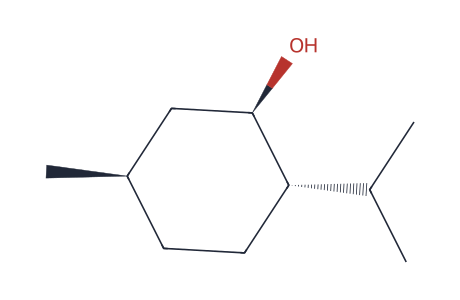
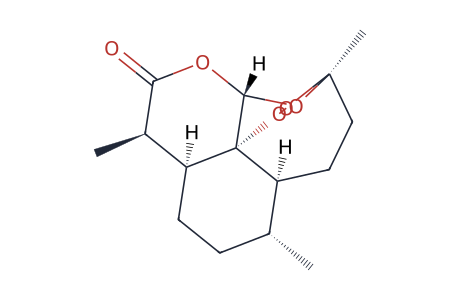
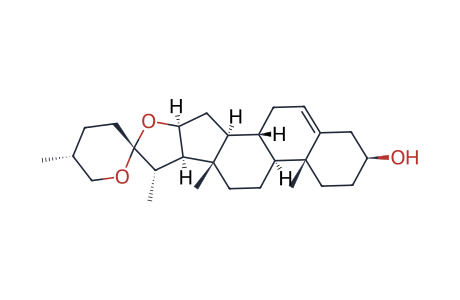
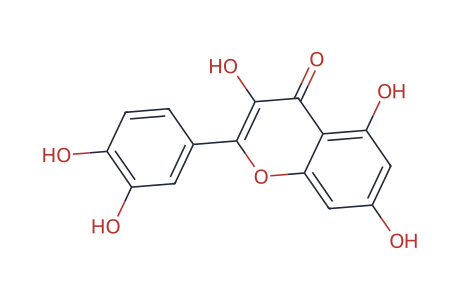
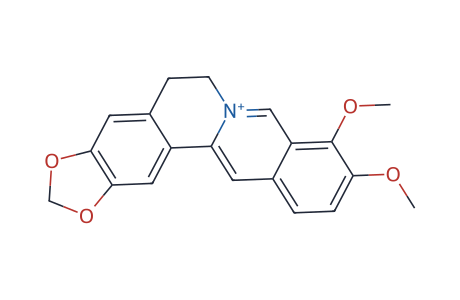
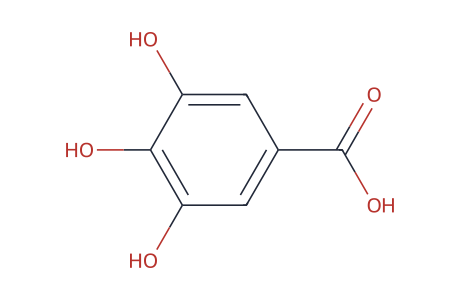
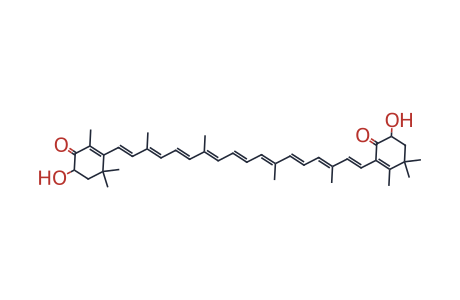
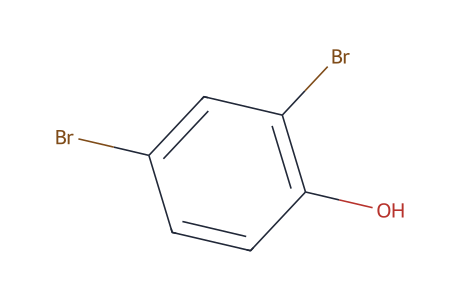
The structures in sections 4.1 / 5.1 / 6.1 / 7.1 are rendered precisely by RDKit from SMILES, with molecular formula and ring counts verified individually; they show only the skeleton and key functional groups, and stereochemistry follows the original literature.
4Plant sources: six compound classes

Origin and extraction entry point
Origin Roots, rhizomes, bark, leaves, flowers, fruits and seeds of angiosperms and gymnosperms.
Extraction entry point Maceration, percolation, decoction, reflux and Soxhlet extraction; volatile components go through steam distillation or supercritical CO₂ extraction.
Shared pretreatment A petroleum ether–ethyl acetate–n-butanol–water gradient partition is usually run before the column; material containing tannins and chlorophyll needs these removed first.
| Compound class | Representative compounds | Material sequence | Practical difficulty |
|---|---|---|---|
| 01Essential oils and monoterpenes | Menthol, camphor, cineole, linalool | Silica › AgNO₃-modified silica › ODS | Too high a distillation temperature can rearrange terpenoids; the components are volatile, so losses on concentration must be controlled |
| 02Sesquiterpenes and diterpenes | Guaiol, artemisinin, paclitaxel, ginkgolides | Silica VLC / flash › Sephadex LH-20 › ODS preparative | Structural analogues are densely packed; pigments and polymers must be removed before selectivity can be developed |
| 03Triterpene and steroidal saponins | Ginsenosides, dioscin, the actein series | Macroporous resin › Silica › LH-20 › ODS semi-preparative | Glycosylated compounds tail readily on silica; adding a little water or acid usually improves peak shape |
| 04Flavonoids and polyphenols | Quercetin, puerarin, proanthocyanidins, anthocyanins | Polyamide › Macroporous resin › LH-20 › ODS | Polyamide orders compounds by the number and position of phenolic hydroxyls, which does not match the reversed-phase order, so separate methods must be developed |
| 05Alkaloids | Berberine, hyoscyamine, vinblastine, hederacine A/B | Basic alumina › Ion exchange resin › C18-SPE / preparative HPLC | Marked tailing on bare silica, requiring diethylamine or ammonia; some quaternary types are very polar and weakly retained in reversed phase |
| 06Polysaccharides and tannins | Astragalus polysaccharide, β-glucan, gallotannin | Ultrafiltration / nanofiltration membranes › DEAE exchanger › Sephadex G/Sephacryl | Tannins adsorb irreversibly on silica and must be removed first; polysaccharides are viscous, so the loading flow rate is limited |
4.1 Representative skeletons
The structures below determine how each compound class behaves in chromatography: the number and position of hydroxyls set the strength of hydrogen bonding adsorption, ionizable groups determine whether ion exchange and pH partitioning are available, conjugation and aromatic rings determine the selectivity of a phenyl phase, and the density of sugar and phenolic hydroxyls determines how much it tails on silica.
Silver ion selectivity for essential oils
Silver nitrate modified silica separates by degree of unsaturation and cis/trans configuration through reversible complexation between Ag⁺ and carbon–carbon double bonds. This dimension of selectivity is available on neither conventional silica nor reversed phase; the cost is that the work must be done in the dark and the column life is shorter.
Dealing with saponin tailing
Tailing of triterpene and steroidal saponins on silica comes mainly from multipoint hydrogen bonding between sugar chain hydroxyls and silanols. Adding 0.5%–2% water to a chloroform–methanol system, or switching to reversed phase, usually improves the peak shape.
The pH dependence of anthocyanins
Anthocyanins exist at different pH as a mixture of flavylium cation, quinoidal base, pseudobase and chalcone. Separation and storage should be under acidic conditions (commonly 0.1%–1% formic or trifluoroacetic acid) to keep a single form.
5Marine sources: six compound classes

Origin and extraction entry point
Origin Sponges, gorgonians and soft corals, ascidians, echinoderms, macroalgae and their symbiotic and epiphytic microorganisms.
Extraction entry point Fresh material is homogenized or freeze-dried and then extracted repeatedly with methanol and dichloromethane.
Shared difficulty A high-salt matrix. Residual salt weakens reversed-phase retention, suppresses ion exchange capacity and interferes with mass spectrometry, so desalting generally comes before the fine separation step.
| Compound class | Representative compounds | Material sequence | Practical difficulty |
|---|---|---|---|
| 07Macrolides and polyketides | Halichondrin, bryostatin, salinosporamide | Enrichment on macroporous resin › Silica VLC › LH-20 › ODS preparative | Usually present at trace level, so fractionation must be guided by activity tracking and many rounds of purification are needed |
| 08Cyclic peptides and depsipeptides | Didemnin, conotoxins, kahalalide | Desalting on macroporous resin › Gel SEC › C18 / C8 preparative | Residual salt weakens reversed-phase retention; 0.05%–0.1% trifluoroacetic acid in the mobile phase improves peak shape |
| 09Marine alkaloids | Manzamine, tetrodotoxin, ecteinascidin | Ion exchange resin › Alumina › ODS/HILIC | Highly polar guanidines are barely retained in reversed phase, so HILIC or ion exchange is needed instead |
| 10Terpenoids and steroidal saponins | Gorgonian diterpenes, holothurins, asterosaponins | Silica / AgNO₃-silica › LH-20 › ODS | The polarity span within one sample is wide, so a gradient partition cut is best made first and the fractions handled separately |
| 11Algal polysaccharides | Alginate, carrageenan, fucoidan | Ultrafiltration / nanofiltration desalting › DEAE exchanger › Sephacryl SEC | The solutions are viscous, limiting loading flow rate and membrane flux; sulfate group density affects exchange behaviour |
| 12Pigments and halogenated compounds | Fucoxanthin, astaxanthin, bromophenols | Silica (protected from light) › ODS › Preparative HPLC | Sensitive to light and oxygen, and prone to oxidative discoloration on silica; work in the dark with controlled temperature and consider an antioxidant |
5.1 Representative skeletons
The difficulties with marine material cluster at two extremes: at one end a high-salt matrix and strongly polar nitrogen- and sulfate-containing groups, barely retained in reversed phase; at the other long conjugated polyenes and halogenated aromatics, sensitive to light and oxygen.
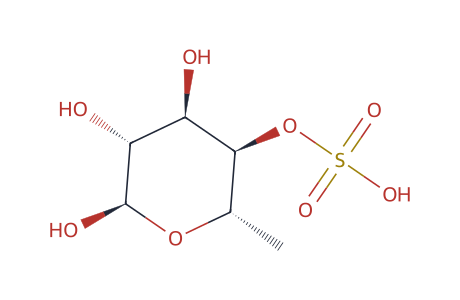
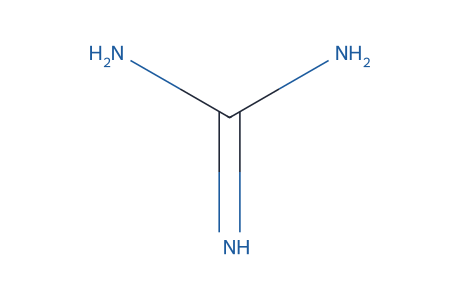
Choosing a desalting method
Macroporous resin adsorption with alcohol elution suits small organic molecules and is cheap to run, but gives limited recovery for very polar components; ultrafiltration and nanofiltration suit macromolecules and samples whose activity is salt-sensitive, but membrane fouling and flux decline have to be managed; gel desalting (G-10, G-25) is inefficient in volume terms and suits small, high-value samples.
Why activity tracking is necessary
Marine actives are present at low levels and are structurally novel, so UV or TLC alone cannot identify the target fraction. Introducing an activity assay at the enrichment and coarse separation stages markedly reduces wasted downstream purification.
6Animal sources: six compound classes

Origin and extraction entry point
Origin Amphibian secretions, reptile venoms, insects and arthropods, molluscs and annelids, mammalian glands and bile.
Extraction entry point Fresh tissue is homogenized or freeze-dried and extracted with dilute acid in ethanol; bound forms can be released enzymatically.
Shared requirement Keep everything cold and control the pH; peptides and proteins need protease inhibitors to prevent autolysis and degradation.
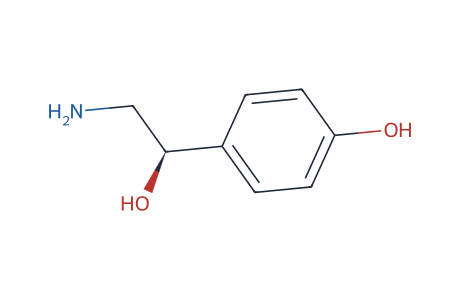
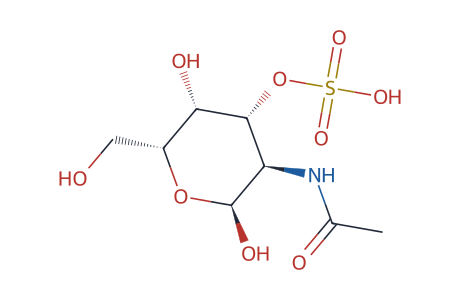
| Compound class | Representative compounds | Material sequence | Practical difficulty |
|---|---|---|---|
| 13Cardiac steroids and steroids | Bufogenins, cinobufagin | Silica › LH-20 › ODS preparative | The lactone ring opens on exposure to base, so avoid basic alumina and alkaline mobile phases |
| 14Peptide and protein toxins | Snake venom neurotoxins, hirudin, antimicrobial peptides | Ultrafiltration membrane fractionation › DEAE / CM exchangers › Gel SEC › C4 / C8 reversed phase | Reversed-phase organic solvents and trifluoroacetic acid can cost activity, so purity has to be traded against activity |
| 15Alkaloids and amines | Bufotenine, batrachotoxin, octopamine | Cation exchange resin › Basic alumina › ODS | Very polar and weakly retained in reversed phase, so enrich by ion exchange first before fine separation in reversed phase |
| 16Bile acids and bile pigments | Ursodeoxycholic acid, taurocholic acid, bilirubin | Macroporous resin › Silica › ODS › Recrystallization | Conjugated and free forms coexist; where necessary hydrolyse first to a single form before separating |
| 17Glycosaminoglycans | Heparin, chondroitin sulfate, hyaluronic acid | Strongly basic anion exchange resin › Ultrafiltration desalting › Gel SEC fractionation | The molecular weight distribution is broad, so salt gradient fractionation is needed; differences in degree of sulfation affect exchange retention |
| 18Lipids and pheromones | Insect pheromones, royal jelly acid, phospholipids | Silica / AgNO₃-silica › Diol / CN bonded phases › ODS | Cis/trans isomers are hard to separate; readily oxidized, so add an antioxidant and limit heating time |
6.1 Representative skeletons
Separation of animal-derived material often has to meet purity and activity targets at the same time, and the acid–base groups, lactone rings and sulfate groups in the structures set the usable and unusable condition windows.
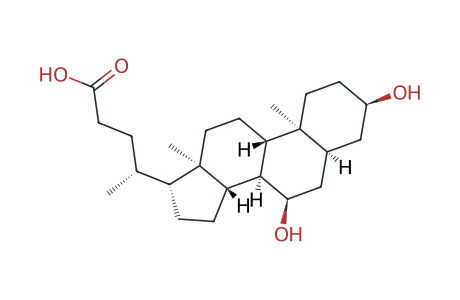
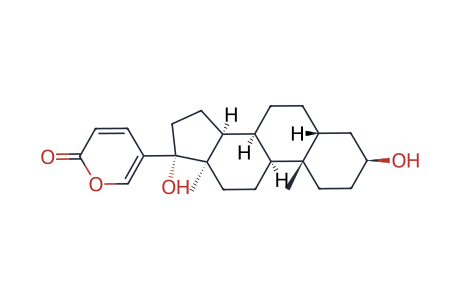
Retaining activity in peptides and proteins
The objective for this class is to meet purity and activity targets together, unlike small molecules where only purity matters. The usual practice is to place the reversed-phase step last and keep the exposure as short as possible, with ion exchange and size exclusion carrying the main separation load beforehand; neutralize, desalt and lyophilize promptly after elution. For products that do not tolerate organic solvents, hydrophobic interaction chromatography (HIC) can replace reversed phase for the final polishing.
7Fungal and microbial sources: six compound classes

Origin and extraction entry point
Origin Basidiomycete fruiting bodies (Ganoderma, Trametes, shiitake), filamentous fungi (Penicillium, Aspergillus), actinomycetes.
Extraction entry point Fruiting bodies are extracted with ethanol or hot water; fermentation systems are clarified first, then run on two parallel routes — intracellular (mycelium) and extracellular (fermentation filtrate).
Shared difficulty Fermentation broth is large in volume and heavy in impurities. Using in-line resin adsorption immediately after clarification reduces the volume to be concentrated and the risk of emulsification.
| Compound class | Representative compounds | Material sequence | Practical difficulty |
|---|---|---|---|
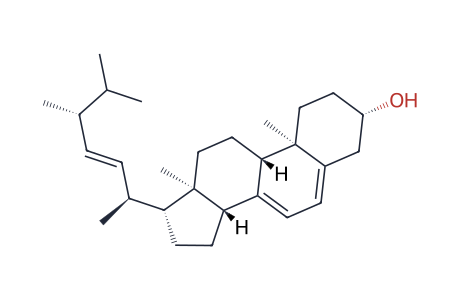
| 19Triterpenes and steroids | Ganoderic acids, ergosterol, polyporusterone | Silica › LH-20 › ODS › Recrystallization | The ganoderic acid series are close in polarity, often needing several rounds of separation or a phenyl phase for extra selectivity |
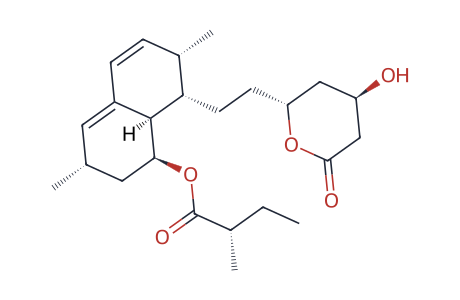
| 20Polyketide antibiotics | Lovastatin, tetracycline, erythromycin | Enrichment by resin adsorption › Silica › ODS preparative HPLC | Fermentation broth must be clarified first; in-line adsorption reduces emulsification during extraction and cuts solvent consumption |
| 21Non-ribosomal peptides | Cyclosporine, echinocandins, penicillins | Silica › LH-20 › ODS preparative | Conformational isomerism distorts the peak shape; raising the column temperature suitably makes the peaks converge |
| 22Fungal alkaloids | Ergot alkaloids, penitrem | Alumina › Ion exchange resin › ODS | Must be protected from light; isomerize and racemize readily under acidic conditions |
| 23Fungal polysaccharides | Lentinan, coriolan, β-D-glucan | Ultrafiltration membranes › DEAE cellulose › Sephacryl/Sephadex G | The alcohol concentration at precipitation sets the molecular weight fraction, so precipitate stepwise rather than all at once |
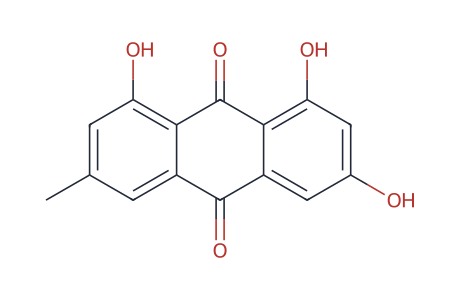
| 24Pigments and quinones | Monascus pigments, emodin-type anthraquinones, griseofulvin | Polyamide › Macroporous resin › Silica › ODS | Polyamide is sensitive to the number of phenolic hydroxyls; column regeneration must follow the specified procedure to restore capacity |
7.1 Representative skeletons
Fungal and microbial material is dominated by three skeleton types — polyketides, steroids and phenol/quinones — and homologues often differ by only one methyl or one hydroxyl, so selectivity is obtained mainly by changing the separation mechanism rather than by adjusting the gradient.
Splitting the intracellular and extracellular routes
Where the fermentation product sits determines the first operation: extracellular products go to filtrate clarification and resin adsorption; intracellular products go to cell harvest, disruption and solvent extraction. The impurity profiles of the two routes should be assessed separately before they converge at the coarse separation stage, because material from the cells brings in additional lipids, pigments and nucleic acids.
Conformational isomerism and column temperature
Cyclic peptides with N-methylated amide bonds, such as cyclosporine, exist in several interconverting conformations at room temperature, and when the exchange rate is comparable to the chromatographic timescale this shows as a broad or split peak. Raising the column temperature to 50–70 °C usually accelerates exchange and makes the peak converge, at the cost of having to confirm that the target is stable at that temperature.
8Master matrix of material sequences for 24 compound classes
Setting the four source routes side by side shows the pattern in how materials are used: bonded reversed-phase silica appears at the end of most of the 24 classes and is the general finishing method; gels have a place both in fine separation of small and medium molecules and in fractionating macromolecules; membrane separation and ion exchange concentrate on the three macromolecular classes — polysaccharides, glycosaminoglycans and peptides/proteins; and polyamide appears only in the phenolic classes — flavonoids, polyphenols and quinones — making it a fairly specialized material.
| Origin | Compound class | Silica | Alumina | Polyamide | Bonded silica | Macroporous resin | Ion exchange | Gel | Membrane separation |
|---|---|---|---|---|---|---|---|---|---|
| Plants | 01Essential oils and monoterpenes | ● | — | — | ○ | — | — | — | — |
| 02Sesquiterpenes and diterpenes | ● | — | — | ● | — | — | ● | — | |
| 03Triterpene and steroidal saponins | ● | — | — | ● | ● | — | ● | — | |
| 04Flavonoids and polyphenols | ○ | — | ● | ● | ● | — | ● | — | |
| 05Alkaloids | ○ | ● | — | ● | ○ | ● | — | — | |
| 06Polysaccharides and tannins | — | — | ○ | — | ○ | ● | ● | ● | |
| Marine | 07Macrolides and polyketides | ● | — | — | ● | ● | — | ● | — |
| 08Cyclic peptides and depsipeptides | — | — | — | ● | ● | ○ | ● | ○ | |
| 09Marine alkaloids | — | ● | — | ● | — | ● | — | — | |
| 10Terpenoids and steroidal saponins | ● | — | — | ● | ○ | — | ● | — | |
| 11Algal polysaccharides | — | — | — | — | — | ● | ● | ● | |
| 12Pigments and halogenated compounds | ● | — | — | ● | — | — | ○ | — | |
| Animals | 13Cardiac steroids and steroids | ● | — | — | ● | — | — | ● | — |
| 14Peptide and protein toxins | — | — | — | ● | — | ● | ● | ● | |
| 15Alkaloids and amines | — | ● | — | ● | — | ● | — | — | |
| 16Bile acids and bile pigments | ● | — | — | ● | ● | ○ | — | — | |
| 17Glycosaminoglycans | — | — | — | — | — | ● | ● | ● | |
| 18Lipids and pheromones | ● | — | — | ● | — | — | — | — | |
| Fungi Microorganisms | 19Triterpenes and steroids | ● | — | — | ● | ○ | — | ● | — |
| 20Polyketide antibiotics | ● | — | — | ● | ● | — | ○ | ○ | |
| 21Non-ribosomal peptides | ● | — | — | ● | ○ | — | ● | — | |
| 22Fungal alkaloids | ○ | ● | — | ● | — | ● | — | — | |
| 23Fungal polysaccharides | — | — | — | — | — | ● | ● | ● | |
| 24Pigments and quinones | ● | — | ● | ● | ● | — | — | — |
● means the material carries a main separation step in the usual route for that compound class; ○ means optional or used under particular conditions; — means not used in the usual route. The table summarizes the material sequences of Chapters 4–7 at route level and does not exclude other combinations used in individual papers.Industry consensus
Published textbooks generally list seven stationary phase types — silica, bonded silica, alumina, polyamide, macroporous adsorption resin, polyacrylamide and gels — grouped into two mechanisms, adsorption and size exclusion. This part adds ion exchangers and membrane separation to that basis and lists modified silica separately, making ten classes in all, each with its mechanism, scope, elution systems and practical points.
9Silica and modified silica
9.1 Silica: activity grade set by water content
Silica separates by hydrogen bonding adsorption between surface silanols and the solute, which is normal phase. Adsorption strength falls as adsorbed surface water increases, and published textbooks divide activity into five grades by water content — one of the more commonly used ways of adjusting a silica column.
Silica water content and activity grade
| Water content | Activity grade |
|---|---|
| 0% | Grade I |
| 10% | Grade II |
| 12% | Grade III |
| 15% | Grade IV |
| 20% | Grade V |
Adsorption chromatography commonly uses 10%–12%; activation at 110 °C for one hour corresponds roughly to grades II–III.
Alumina water content and activity grade
| Water content | Activity grade |
|---|---|
| 0% | Grade I |
| 3% | Grade II |
| 6% | Grade III |
| 10% | Grade IV |
| 15% | Grade V |
Alumina needs less water than silica to reach the same activity grade, reflecting its stronger adsorption.
Particle size and operating pressure Silica for column chromatography is commonly 100–200 mesh for atmospheric columns and 200–300 or 300–400 mesh for pressurized (flash) columns. A higher mesh number means both higher efficiency and higher resistance, and must be matched to the pressure available.
Scope and limitations of silica
- Suited to Terpenoids, steroids, anthraquinones, coumarins, lignans and other low- to medium-polarity components; neutral and acidic substances behave well
- Elution systems Binary gradients of petroleum ether–ethyl acetate, dichloromethane–methanol, cyclohexane–acetone and similar
- Limitations Basic components tail; tannins adsorb irreversibly; strongly polar glycosides need a high proportion of methanol, which reduces selectivity
- Reference loading About 100–500 g of medium per 1 g of crude separated (from published textbooks, varying with sample complexity)
9.2 Modified silica: introducing a second interaction
Loading a metal salt or another reagent onto the silica surface gives it a specific selectivity in addition to hydrogen bonding adsorption. The common types are:
| Loaded reagent | Interaction introduced | Main use |
|---|---|---|
| Silver nitrate (AgNO₃) | Reversible π complexation between Ag⁺ and carbon–carbon double bonds | Separation of unsaturated hydrocarbons, fatty acid esters and cis/trans isomers; must be kept dark |
| Borate | Forms a cyclic borate ester with a vicinal diol | Separation of polyhydroxy compounds, sugars and some glycosides |
| Ferric chloride | Fe³⁺ coordinates to phenolic hydroxyls and nitrogen heterocycles | Separation of chelating components such as hydroxyquinolines |
| Copper sulfate | Cu²⁺ coordinates to amines and amino acids | Separation of amines and amino acids |
Modified silica generally has a shorter column life than conventional silica, and the loaded reagent may bleed with the eluent and contaminate fractions, so residues must be assessed in preparative work and in subsequent testing.Industry consensus
10Bonded silica: reversed phase and polar bonded
Silanization introduces alkyl or polar functional groups onto the silica surface, changing the mechanism from adsorption to partitioning (reversed phase) or altering the adsorption selectivity (polar bonded normal phase). In natural product separation, bonded silica carries most of the final polishing work.
| Phase | Mechanism | Mainly suited to | Selectivity characteristics |
|---|---|---|---|
| ODS(C18) | Hydrophobic partitioning | Medium to highly polar components; broadly applicable | Orders by hydrophobicity; sample capacity about 2 mg/g (from published textbooks) |
| C8 | Hydrophobic partitioning | More hydrophobic components, or those of higher molecular weight | Retains less strongly than C18, suiting compounds over-retained on C18 |
| C4 | Hydrophobic partitioning | Peptides and proteins | The short chain gives weak retention, reducing denaturation and irreversible adsorption of macromolecules |
| Phenyl (Ph) | Hydrophobic partitioning + π–π interaction | Aromatic and conjugated components | Sensitive to the number of aromatic rings and the substitution pattern, giving recognition C18 does not have |
| Cyano (CN) | Weakly polar, usable in both modes | Medium-polarity components, lipids | Runs in both normal and reversed phase, and is often used in method development screening |
| Amino (NH₂) | Polar bonded, with weak anion exchange | Sugars, acidic components | Combines normal-phase and weak ion exchange behaviour; there is a risk of reaction with reducing sugars |
| Diol | Polar bonded | Lipids, medium-polarity components | Milder than bare silica, with better reproducibility than normal-phase silica |
| HILIC | Hydrophilic partitioning | Strongly polar components not retained in reversed phase | An option for sugars, amino acids, quaternary alkaloids and some marine guanidines |
The difference between methanol and acetonitrile
Changing the organic modifier in a reversed-phase system is not an equivalent operation. Beyond the difference in eluting strength, the two interact with solutes differently: changing the acetonitrile proportion often changes the elution order, whereas changing the methanol proportion usually changes only the retention time without changing the order. In method development, if a peak pair will not resolve, try switching the modifier first and fine-tuning the gradient slope second.Industry consensus
The cost structure of reversed-phase silica
Reversed-phase silica costs more per unit than bare silica, but shows little irreversible adsorption and can be cleaned, regenerated and reused repeatedly. For highly polar extracts, its cost amortized across batches is usually better than single-use bare silica; and the reproducibility of a reversed-phase column makes it easier to transfer a laboratory method to preparative scale.
11Alumina and polyamide
11.1 Alumina: three pH grades
Alumina adsorbs more strongly than silica and is made in basic, neutral and acidic grades according to the pH at manufacture, each suited to different targets.
Basic alumina
Suits alkaloids, steroids and pigments. It is the usual alternative to bare silica where basic components tail. Note that lactone rings, esters and some glycosidic bonds may open or hydrolyse on a basic surface.
Neutral alumina
Suits aldehydes, ketones, quinones and glycosides. Broadly applicable, and the most general-purpose of the three grades.
Acidic alumina
Suits acidic pigments and components unstable under basic conditions. Confirm the target's stability on an acidic surface before use.
Alumina that is too active readily causes irreversible adsorption and catalytic decomposition, and generally needs adjusting to grade III–IV by water content before use.Industry consensus
11.2 Polyamide: ordering by phenolic hydroxyls
Polyamide forms hydrogen bonds between its amide groups and the solute's phenolic hydroxyls, so the elution order relates directly to the number and position of those hydroxyls. This selectivity dimension is hard to reproduce in reversed-phase chromatography, which is why polyamide has kept its place in flavonoid and polyphenol separation.
Practical points for polyamide
- Dual mechanism In water–ethanol systems it separates by the strength of phenolic hydrogen bonding; in non-aqueous systems such as chloroform–methanol it can behave as a reversed phase, for terpenoids, steroids and alkaloids
- Loading 1.5–2.5 g loaded per 100 mL of bed (from published textbooks)
- Elution A water → ethanol gradient is standard; chloroform–methanol can also be used
- Tolerance Tolerates alkali but not mineral acids; column regeneration must follow the specified procedure, or capacity falls batch by batch
- Secondary use Can serve as a means of removing tannins beforehand
12Macroporous adsorption resins and ion exchangers
12.1 Macroporous adsorption resin
Porous microspheres built on a crosslinked polystyrene or polyacrylate skeleton, adsorbing organics from the aqueous phase through van der Waals forces, hydrogen bonding and a molecular sieving effect. In natural product processes it mainly performs enrichment and desalting, and is the usual starting point at kilogram scale.
| Parameter | Usual range | Notes |
|---|---|---|
| Particle size | 20–60 mesh | Coarse particles with low resistance, suiting large-volume feeds at atmospheric pressure |
| Water content | 40%–75% | Supplied wet, so it must be pretreated with ethanol and rinsed before use |
| Operating temperature | Below 150 °C | Better thermal stability than most organic stationary phases |
| Elution systems | Water → ethanol / methanol / acetone gradient | Choose the starting and final concentrations by the polarity of the target |
Necessary pretreatment before use
New resin contains unreacted monomer, porogen and residual solvent, and using it directly will contaminate the fractions. The usual practice is to soak and rinse thoroughly with ethanol until the effluent is clear and odourless, then displace with water. For pharmaceutical and food use, testing for residual monomer and porogen should be included in release.Industry consensus
12.2 Ion exchangers
Working by reversible ion exchange, these are divided by exchange group into cationic (strongly acidic sulfonic, weakly acidic carboxymethyl CM) and anionic (strongly basic quaternary ammonium, weakly basic diethylaminoethyl DEAE) types. The skeleton may be polystyrene, cellulose, dextran or agarose; polystyrene types are mostly used for small molecules, and cellulose, dextran and agarose types for macromolecules, to avoid exclusion limits.
Suited to
Alkaloids and amines (cation exchange), organic acids (anion exchange), amino acids and peptides, acidic polysaccharides and glycosaminoglycans (anion exchange, commonly DEAE and strongly basic quaternary ammonium types).
Elution and work-up
Elution is by salt or pH gradient. The eluate contains salt and must be desalted (by ultrafiltration, nanofiltration or gel desalting) before reversed phase or lyophilization. Salt gradient fractionation is the main means of fractionating samples with a broad distribution of molecular weight and charge density, such as glycosaminoglycans.
13Gels, polyacrylamide and membrane separation
13.1 Dextran gels
The Sephadex G series is built on crosslinked dextran and works mainly by size exclusion. The naming corresponds to swelling volume: G-15 needs about 1.5 mL of solvent per gram of dry gel and G-100 about 10 mL, with an overall separation range of roughly 10–100,000 Da.
Sephadex LH-20 is the hydroxypropylated form of G-25 and swells in organic solvents, applying to a molecular weight range of about 100–4000 Da. Its behaviour is not pure size exclusion but also involves adsorption and partitioning, which gives it two fixed positions in natural product separation: removing chlorophyll and polymers beforehand, and final polishing to reduce losses with a small sample.
Practical points for gels
- The skeleton is inert, recovery is high and it can be reused repeatedly
- It must be fully swollen and slurry packed; insufficient swelling causes the bed to shrink later and the flow path to become disordered
- Avoid strong acid; aqueous systems need protection against microbial growth, and a preservative for long-term storage
- The usual elution systems for LH-20 are chloroform–methanol (1% methanol in chloroform, for example) or neat methanol
13.2 Polyacrylamide gels
The Bio-Gel P series is an uncharged, low-hydrophobicity size exclusion medium with a particle size of about 45–180 μm, graded by molecular weight range (P-10 covers about 1,500–20,000 Da, for example). It suits carbohydrates, peptides, tannins and other components prone to non-specific adsorption on other media. These gels swell considerably in water, and in practice are mostly used with alcohol–water systems above 20% rather than with pure water.
13.3 Membrane separation and molecular distillation
| Membrane process | Pore size / cut-off | Operating pressure | Main use |
|---|---|---|---|
| Microfiltration (MF) | 0.05–2.0 μm | About 100 kPa | Sterilization, removal of particulates, clarification of feeds |
| Ultrafiltration (UF) | 0.0015–0.02 μm | 100–1000 kPa | Fractionating macromolecules, removing small-molecule impurities and some pigments |
| Nanofiltration (NF) | About 2 nm | — | Concentration and desalting, retaining most small organic molecules |
| Reverse osmosis (RO) | < 0.002 μm | 0.1–10 MPa | Water production and deep concentration |
Membrane processes involve no phase change, operate at low temperature and use relatively little energy, which suits concentration and desalting of heat-sensitive components. The main limitations are membrane fouling and flux decline, which need a cleaning and regeneration scheme. Molecular distillation separates by short-path evaporation under high vacuum and suits high-boiling, heat-sensitive fat-soluble components, with applications in essential oil refining and lipid separation.
14Quick reference to the ten material classes
| Material class | Mechanism | Mainly suited components | Elution systems | Practical points |
|---|---|---|---|---|
| Silica | Silanol hydrogen bonding adsorption (normal phase) | Terpenoids, steroids, anthraquinones, coumarins, lignans and other low- to medium-polarity components | Petroleum ether–ethyl acetate, dichloromethane–methanol, cyclohexane–acetone | 100–200 mesh at atmospheric pressure, 300–400 mesh under pressure; suits acidic and neutral substances, with basic ones tailing readily |
| Modified silica | Selective complexation / acid–base adjustment | Unsaturated hydrocarbons and cis/trans isomers (AgNO₃); polyhydroxy compounds (borate) | As for silica; the AgNO₃ type must be kept dark | Borate → polyhydroxy compounds; ferric chloride → hydroxyquinolines; copper sulfate → amines; column life is shorter |
| Bonded silica | Hydrophobic partitioning (reversed phase) / polar bonded (normal phase) | ODS and C8 for medium to high polarity; phenyl, CN, NH₂ and diol for adjusting selectivity | Water–methanol and water–acetonitrile gradients | ODS is broadly applicable with a sample capacity of about 2 mg/g; acetonitrile can change the elution order while methanol generally changes only retention |
| Alumina | Adsorption (basic / neutral / acidic grades) | Basic → alkaloids, steroids, pigments; neutral → aldehydes, ketones, quinones and glycosides; acidic → acidic pigments | Low-polarity solvent gradients | Adsorbs more strongly than silica; if too active, causes irreversible adsorption and catalytic decomposition |
| Polyamide | Hydrogen bonding between amide groups and phenolic hydroxyls (dual mechanism possible) | Flavonoids, phenols, quinones, tannins; in non-aqueous systems can separate terpenoids, steroids and alkaloids | Water → ethanol gradient, or chloroform–methanol | 1.5–2.5 g loaded per 100 mL of bed; tolerates alkali but not mineral acids; regeneration must follow the procedure |
| Macroporous adsorption resin | Van der Waals forces + hydrogen bonding + molecular sieving | Enrichment and desalting of saponins, flavonoid glycosides, polyphenols and fermentation products | Water → ethanol / methanol / acetone gradient | 20–60 mesh, 40%–75% water content, usable below 150 °C; residual monomer and porogen must be removed before use |
| Ion exchangers | Reversible ion exchange | Alkaloids, organic acids, amino acids and peptides, acidic polysaccharides, glycosaminoglycans | Salt gradient or pH gradient | DEAE / CM cellulose and dextran types suit macromolecules; the eluate must be desalted |
| Gel | Size exclusion + adsorption / partitioning | LH-20 for polishing at 100–4000 Da and for removing chlorophyll; the G series and Sephacryl for polysaccharides, peptides and tannins | LH-20: chloroform–methanol or methanol; G series: water or buffer | Inert, high recovery and reusable; must be fully slurry swollen; avoid strong acid and microbial contamination |
| Polyacrylamide | Size exclusion (uncharged, low hydrophobicity) | Carbohydrates, peptides, tannins and other components prone to non-specific adsorption | Alcohol–water solutions above 20% | Choose the Bio-Gel P grade by molecular weight range; swells considerably in water, so pure water is generally not used |
| Membrane separation | Pore-size retention (pressure driven) | Microfiltration for sterilization and particulate removal; ultrafiltration to remove macromolecules; nanofiltration for concentration and desalting; reverse osmosis for water production | Aqueous, at ambient temperature | No phase change and low energy use, suiting heat-sensitive components; membrane fouling and regeneration must be managed |
Chromatography is not the whole of separation work. In most natural product processes, the extraction, precipitation and crystallization carried out before chromatography achieve most of the volume reduction and impurity removal, and chromatography only comes in where selectivity is insufficient. This part follows the order of operations, covering the classical separation methods, thin layer chromatography, the scale ladder in column chromatography, and preparative HPLC.
15Before chromatography: extraction, fractionation, precipitation and crystallization
| Method | Property relied on | Practical points | Limitations |
|---|---|---|---|
| Simple solvent extraction | Difference in partition coefficient between two phases | Extract in sequence along a polarity gradient, cutting the system into fractions; a pH gradient can be superimposed where ionizable groups are present | Emulsifies readily; separating power is limited where partition coefficients are close |
| Continuous extraction | As above, improving recovery through repeated contact | Suits components with a low partition coefficient and reduces total solvent use | Equipment and time costs are higher than for simple extraction |
| Solid phase extraction (SPE) | Adsorption / partitioning between stationary phase and solute | Enrichment and clean-up on a small cartridge, commonly C18, ion exchange or mixed mode | Limited capacity; mainly for small scale and pretreatment |
| Droplet countercurrent chromatography (DCCC) | Partitioning between two liquid phases | No solid stationary phase, so no irreversible adsorption and high sample recovery | Long separation times; screening the two-phase system takes considerable work |
| Fractional distillation | Difference in boiling point | Suits initial fractionation of essential oils and low-boiling components | Heat-sensitive components are at risk; resolution is insufficient where boiling points are close |
| Precipitation | Difference in solubility, or salt or complex formation | Acid–base precipitation, salting out, alcohol precipitation, reagent precipitation (gelatin, lead acetate, caffeine and others) | May carry the target down with it; residues from heavy metal reagents must be assessed |
| Crystallization and recrystallization | Solubility varying with temperature and solvent | A large gain in purity at low cost, often used as the final polishing step | The target must itself be crystallizable; losses to the mother liquor must be accounted for |
Where countercurrent partitioning fits in natural product work
DCCC and modern countercurrent chromatography work by liquid–liquid partitioning, with no irreversible adsorption on a solid stationary phase, which protects overall sample recovery better than adsorption chromatography. For trace, readily adsorbed or high-value samples, placing countercurrent partitioning early in the fractionation reduces total losses. The cost is that the two-phase solvent system has to be screened case by case, so method development takes longer.
16Thin layer and preparative thin layer chromatography
Thin layer chromatography (TLC) plays two roles in natural product work: rapid screening of column chromatography conditions, and direct preparative work on small samples.
Analytical TLC
Used for deciding which fractions to combine and for screening column solvent systems. Silica GF₂₅₄ plates with UV and visualization reagents give an overview of a system's separation within minutes, at far lower cost than a trial column run.
Preparative TLC (PTLC)
The sample is applied to a thick plate (0.5–2 mm) and developed, then the target band is scraped off and eluted. This suits final purification of milligram samples, particularly components that cannot be resolved on a column but show visible separation on a plate. Watch for silica fines entering the product and for losses during scraping.
Centrifugal TLC (CPTLC) and two-dimensional TLC
CPTLC drives the mobile phase across a rotating plate by centrifugal force, allowing fractions to be collected continuously — between PTLC and column chromatography. Two-dimensional TLC develops in two different systems in turn, to judge whether a spot is a single component.
The choice of visualization reagent relates directly to the compound type (vanillin–sulfuric acid for terpenoids and steroids, aluminium trichloride for flavonoids, Dragendorff's reagent for alkaloids, anisaldehyde–sulfuric acid for glycosides). Establishing a detection system matched to the target is a prerequisite for judging fractions.Industry consensus
17The particle size – pressure – resolution ladder
The three scale bands in column chromatography are set by particle size, which simultaneously determines the pressure needed, the resolution obtainable and the time per batch. The three cannot all be optimized at once.
| Band | Particle size | Operating pressure | Resolution | Time per batch | Typical position |
|---|---|---|---|---|---|
| LPLC, low pressure | 40–200 μm | Atmospheric | Lower | Longer | Enrichment, fractionation and coarse separation; open columns, vacuum liquid chromatography (VLC), flash columns |
| MPLC, medium pressure | 25–40 μm | About 75–600 psi | Medium | Medium | Between coarse and fine separation; gram to hundred-milligram scale |
| HPLC, high pressure | 3–12 μm | About 500–3000 psi | Higher | Shorter | Final purification; semi-preparative and preparative scale |
Resolution runs HPLC > MPLC > LPLC and time per batch runs LPLC > MPLC > HPLC. The figures are from published textbooks and vary with column length, diameter and system.Industry consensus
General basis for choosing a band
- Where the load is above gram scale and the components differ clearly in polarity, use LPLC for the cuts — the cost and capacity suit it better
- Once the target is in a few fractions and analogues need removing, move to MPLC or a gel
- Where only one to three analogues remain and the quantity is below a hundred milligrams, move to preparative HPLC
- Skipping bands — taking a crude extract straight to preparative HPLC, for example — fouls the column and wastes capacity
18Preparative HPLC and scale-up
18.1 The order in which a method is established
A preparative method is generally converted from an analytical one, in the order: establish selectivity on an analytical column → establish loading and the collection window on a semi-preparative column → scale up on a preparative column. The first step, selectivity, decides the outcome; optimizing loading and flow rate cannot make up for insufficient selectivity.
What changes on transfer from analytical to preparative
- Column diameter and flow rate The flow rate is generally scaled by column cross-sectional area, to keep the linear velocity constant
- Injection volume Set by mass or volume overload, with the upper limit for acceptable peak shape established by a loading study
- Particle size Preparative columns usually have a larger particle size, and the loss of efficiency must be compensated by a longer column or a lower load
- Detection The preparative concentration is high, so a weakly absorbing wavelength or a shorter path length is needed to avoid detector saturation
- Mobile phase components Buffer salts and ion-pairing agents end up in the product, so the removal scheme must be assessed
18.2 Engineering constraints on scale-up
As the scale rises, the mechanical strength of the medium, bed stability and packing method become the main variables. A preparative column can be packed by dynamic axial compression (DAC), keeping the bed consolidated by continuous axial pressure and reducing bed collapse and loss of efficiency over long use. Particle size band, sphericity and the width of the size distribution all affect packing and column pressure.
Packing diagnostics and acceptance criteria are covered at DAC Packing SupportandDAC Packing Problem Diagnosis; analytical column packing is atAnalytical Column Packing。
Once the materials and methods are fixed, what remains is sequencing them. The logic of sequencing in natural product separation comes down to one rhythm and four general rules; this part gives both, with six published routes for comparison.
19The four separation stages
Desalting, impurity removal and cutting by polarity. Capacity and cost are the main considerations, not resolution.
Collecting the target into 2–5 fractions. This stage determines the subsequent route and needs TLC or activity tracking to judge.
Removing structural analogues and polymers. A different separation mechanism from the previous step is preferable.
Reaching the purity required for structure elucidation or reference standard use. Resolution is the main consideration, with cost weighted lower.
20Four general selection rules and orthogonal combinations
Common orthogonal combinations
- Adsorption → exclusion → partitioning Silica column cuts → LH-20 to remove polymers and pigments → ODS preparative finish; the usual route for low- to medium-polarity small molecules
- Adsorption enrichment → adsorption selectivity → partitioning Macroporous resin desalting and enrichment → polyamide ordering by phenolic hydroxyls → ODS finish; the usual route for flavonoids and polyphenols
- Ion exchange → exclusion → partitioning Ion exchange enrichment by charge → gel fractionation by molecular weight → C4 / C8 reversed-phase finish; the usual route for peptides and proteins
- Membrane → ion exchange → exclusion Ultrafiltration fractionation → DEAE separation by charge density → Sephacryl fractionation; the usual route for polysaccharides and glycosaminoglycans
21Six published separation routes reviewed
The six routes below are taken from published reports, to show how the general rules above appear in practice.
| Source and target | Separation route | Features of the route |
|---|---|---|
| Eriostemon fitzgeraldii Guaiol-type compounds | Soxhlet extraction (n-hexane / chloroform / methanol) → silica 60H vacuum column (VLC) gradient → silica column chromatography → preparative TLC on silica; a parallel route runs through Sephadex LH-20 (1% methanol in chloroform) → column chromatography → preparative TLC | Two parallel routes, one purely adsorptive and one passing first through a gel to remove pigments and polymers, illustrating the value of placing a gel early |
| Cimicifuga foetida Actein-series triterpene saponins | Cold extraction with 90% ethanol → the water-insoluble fraction dissolved in dichloromethane → silica column (increasing methanol in dichloromethane, giving 7 fractions) → each fraction rerun on silica (cyclohexane–acetone / chloroform–methanol) | Two rounds within one mechanism, separated by changing the solvent system; suits samples with few fractions and a well-defined polarity distribution |
| Glechoma hederaceae Hederacine A/B alkaloids | Soxhlet extraction (n-hexane / dichloromethane / methanol) → C18 SPE cartridge with a 10%–100% methanol step gradient → the 40% fraction to preparative HPLC | SPE carries the coarse separation, making the route short; suits compounds with clear reversed-phase retention behaviour |
| Eriostemon apiculatus Umbelliferone | Sephadex LH-20 (1% methanol in chloroform) to wash out chlorophyll first → preparative TLC | Complete in two steps, finishing on preparative TLC straight after gel decolorization — the typical approach with a small sample |
| Blackcurrant anthocyanins / cocoa proanthocyanidins | Sephadex LH-20, eluted with methanol | A single gel step. The route works because LH-20 can separate proanthocyanidins by degree of polymerization |
| Xeranthemum cylindraceum Nitrile-containing components | Low-pressure column chromatography (LPLC) with medium-pressure column chromatography (MPLC), HPLC, centrifugal TLC (CPTLC) and droplet countercurrent chromatography (DCCC) in combination | Five techniques combined — the approach where structural analogues are densely packed and no single mechanism can resolve them |
All six routes are taken from the experimental sections of published reports; only the stationary phase and solvent system are quoted here, and the gradients, column specifications and yields follow the original papers.Literature example
The first five parts describe materials by class. Moving to actual purchasing and process development, the class has to be resolved into pore size, particle size, carbon load and scale band. This part gives the correspondence between the ten material classes and the product lines on this site, a one-page reference, and what this text does not cover.
22From material class to Microwants products
The table maps the ten material classes of Part Three onto the product lines available on this site. The correspondence is drawn on separation mechanism and does not amount to a conclusion about suitability for a specific sample; actual selection must still be confirmed against the properties of the target and the scale.
| Material class | Corresponding product line | Specifications available and positioning | Compound classes suited |
|---|---|---|---|
| Silica | Daisogel bare silica SilicaOne Silica |
The full Daisogel range covers pore sizes 60–2000 Å and particle sizes 3–50 μm, including 40–60 μm preparative grades; SilicaOne covers laboratory to industrial scale and supports custom pore and particle sizes | Terpenoids, steroids, anthraquinones, coumarins, lignans |
| Bonded silica (reversed phase) | Daisogel C18 / C8 / C4 / phenyl COSMOSIL bulk media |
The SP-ODS-RPS series comes in four pore sizes — 60 Å (450 m²/g surface area, 19% carbon), 120 Å (300 m²/g, 17%), 200 Å and 300 Å — with particle sizes 3–60 μm; SP-ODS-HP at 24% carbon is for difficult separations; the SP-C4Ph-HP phenyl phase provides π–π selectivity; SP-C4-NP is a non-endcapped C4. Microwants is the exclusive distributor for COSMOSIL in mainland China, carrying the 14 catalogue categories, of which Cholester(cholesteryl, USP L101, hydrophobicity plus molecular shape selectivity) and PBr(pentabromophenyl, hydrophobicity plus dispersion force) cover respectively the fused-ring hydrophobic skeletons and the strongly polar and halogenated components that C18 handles poorly | Saponins, flavonoid glycosides, polyphenols, polyketides, cyclic peptides, pigments |
| Bonded silica (polar) | Daisogel APS amino SilicaOne custom bonded phases |
The amino phase is a catalogue grade; CN, diol, HILIC and other dedicated phases can be developed through theCustom Bonded Phasesroute, including ground-up development, characterization and quality control | Sugars, strongly polar alkaloids, lipids |
| Polymer adsorption and reversed phase | PolymerOne series | PS/DVB and PMMA microspheres, particle sizes 50 nm–1000 μm, covering reversed-phase and ion exchange chromatography; crosslinking, particle size, pore size and functional group can be customized. Tolerant of a wide pH range, suiting alkaline elution and alkaline regeneration conditions that silica cannot take | Enrichment and desalting of saponins, flavonoid glycosides and fermentation products |
| Ion exchangers | Gel media (ion exchange types) PolymerOne ion exchange |
Microse crosslinked agarose, Micdex crosslinked dextran and Mixrose near-rigid crosslinked agarose, covering gel filtration, ion exchange and mixed mode; a hydrophilic skeleton with low non-specific adsorption, tolerating in-line NaOH and HCl cleaning | Alkaloids, organic acids, acidic polysaccharides, glycosaminoglycans, peptides |
| Gels (size exclusion) | Micdex crosslinked dextran / Microse agarose JNC Cellufine Cellulose Media |
The gel media range covers the gel filtration mode, for fractionating proteins, antibodies, peptides and polysaccharides from laboratory to industrial scale; Cellufine is built on crosslinked cellulose microspheres, with higher mechanical strength, low non-specific adsorption and tolerance of alkaline CIP | Polysaccharides, glycosaminoglycans, peptide and protein toxins, tannins |
| Low-pressure and flash preparative columns | FlashONE flash preparative columns Empty Glass Column Tubes |
FlashONE uses high-purity silica media in a medical-grade transparent polypropylene body, for low- to medium-pressure rapid purification, with the transparent body making the separation visible; empty glass column tubes are for self-packed open and vacuum columns | Most compound classes at the enrichment and coarse separation stages |
| Solid Phase Extraction | SPEONE SPE Cartridges | Covering C18, C8, amino (NH₂) and mixed mode, for sample clean-up and enrichment of dilute solutions | Alkaloids, phenolics, pretreatment of trace actives |
| Analytical and semi-preparative columns | COSMOSIL columns HPLCONE Columns |
HPLCONE uses in-house SilicaOne bonded silica with total metal impurities < 10 ppm, covering C18, C8, phenyl, amino and HILIC, with a full range from analytical to preparative; COSMOSIL is exclusively distributed in mainland China | Method development, assay and final preparative work |
| Reference standards and technical services | TCM Reference Standards Process Development · Impurity Preparation · Column Packing Service |
TCM reference standards for method establishment and fraction identification; process development and impurity preparation services can take on separations from crude extract to single compound; packing services cover analytical columns and DAC preparative columns | Method establishment and outsourcing for each compound class |
Matching reversed-phase pore size to the target molecule
- 60 Å (450 m²/g surface area, 19% carbon) High surface area and strong retention, suiting components of lower molecular weight and higher polarity such as phenolic acids and flavonoid aglycones
- 120 Å (300 m²/g, 17% carbon) The general-purpose band, broadly applicable, handling most saponins, flavonoid glycosides, alkaloids and polyketides; fully endcapped, with reproducibility suited to scale-up
- 200 Å and 300 Å Wider pores with lower surface area and carbon load, suiting peptides, large saponins and natural products of higher molecular weight
- Particle size 40–60 μm for low pressure and enrichment, 10–20 μm for medium pressure and semi-preparative, 3–10 μm for analytical and high-resolution preparative
The surface areas and carbon loads above are the stated values from the Daisogel catalogue.Manufacturer data
23One-page reference: target compound → material sequence
| Application | Preferred starting point | Suggested sequence | To confirm in advance |
|---|---|---|---|
| A single terpenoid in a plant essential oil | Silica | Silica › AgNO₃-silica › ODS | Whether the distillation conditions have already caused rearrangement; losses on concentration from volatility |
| A diterpene present below one part per thousand | Silica VLC | Silica VLC › LH-20 › ODS preparative | Whether pigments and polymers have been removed; whether activity or MS tracking is available |
| Enrichment of a crude saponin extract | Macroporous resin / PS-DVB | Resin enrichment › coarse separation on silica or reversed phase › LH-20 › ODS semi-preparative | Whether residual monomer has been washed out of the resin; the alcohol concentration steps for elution |
| Grouping flavonoids and polyphenols | Polyamide | Polyamide › macroporous resin › LH-20 › ODS | Whether tannins are present; the regeneration state of the polyamide column |
| Coarse separation of alkaloids | pH gradient partitioning | pH partitioning › basic alumina or ion exchange › ODS (with a basic modifier in the mobile phase) | The stability of the target on a basic surface; whether quaternary types need HILIC instead |
| Polyketides in a fermentation broth | In-line resin adsorption | Clarification › resin adsorption › silica › ODS preparative HPLC | The intracellular versus extracellular distribution; the risk of emulsification |
| The first step with a marine sample | Desalting | Resin or membrane desalting › VLC cuts › LH-20 › ODS | Whether the salt has come down to a level at which reversed phase will retain |
| Retaining activity in peptides and proteins | Ultrafiltration | Ultrafiltration fractionation › DEAE / CM exchange › gel SEC › C4 / C8 reversed phase | The effect of organic solvent and acid on activity; whether HIC is needed for the finish |
| Molecular weight fractionation of a polysaccharide | Membrane separation | Ultrafiltration / nanofiltration › DEAE exchange › Sephacryl / Sephadex G | The alcohol concentration steps for precipitation; the limit viscosity places on flow rate |
| Charge fractionation of glycosaminoglycans | Strongly basic anion exchange | Anion exchange (salt gradient) › ultrafiltration desalting › gel SEC fractionation | The distribution of degree of sulfation; the scheme for removing the elution salt |
| Pigments and photosensitive components | Silica (protected from light) | Silica in the dark › ODS › preparative HPLC | Whether an antioxidant is needed; control of column temperature and exposure time |
| Analogues that will not separate | Change the mechanism | Switch to a phenyl phase, switch between acetonitrile and methanol, or bring in a gel or countercurrent partitioning | Whether several rounds within the same mechanism have already been tried |
24Data basis and scope
The empirical ranges in this text are taken from published textbooks and vary with sample complexity, medium lot and operating conditions; replace them with measured values before use.
| Value | Origin | Suggested use |
|---|---|---|
| Media requirement: about 100–500 g per 1 g of crude separated | Published textbooks | A wide range; calibrate at bench scale against sample complexity and the resolution required |
| ODS sample capacity: about 2 mg/g | Published textbooks | The actual value varies with pore size, carbon load and target structure; establish it by a loading study |
| Polyamide loading: 1.5–2.5 g per 100 mL of bed | Published textbooks | Actual capacity differs considerably between products and must be measured lot by lot |
| The 24×8 material usage matrix in Chapter 8 | Route summary | Summarized from the material sequences of Chapters 4–7, without bibliometric analysis, and not excluding other combinations |
| The six separation routes in Chapter 21 | Published literature | Only the stationary phase and solvent system are quoted; gradients, column specifications and yields follow the original papers |
| Product parameters in Chapter 22 | Manufacturer catalogue | Pore size, surface area and carbon load are stated values; the batch certificate supplied with the goods governs |
The scope of this text
This text is organized by compound chemistry and separation mechanism and can be used as a starting point for designing an extraction process and selecting chromatographic media, but does not replace bench-scale validation. Applications going to scale-up or regulatory filing should complete media screening, confirmation of loading and recovery, impurity profile assessment and batch consistency validation. For pharmaceutical and food use, residual monomer, porogen and leachables from media and resins must be assessed under the applicable regulations.
Appendix Principal source categories and evidence grading
| Marking | Meaning | Typical content in this text |
|---|---|---|
| Industry consensus | Methodological conclusions that recur in published textbooks and reviews without substantive dispute | The five property assessments, the mechanisms and scope of the ten material classes, the four separation stages, the four general selection rules |
| Literature example | Specific separation routes reported in the published literature | The stationary phases and solvent systems of the six routes in Chapter 21 |
| Manufacturer data | Stated catalogue values | Daisogel pore size, surface area, carbon load and particle size bands; HPLCONE metal impurity limits |
| To be measured | Empirical ranges from published textbooks, with considerable variation in practice | The six data items listed in Chapter 24 |
Applying the overview to your sample
Send us the source, target compound class, load and purity requirement, and we will reply with a media selection and route proposal