Organized by product type, on the central role of chromatographic purification
Starting from the chemical structure of the nucleotide monomer, the text works through nine product types — ASO, siRNA, GalNAc and other conjugates, sgRNA, miRNA, aptamers, CpG, probes and primers — setting out the structural features, impurity profile, purification route and analytical methods of each, and then summarizing across five chromatographic technologies (AEX, IP-RP, HIC, SEC and mixed mode) their technical potential, parameter windows and engineering scale-up considerations.
Summary Ten core conclusions
- Denaturing AEX (pH 11–12)— separates by net charge, giving the best N−1/N−x resolution, fully aqueous with no acetonitrile and the highest loading; the weaknesses are a heavy desalting burden, declining selectivity above 40–50 nt, and a risk of alkaline hydrolysis with pure RNA.
- IP-RP (TEAA / HAA ion pairing)— separates by hydrophobicity and is the only effective mode for clearing P=O and hydrophobic adducts; the DMT-on strategy turns a small difference in chain length into the presence or absence of a 303 Da hydrophobic handle, which is particularly effective for 40–150 nt long chains; the cost is acetonitrile consumption.
- HIC (ammonium sulfate gradient)— replaces acetonitrile with a high-salt aqueous phase to give reversed-phase-like selectivity, and can remove the DMT on the column, combining purification and deprotection into a single unit operation; loading 26.5–45 mg/mL of resin.
1Backbone chemistry: phosphodiester and phosphorothioate
Natural nucleic acids are linked by phosphodiester (PO) bonds. Therapeutic oligonucleotides almost all replace one of the non-bridging oxygens with sulfur, forming a phosphorothioate (PS) linkage. This single-atom substitution has three decisive consequences: markedly greater resistance to nucleases, stronger plasma protein binding and hence longer residence in the body, and a chiral phosphorus centre at every linkage.
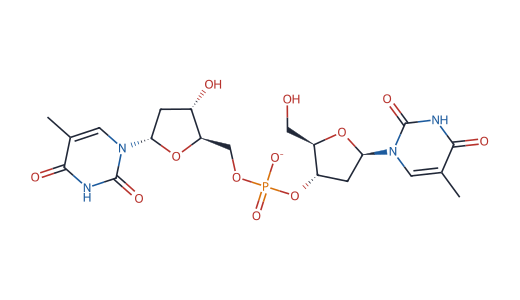
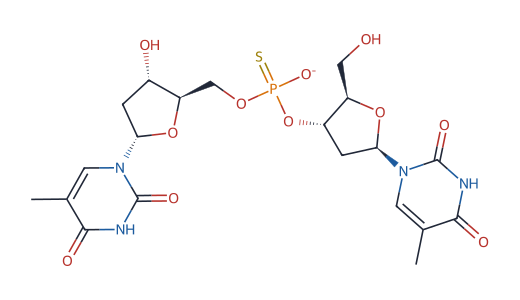
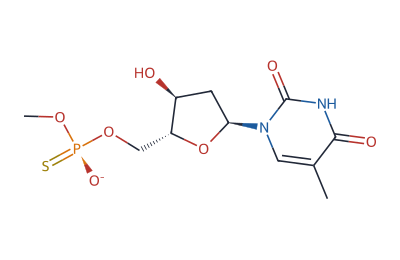
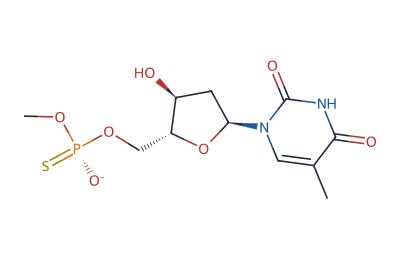
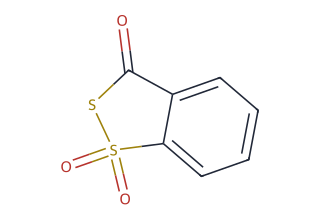
Diastereomers: a physical constraint that has to be accepted
n PS linkages give 2n stereoisomers. A fully thioated 20mer (19 PS linkages) means 2¹⁹ ≈ 5.2 × 10⁵ diastereomers. Preparative chromatography neither can nor attempts to separate them; regulators require only "an estimate of the diastereomer distribution (isomer ratio) and its reproducibility", and the industry generally manages this as a comparability attribute rather than as an impurity. But they do appear chromatographically as peak broadening — the fundamental reason why column efficiency in preparative oligonucleotide chromatography is inherently lower than for peptides and small molecules, and why applying peptide-process resolution expectations to oligonucleotides is bound to disappoint.
Characterization methods: ³¹P NMR with principal component analysis, circular dichroism, nuclease P1 digestion with LC-MS, metal ion complexation chromatography, RP-SAX in series, and cyclic ion mobility (cIMS).
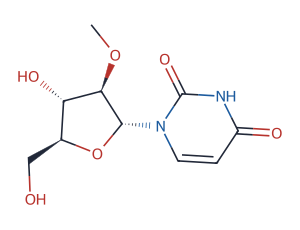
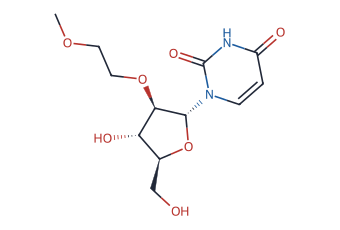
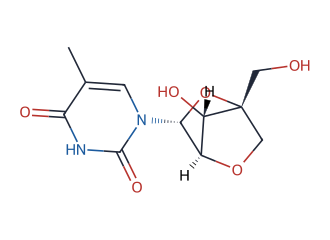
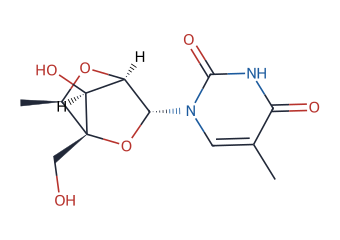
2The 2′ sugar modification landscape and conformational locking
The 2′ position is the main battleground of oligonucleotide chemistry. Modification has three aims: greater nuclease stability, higher hybridization affinity for the target RNA (Tm), and lower immunogenicity and off-target activity. From a purification standpoint, 2′ modification directly changes the molecule's hydrophobicity and hydrophilicity, and therefore directly changes retention in IP-RP and HILIC — which is why a method has to be redeveloped when the modification pattern changes on the same sequence.
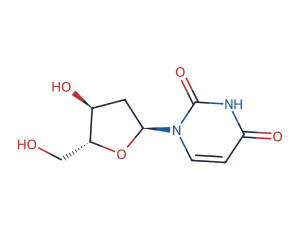
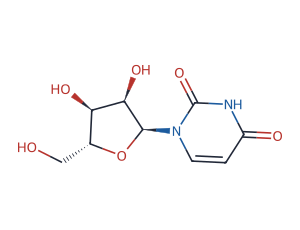
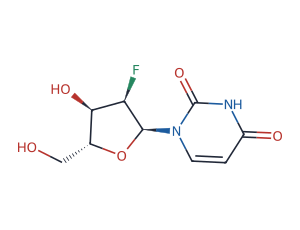
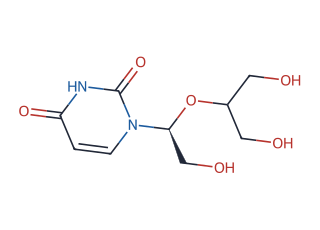
3Terminal chemistry, protecting groups and phosphoramidite monomers
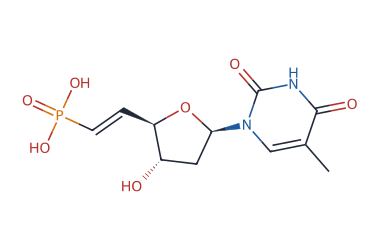
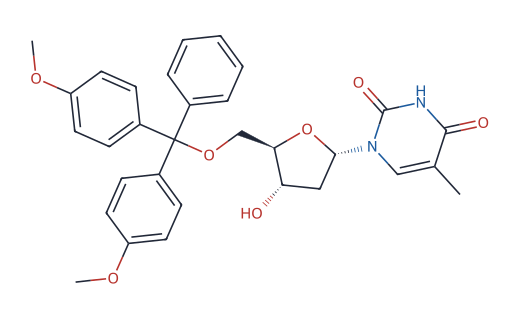
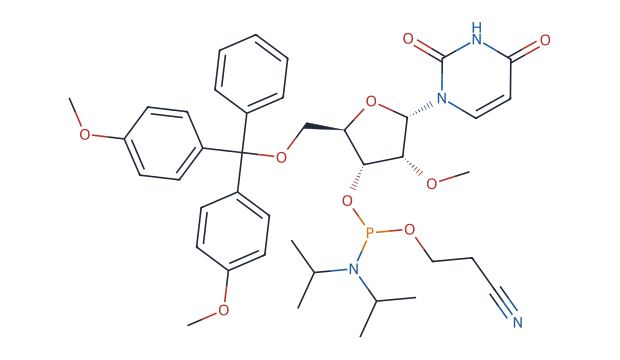
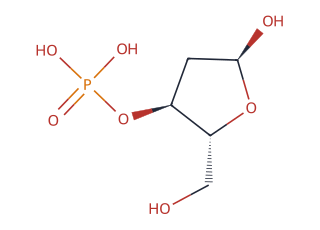
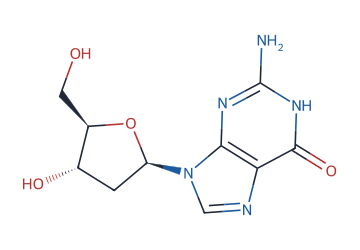
Depurination: why the choice of detritylation reagent is a process-critical decision
The N-glycosidic bond of purines, and of guanine in particular, is the least stable under acidic conditions. Using dichloroacetic acid (DCA) rather than trichloroacetic acid (TCA) for detritylation suppresses depurination appreciably. This apparently minor reagent choice directly determines how much abasic impurity has to be cleared downstream — and abasic sites essentially co-elute with the main peak in IP-RP, making them among the hardest impurities to remove.
4The solid-phase synthesis cycle and the chemical origin of impurities
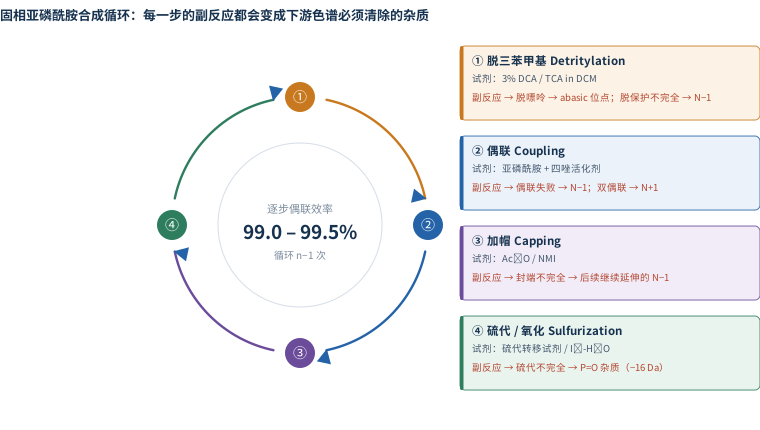
The synthesis column is itself a chromatography column: CPG or polystyrene support is packed in a 100–800 mm bore synthesis column, and reagents flow through in a four-step cycle. Every additional nucleotide is another opportunity to introduce an impurity.
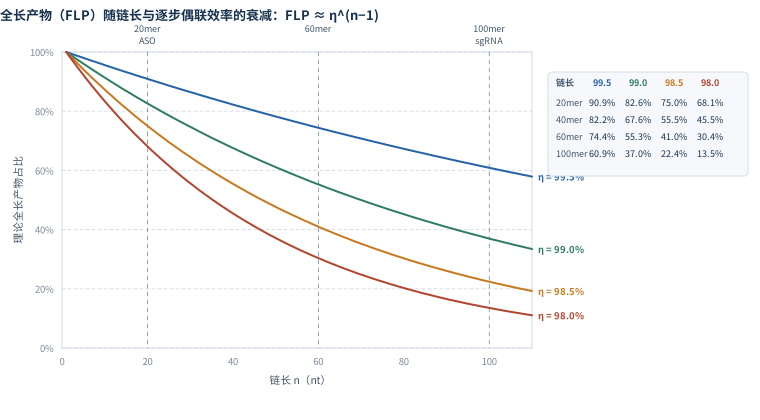
This figure explains why the difficulty of purifying long products (sgRNA, long ASOs) rises not linearly but as a cliff edge, and why the industry has developed alternative synthetic strategies such as fragment (blockmer) coupling.
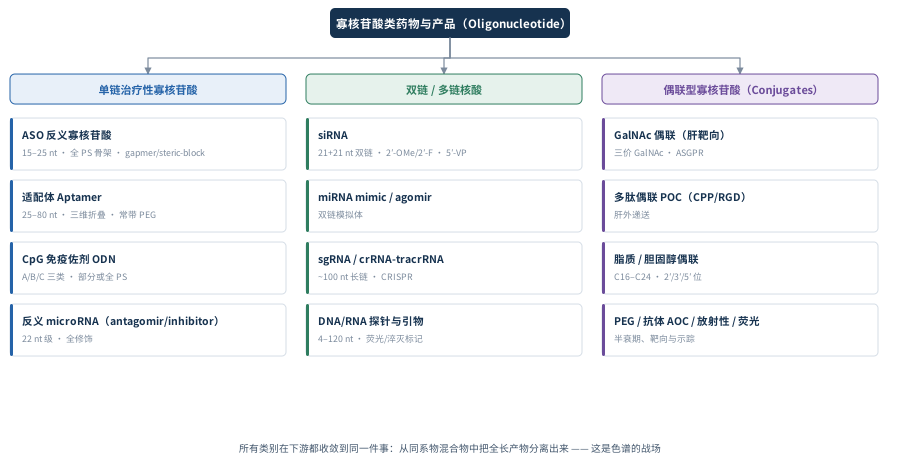
The text below works through this classification class by class, with a consistent template for each:structural features → key impurities → purification route → analytical scheme。
01ASO — antisense oligonucleotide
1.1 Structural features
A single strand of 15–25 nt, usually fully thioated (all PS). There are two main mechanistic designs: Gapmer(a central DNA gap recruits RNase H1 to cleave the target mRNA, with high-affinity modifications in both wings) and steric-block(fully modified, non-cleaving, used to modulate splicing). Common modifications include 2′-MOE, 2′-OMe, LNA, cEt and MsPA.
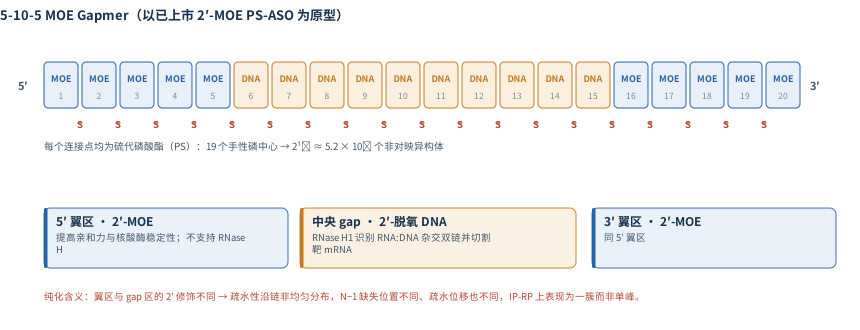
The 2′ modifications differ between the wings and the gap, so hydrophobicity is distributed unevenly along the chain. This means that N−1 species arising from deletions at different positions shift retention differently in IP-RP, appearing as a cluster of adjacent peaks rather than a single impurity peak — the most common difficulty in developing an ASO purity method.
1.2 Key impurities
| Impurity | Mass difference | Origin and characteristics | Best means of separation |
|---|---|---|---|
| N−1 / N−x deletion sequences | −1 nucleotide unit (about −300 to −350 Da for PS-2′-MOE) | Failed coupling with incomplete capping, or incomplete detritylation followed by failed coupling. Usually the largest single impurity, and its level is a diagnostic indicator of detritylation and coupling efficiency | Denaturing AEX (pH 12) is best; IP-RP can resolve it; CGE is orthogonal |
| N+1 / long chains | +1 nucleotide unit | Double coupling (excess phosphoramidite or over-detritylation), or dimer impurities in the phosphoramidite | AEX、IP-RP、CGE |
| P=O desulfurization impurity | −16 Da | Incomplete sulfurization. A fully PS 20mer has 19 sites, and missing sulfur at any one gives a P=O variant | AEX (difference in charge / pKa); ³¹P NMR to quantify the degree of sulfurization |
| Abasic / depurination | −117 / −133 Da | Cleavage of the A/G glycosidic bond during acidic detritylation, which can undergo β-elimination and break the chain. Listed as a new structural unit impurity requiring toxicological qualification | WAX with aldehyde derivatization; essentially co-elutes with the main peak in IP-RP |
| Residual protecting groups / CNEt adducts | Each with a characteristic mass increment | Incomplete removal of base protecting groups (isobutyryl on G, benzoyl on A, acetyl on C); cyanoethyl addition to O4/N3 of T | IP-RP (a marked increase in hydrophobicity) with HRMS |
| Deamination | +1 Da | C → U、5-Me-C → T | Chromatography is essential — it overlaps the isotope peak and MS alone cannot resolve it |
| Diastereomers | 0 (isomeric) | 2¹⁹ ≈ 5.2 × 10⁵ | Not separated; the distribution is characterized by ³¹P NMR / CD / NP1 digestion with LC-MS |
1.3 Purification routes
Route A · green first
DMT-on HIC (detritylation on the column) → AEX polishing → UF/DF → lyophilization
- HIC: phenyl / hexyl methacrylate; (NH₄)₂SO₄ 1.5 M → 10 mM; loading 26.5–45 g/L; bed height 15–30 cm
- Linear velocity: loading about 200, wash 75–100, elution 150–200 cm/h
- Fully aqueous, with organic solvent in the purification stage reduced to zero
Route B · purity first
Denaturing AEX → IP-RP → UF/DF → lyophilization
- AEX: pH 11–12 (NaOH or arginine-NaOH); NaCl or NaBr 0 → 1–2 M over 20 CV; loading 20–40 g/L; 120 cm/h; 7–15% ACN can be added to suppress secondary hydrophobic interaction
- RP: C18 or PS-DVB, 10 μm / 120 Å; 0.1 M TEAA pH 7; 2 → 20% ACN; 180–360 cm/h
- The two orthogonal dimensions give the widest coverage, and this is the mainstream route for marketed products
Route C · single-step simplification
Denaturing AEX with UF/DF
- Only suitable for short chains, high coupling efficiency and relaxed specifications
- Reference measurement: a 21mer DNA at pH 11, 113–150 cm/h → purity 94.6–95.2%, yield 80–99%Manufacturer
- Risk: P=O impurities and hydrophobic adducts cannot be cleared effectively
1.4 Analytical scheme
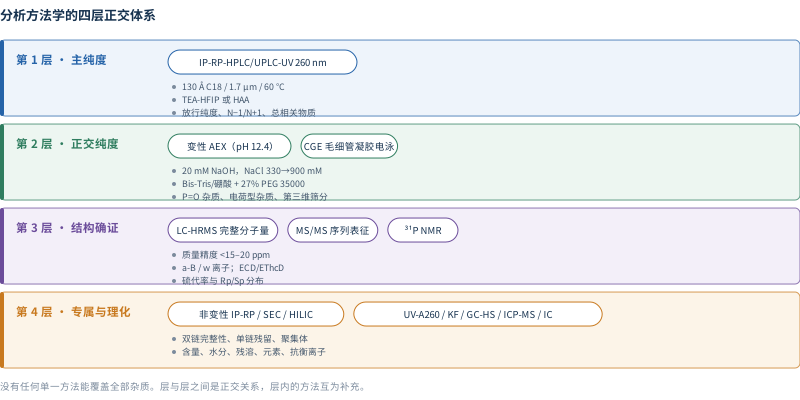
- Main purity:IP-RP-UV at 260 nm. Column: hybrid silica C18, 130 Å / 1.7 μm, 60 °C; mobile phase TEA-HFIP or HAA; raise to 80–90 °C for GC-rich sequences.
- Orthogonal purity:Denaturing AEX, 20 mM NaOH pH 12.4, NaCl 330 → 900 mM over 31.5 min; specifically for P=O and N−1.
- Third dimension:CGE, Bis-Tris/borate buffer with 27% PEG 35,000, −25 kV, 30 °C.
- Structural confirmation:LC-HRMS for the intact molecular weight (within 15–20 ppm) plus MS/MS sequencing (a-B / w ions; ECD/EThcD improves coverage for a fully PS, 2′-MOE backbone).
- Degree of sulfurization:³¹P NMR to quantify the PS/PO ratio.
- Dedicated abasic and deamination methods:WAX (DEAE weak anion exchange column) with cysteine-analogue derivatization, column temperature ≤20 °C.
02siRNA and miRNA mimics — small interfering RNA / microRNA mimic
2.1 Structural features
A duplex of 21+21 nt (the antisense strand may reach 23 nt where there is a 3′ overhang), with the sense and antisense strands differing in chemistry and possibly in length. The typical modification pattern alternates 2′-OMe and 2′-F, with two to four terminal PS linkages against exonucleases and an optional 5′-VP at the 5′ end of the antisense strand. miRNA mimics and agomirs are structurally isomorphous with siRNA, so the purification and analytical strategies transfer directly.
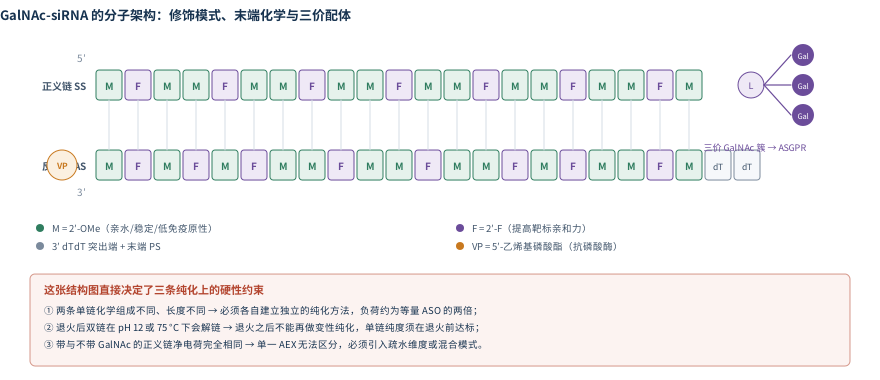
Note: the alternating modification pattern shown is a general industry illustration; the modification pattern differs for each product.
2.2 Key impurities (additional to the ASO impurity profile)
| Impurity | Cause | Method of detection |
|---|---|---|
| Excess residual single strand | Stoichiometric deviation during annealing | Non-denaturing IP-RP (20 °C), non-denaturing AEX, SEC, HILIC below 55 °C |
| Mismatched duplexes (SS:SS, AS:AS) | Side reactions during annealing | Non-denaturing IP-RP / non-denaturing AEX |
| Aggregates / HMWS | Concentration, lyophilization, storage | SEC(≥300 mM NaCl)、SEC-MALS、SV-AUC |
| Abnormal duplex conformation | Annealing conditions out of specification | UV melting Tm, DSC, microfluidic modulation spectroscopy (MMS) |
| RNA alkaline hydrolysis products | Alkaline hydrolysis involving the 2′-OH (a high-pH process) | IP-RP, AEX; avoided in the process by lowering the pH |
2.3 Purification route
Standard route (the published process path for a marketed GalNAc-siRNA)Regulatory disclosure
The two single strands are synthesized on their own supports → cleavage and deprotection → ultrafiltration → two orthogonal chromatographies, AX-HPLC (anion exchange) and IPRP-HPLC (ion-pair reversed phase) → a second ultrafiltration specifically to remove mobile phase components → the two strands annealed at the target equimolar ratio → concentration → lyophilization. Impurities are controlled in groups by retention time window (deletion sequences / insertion sequences / partly deprotected strands / P=O variants / ligand-related species).
Three hard constraints imposed by the duplex
- Double the purification load:the two single strands need two independently developed purification and analytical methods, so purification capacity and cost are about twice those for an equivalent quantity of ASO.
- No denaturing chromatography after annealing:the duplex melts at pH 12 or 75 °C, so single-strand purity must meet specification before annealing, and only non-denaturing analysis is possible afterwards.
- Annealing is a critical process parameter (CPP):regulators require the annealing buffer composition, time and temperature to be specified, and the volume ratio of the two strands to be optimized to minimize unhybridized excess single strand.
2.4 Analytical scheme: paired denaturing and non-denaturing methods
| Parameter | Denaturing method (single-strand purity) | Non-denaturing method (duplex integrity and residual single strand) |
|---|---|---|
| Column | Hybrid silica C18 (peptide/oligonucleotide type), 300 Å / 1.7 μm / 2.1×150 mm, with inert hardware recommended | |
| Column temperature | 75 °C | 20 °C |
| Mobile phase A | 0.07% TEA + 0.60% HFIP(≈5 mM TEA + 60 mM HFIP) | 0.2% hexylamine with 0.5% HFIP (about 15 mM HA and 47.5 mM HFIP) |
| Mobile phase B | 85% A + 15%(MeOH:ACN 70:30) | MeOH:ACN 80:20 |
| Gradient / flow rate | 0 → 100% B / 20 min,0.30 mL/min | 50 → 80% B / 30 min,0.15 mL/min |
| Additional | Denaturing AEX at pH 12 as the orthogonal method | SEC (50 mM phosphate pH 6.7 with 300 mM NaCl), HILIC below 55 °C |
SEC × IP-LC-MS two-dimensional chromatography can also give both non-denaturing and denaturing information in one experiment; the denaturing/non-denaturing boundary for HILIC is that the duplex is stable below 55 °C and fully melted above 65 °C, so 60 °C is a broad transition zone to be avoided。
03GalNAc-conjugated oligonucleotides
3.1 Structural features
A trivalent N-acetylgalactosamine (GalNAc) cluster is conjugated through a linker to the 3′ or 5′ end of the oligonucleotide, binding the asialoglycoprotein receptor (ASGPR) highly expressed on hepatocytes and being endocytosed. The triantennary design gives affinity several orders of magnitude higher than monovalent. GalNAc can be used with siRNA, ASO and miRNA.
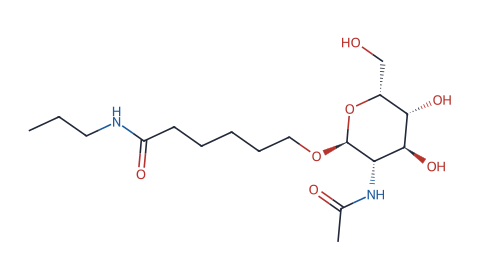
List of GalNAc-related impurities
- Completely unconjugated oligonucleotide — the same net charge as the product
- Partly conjugated species (1× or 2× GalNAc instead of 3×)
- Linker degradation products (hydrolysis of the amide or ester bond)
- Incompletely removed acetyl protecting groups on the sugar
- Residual conjugation reagents and catalytic metals (Pd, for example)
Why AEX alone must fail here
GalNAc is a neutral sugar. The conjugated and unconjugated species have exactly the same number of phosphates on the backbone and exactly the same net negative charge, so they show almost no difference in retention on an anion exchange column. A hydrophobic dimension (IP-RP / HIC) must be introduced, or a stationary phase that exploits several interactions at once.
3.2 Purification: three workable routes
| Route | Stationary phase | Mobile phase and gradient | Mechanism |
|---|---|---|---|
| A. Mixed mode (three ligands) | A stationary phase carrying strong anion exchange, strong cation exchange and C18 ligands together | 100 mM Tris·HCl pH 7.5; a dual gradient of NaBr 0 → 1 M and ACN 0 → 20%; 40 → 70% B over 20 min; 1.5–5 mL/min at 25 °C | Charge and hydrophobicity act together |
| B. AEX with a pH / salt dual gradient | A porous polymer Q type (hydrophilic polymethacrylate Q, for example) | 20 mM Na₂HPO₄ with 15% ACN; pH 8.5 → 11 and NaCl/NaBr 0 → 1 M rising together | The pH gradient modulates the oligonucleotide's own ionization without changing the matrix charge, amplifying the conjugated/unconjugated difference |
| C. Direct IP-RP separation | C18 (120 Å) or PS-DVB | 0.1 M TEAA pH 7 with an ACN gradient | The hydrophobic shift from the GalNAc cluster and linker is enough to separate them in reversed phase |
Additional: the monolith route Patent example— a quaternary ammonium monolith (8 mL, pore size 1300–2000 nm), 20 mM Na₂HPO₄ with 10% ACN at pH 8.5, NaBr 0 → 1 M, 0 → 55% B over 15 min, 30 mg loaded per run (tested to 50 mg), kept below 35 °C to protect guanine-rich quadruplex structures, giving over 200 mg of pure material with single-strand fraction purity of 88–93%.
3.3 Analytical scheme
- IP-RP-UV / MS as the main method:the hydrophobicity of the conjugated, partly conjugated and unconjugated species differs considerably, so they separate well; HRMS confirms the mass corresponding to each arm.
- The GalNAc cluster is a hydrophilic structure, so HILIC is also an effective orthogonal method.
- Where conjugation is carried out after purification (purify the oligonucleotide, conjugate with the ligand precursor, then lyophilize), a dedicated purity and conjugation-rate method is needed after the conjugation step, and the pre-conjugation method cannot simply be carried over.
04Other conjugates: peptide / lipid / PEG / antibody / radiolabel / fluorophore
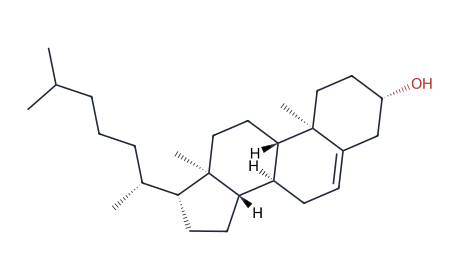
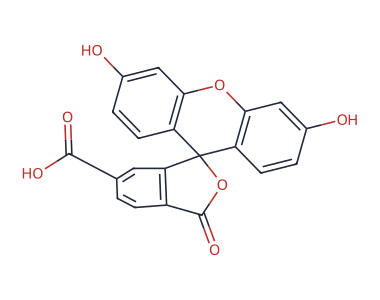
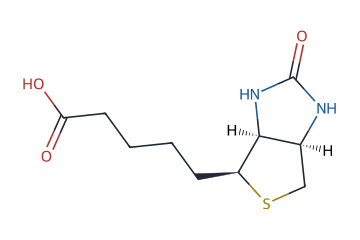
| Conjugate type | Structure and chemistry | Characteristic impurities | Purification and analytical points |
|---|---|---|---|
| Peptide conjugates (POC)(cell-penetrating peptides / RGD cyclic peptides) | A three-part construct of oligonucleotide, linker and peptide; the conjugation chemistry may be a disulfide, click chemistry (azide-DBCO), an amide bond, maleimide-thiol or photo-crosslinking | Unconjugated oligonucleotide, unconjugated peptide, hydrolysed linker, disulfide scrambling and dimers, impurities from the peptide itself (deletion peptides) | The peptide brings in positive charge → the net charge is partly neutralized, weakening AEX retention and strengthening IP-RP retention; mixed mode (carrying both anion and cation exchange) is often the best answer. The analysis must cover the impurity profiles of both the nucleic acid and the peptide |
| Lipid / cholesterol conjugates | C16, C18, C20, C22 and C24 fatty acids; attached at the 5′, 3′ or 2′ position | Unconjugated species, lipid chain oxidation products, positional isomers | A 300 Å pore size with a short C8/C4 bonded phase is more suitable (avoiding excessive retention); the organic proportion in the mobile phase must be raised; watch for aggregation and precipitation on the column |
| PEG conjugates(mPEG / DSPE-PEG / Chol-PEG / DBCO-PEG) | Increases the hydrodynamic radius to reduce glomerular filtration, while shielding the surface negative charge | The molecular weight distribution (polydispersity) of the PEG itself → the product is a distribution rather than a single molecule; unconjugated species; PEG degradation products | PEG polydispersity inherently broadens the IP-RP peak, so purity has to be defined on a "main peak cluster" rather than a single peak; SEC is the key method for assessing distribution and aggregation |
| Antibody conjugates (AOC) | Antibody plus linker plus oligonucleotide, an architecture similar to an ADC | DAR distribution (drug-to-antibody ratio), free oligonucleotide, free antibody, aggregates | Downstream work is closer to a biologic: a combination of protein A / HIC / SEC / CEX; DAR distribution is characterized by HIC or RP; aggregates by SEC |
| Radiolabel / chelator conjugates(NOTA / DOTA / DTPA / HYNIC / TETA / MAG) | The chelator is conjugated first and the radionuclide complexed just before use | Free chelator, unconjugated species, incomplete metal complexation | The chelator adds further metal-binding capacity, making the material more sensitive to metal adsorption on stainless steel flow paths and columns → inert hardware is strongly recommended; the analysis must add complexation rate and radiochemical purity |
| Fluorophore / quencher(FAM、TAMRA、HEX、ROX、Cy3/5/7、BHQ、Dabcyl、MGB) | A 5′ reporter with a 3′ quencher; near-infrared Cy7/Cy7.5/ICG for in vivo imaging | Single-labelled species (missing reporter or quencher), dye degradation, isomers | The strong hydrophobicity of the dye makes IP-RP the preferred purification mode; the fluorophore's own UV absorbance interferes with quantification at 260 nm, so dual-wavelength detection or a calibrated correction factor is needed |
05sgRNA and crRNA·tracrRNA — CRISPR guide RNA
5.1 Structural features and purification difficulties
A single guide RNA (sgRNA) is a long RNA of about 100 nt, made up of an approximately 20 nt targeting sequence, the crRNA repeat region, a linker loop and the tracrRNA scaffold, with extensive hairpin secondary structure. The termini usually carry 2′-OMe with PS modification against nucleases. It can also be split into crRNA and tracrRNA, synthesized separately and annealed.
Chain length is the watershed in purification difficulty
- The full-length fraction falls off a cliff:at 99% coupling efficiency a 100mer has a theoretical full-length fraction of only 36.9%, and at 98% only 13.5%.
- AEX selectivity declines:the charge difference between N−1 and the full-length product is diluted from 1/19 (about 5%) for a 20mer to 1/99 (about 1%) for a 100mer.
- IP-RP struggles equally:published measurements show a single IP-RP step on a 60mer reaching only 62–70% purity at 20–25% mass yield (10×100 mm preparative column, 20 mg loaded).
- Secondary structure is strong:a high column temperature (60–80 °C) or high-pH denaturation is essential for a usable peak shape.
5.2 Purification route
- Two or more steps are unavoidable:DMT-on IP-RP (300 Å wide-pore medium) for coarse separation → detritylation with 3% DCA → AEX or RP polishing.
- Switch the ion-pairing reagent to HAA:published comparisons show 100 mM hexylammonium acetate at pH 7.0 resolving a 60mer better than TEAA. Reference analytical conditions: hybrid silica C18, 300 Å / 2.5 μm / 4.6×100 mm, 60 °C, 30 → 63.5% ACN over 47 min; A = 5% ACN in 100 mM HAA pH 7.0, B = 80% ACN in 100 mM HAA pH 7.0.
- The pore size must be increased:100–130 Å up to 30 nt; 300 Å for 40–200 nt; 1000–4000 Å for mRNA scale. On the support side, above 100 nt a 2000 Å CPG (loading only 10–20 μmol/g) or a polystyrene support is recommended.
- Alternative strategies:fragment synthesis (blockmer, coupling 20–40 nt fragments) avoids the yield cliff of synthesizing a long chain in one pass; the in vitro transcription (IVT) route is entirely different, with an impurity profile dominated by dsRNA, truncated transcripts, residual DNA template and enzymes, and purification based mainly on AEX, reversed phase and affinity.
5.3 Analytical scheme
- HILIC-MS is particularly suitable for sgRNA:A = 100 mM aqueous ammonium acetate with 1% ACN, column temperature 75 °C, with no ion-pairing reagent to contaminate the system.
- SEC needs a large pore:a 30 nm pore diol SEC column suits 60–120mers; molecules above about 50 bases cannot enter smaller pores and elute together at the exclusion limit.
- CE / CGE Resolves long-chain RNA better than HPLC and is an important orthogonal method for releasing long-chain products.
06miRNA inhibitors / antagomirs — microRNA inhibitor
Mature miRNAs are 21–25 nt long. An inhibitor is a fully modified single strand fully complementary to the target miRNA, and an antagomir usually carries a cholesterol conjugate to improve cellular uptake. Purification and analysis follow the ASO framework directly, with two differences:
- Full modification (usually all 2′-OMe or a mix with LNA) shifts hydrophobicity upward overall, so the IP-RP gradient must start higher; the strong conformational locking of LNA units makes the secondary structure more stable, requiring a higher column temperature.
- A cholesterol-conjugated antagomir is handled as a lipid conjugate under class 04: 300 Å pore size with a C8/C4 phase, at a raised organic proportion.
07Aptamers and ApDCs
7.1 Structural features
A single-stranded DNA or RNA of 25–80 nt, obtained by SELEX, binding a target protein with high affinity through a particular three-dimensional fold (hairpins, internal loops and, above all, G-quadruplexes formed by guanine-rich sequences). They commonly carry 2′-F / 2′-OMe modifications, an inverted dT cap at the 3′ end against exonucleases, and PEGylation to extend the half-life.
The G-quadruplex: a structure that overturns conventional purification logic
- Denaturing conditions destroy the active conformation— an aptamer's function depends on its fold, and pH 12 or 75 °C unfolds it. Conformational confirmation of the final product must therefore be done under non-denaturing conditions.
- G-quadruplexes appear as multiple or broad peaks in chromatography:different folded states interconvert slowly and behave as conformational isomers on the chromatographic timescale.
- This is exactly why the published patent example uses a monolith AEX (NaBr gradient) below 35 °C to protect the quadruplex structure.
- A dedicated refolding step and a conformational consistency release method (circular dichroism, UV melting, non-denaturing SEC / IEX) are required.
7.2 Additional considerations for ApDCs
An aptamer–drug conjugate can be built in three ways: (1) covalent conjugation (amine / thiol / DBCO cyclooctyne → MMAE, paclitaxel and others); (2) direct incorporation of a small-molecule nucleoside analogue during synthesis (5-FU, gemcitabine); (3) physical non-covalent intercalation (an anthracycline intercalating into a GC region, for example). Type (1) requires separation of the unconjugated aptamer from conjugates of different DAR, and the strong hydrophobicity of the small-molecule payload makes IP-RP inevitable; type (3), being a non-covalent complex, is destroyed by any chromatography, so only free drug content and encapsulation efficiency can be controlled.
08CpG immunoadjuvant ODNs
| Category | Structural features | Immunological effect | Purification and analytical points |
|---|---|---|---|
| Class A | A palindromic core with poly-G tails at both ends, partly thioated (PO core, PS ends) | Strongly activates plasmacytoid dendritic cells to produce type I interferon | The poly-G tails form G-quadruplexes and self-assemble into nanoparticles— the hardest aspect of class A: strongly aggregated in chromatography with very poor peak shape, requiring high-pH denaturing AEX, or urea or high temperature, to give an analysable peak |
| Class B | A fully thioated linear sequence with several CG motifs, no palindrome and no poly-G | Strongly activates B cells (proliferation and IgM secretion) | Behaves like an ordinary fully PS ASO, so standard AEX / IP-RP is sufficient |
| Class C | Thioated with a palindromic sequence, able to form stem-loops and dimers | Activates both DCs and B cells | Dimerization is marked under non-denaturing conditions, so monomer purity is measured under denaturing conditions and the degree of dimerization assessed under non-denaturing conditions |
Release points common to all three classes:endotoxin control is especially critical(these are immunostimulants themselves, and endotoxin contamination confounds efficacy readouts), as is strict sequence confirmation — the position and number of CpG motifs determine activity directly.
09Primers, probes and diagnostic-grade oligonucleotides
| Length band | Typical use | Purification recommendation |
|---|---|---|
| Short, 4–7mer | Special probes, linkers | Reversed-phase cartridge or HILIC (IP-RP retention is insufficient) |
| Conventional, 8–59mer | PCR primers, sequencing primers, hydrolysis probes | DMT-on reversed phase is the most economical general approach; IP-RP or AEX where requirements are higher |
| Long, 60–100+mer | Gene synthesis fragments, long probes, templates | 300 Å pore size is essential, with PAGE or two steps of IP-RP/AEX |
Particular points for labelled primers and probes:there is a very wide range of terminal modifications — functional groups (phosphate, NH₂-C6/C12, SH-C6, carboxyl), click chemistry (alkyne, azide, DBCO, maleimide, Acrydite), affinity tags (biotin, digoxigenin), lipophilic groups (cholesterol, lipids, PEG), and fluorophore/quencher pairs (FAM/TET/HEX/TAMRA/Cy series with BHQ1/2/3, Dabcyl, Eclipse, MGB). Every class of label changes the molecule's hydrophobicity, so purification of labelled products almost always falls to IP-RP, and because the label itself absorbs in the UV, purity quantification must use dual wavelengths or a correction factor.
10Product–solution overview matrix
| Product type | Typical length | Structural feature governing purification | First-choice purification | Orthogonal second step | Main purity method | Dedicated release item |
|---|---|---|---|---|---|---|
| ASO gapmer | 15–25 nt | Fully PS; wings and gap modified differently | DMT-on HIC or denaturing AEX | IP-RP | IP-RP-UV 130 Å / 60 °C | ³¹P NMR degree of sulfurization; WAX for abasic |
| siRNA | 21+21 nt | Duplex; the two strands differ chemically | Denaturing AEX on each strand | IP-RP on each strand | Denaturing IP-RP at 75 °C | A non-denaturing method for residual single strand; UV melting Tm; SEC for aggregation |
| GalNAc conjugates | 21 / 20 nt | A neutral sugar cluster, leaving charge unchanged | AEX with a pH/salt dual gradient, or mixed mode | IP-RP | IP-RP-UV/MS | Conjugation rate, partly conjugated species, residual sugar acetyl |
| Lipid / cholesterol conjugates | 20–25 nt | Strongly hydrophobic ligand | IP-RP(300 Å / C8-C4) | AEX | IP-RP at high organic | Positional isomers, lipid chain oxidation |
| PEG conjugates | 25–80 nt | PEG polydispersity | IP-RP | SEC | IP-RP (peak cluster) | PEG distribution, SEC for aggregation |
| Peptide conjugates (POC) | 20 nt plus peptide | The positive charge partly neutralizes the backbone | Mixed mode (SAX+SCX+C18) | IP-RP | IP-RP with peptide mapping | Disulfide scrambling, free peptide |
| Antibody conjugates (AOC) | Antibody scale | Protein as the main body | Protein A / HIC | SEC / CEX | HIC for DAR | DAR distribution, free oligonucleotide, aggregates |
| sgRNA | ~100 nt | Long chain, strong secondary structure | DMT-on IP-RP 300 Å | AEX or RP | HILIC-MS 75 °C / CGE | Truncated transcripts (IVT route), dsRNA |
| Aptamer | 25–80 nt | G-quadruplex, activity dependent on folding | Low-temperature AEX (below 35 °C) | IP-RP | Non-denaturing IEX / SEC | Conformational consistency (CD, UV melting), refolding validation |
| CpG class A | 20–25 nt | Poly-G tails self-assemble into particles | Denaturing AEX (high pH / urea) | IP-RP | Denaturing AEX | Particle size, endotoxin |
| CpG classes B / C | 20–25 nt | Fully PS linear / palindromic dimer | Denaturing AEX | IP-RP | IP-RP-UV | Degree of dimerization, endotoxin |
| Labelled primers and probes | 8–100 nt | Strongly hydrophobic terminal dye or tag | IP-RP(DMT-on) | — | IP-RP with dual wavelengths | Labelling rate, single-labelled impurities |
11A framework for orthogonality between chromatographic modes
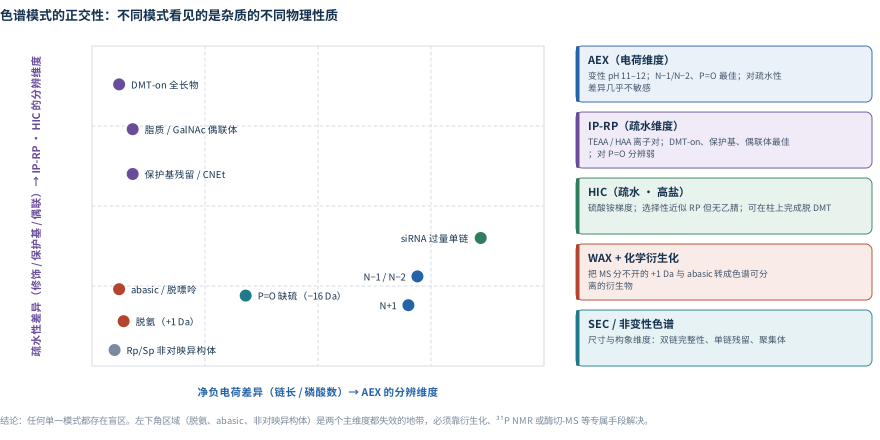
The horizontal axis is the difference in net charge (the dimension AEX resolves) and the vertical axis the difference in hydrophobicity (the dimension IP-RP and HIC resolve). Where an impurity sits on this plot determines directly which mode should be used to remove it.
Placing the impurities on this two-dimensional plot makes the purification and analytical strategy derivable:
- Lower right (N−1/N−2, N+1)— a clear charge difference and almost no difference in hydrophobicity → AEX is the workhorse and IP-RP can only assist.
- Upper left (DMT-on full-length product, residual protecting groups, lipid/GalNAc conjugates)— a large difference in hydrophobicity → IP-RP or HIC deals with it in one step.
- Centre-left (P=O desulfurization)— a slight change in charge/pKa and almost none in hydrophobicity → AEX can resolve it, IP-RP often co-elutes.
- Lower left (deamination +1 Da, abasic, diastereomers)— near zero in both main dimensions, and therefore a blind spot for conventional chromatography, requiring chemical derivatization (WAX with a cysteine analogue), ³¹P NMR or digestion-MS instead.
- Upper right (excess single strand in siRNA)— requires the size and conformation dimensions under non-denaturing conditions (SEC, non-denaturing IP-RP).
12AEX anion exchange preparative purification
The mechanism separates by net negative charge and resolves N−1/N−2 best. The usual range is 12–50 nt (some papers extend this to 80 nt). High-pH (11–12) denaturation has become the industry default starting point: at around pH 12 the Watson-Crick hydrogen bonds are broken and G-quadruplexes disassemble, so the separation reflects net charge and chain length purely; at the same time guanine N1-H (pKa ≈ 9.4) and thymine N3-H (pKa ≈ 9.9) are deprotonated, adding a further base-composition selectivity.
| Resin type | Substrate / particle size | Loading (DBC or applied) | Published measured results | Origin |
|---|---|---|---|---|
| Agarose-based Q type (40–45 μm) | Agarose / 40–45 μm | DBC 48.3 mg/mL (20mer, 10% breakthrough, 150 cm/h); 45 nt RNA 56.4 mg/mL | 20mer,pH 12,NaCl 20 → 50%:Purity 95.6% / yield 74.2% | Manufacturer |
| Agarose-based Q type (high resolution, 40 μm) | Agarose / 40 μm | Loading 1.7 mg/mL (scale-up) to 8.2 mg/mL (screening) | 21mer DNA,pH 11,113–150 cm/h:Purity 94.6–95.2% / yield 80–99% | Manufacturer |
| Grafted polymer layer Q type | Hydroxylated methacrylic polymer / 35 μm | A 24mer PS loaded to 80% of DBC; pressure limit only 0.3 MPa (industry friendly) | Purity 96.9% / yield 81.3%, and separates N−1 and N+1 at the same time | Manufacturer |
| Epoxy-crosslinked polymer Q type | Crosslinked polymer microspheres / 38–53 μm | DBC about 20 mg crude/mL (10% breakthrough) | 20/21mer PO: purity >97% / yield about 90%, with the 5 mL and 25 mL columns agreeing | Manufacturer |
| Hydrophilic polymethacrylate Q type | 20 / 30 μm | 1 mg/mL (high-resolution polishing mode) | 10 mM NaOH, pH 12, 60 °C; also used for single-step DMT-on purification | Manufacturer |
| PS-DVB-based Q type | Polystyrene-divinylbenzene / 15 μm | Loading 8.55 BV of crude solution | The reference column in mechanistic modelling studies; tolerates the full pH range | Literature |
| Polystyrene-based Q type (domestic) | Polystyrene / 15–30 μm | Bed height 15–20 cm, salt below 2 M, elution within 0.5 h | Purity 93.0% / yield 81.3% | Manufacturer |
How to read the loading figures correctly
A modern process-grade AEX resin has a DBC for 20mer-class oligonucleotides of the order of 20–55 mg/mL of resin, and production loading is commonly set at 50–80% of DBC; a "low-load polishing" mode aimed at high resolution can go as low as 1–2 mg/mL. Loading and resolution trade off directly against one another — when quoting or costing a process, always establish which mode the figure refers to.
12.1 Choice of elution salt: an underrated lever
- NaCl— the most common and cheapest, with a gradient of 0 → 1.0–2.0 M; eluting power may be insufficient for fully PS oligonucleotides, which are more hydrophobic.
- NaBr— mechanistic modelling gives a selectivity coefficient KBr/OH = 1.1 against KCl/OH ≈ 5 (with selectivity reversal), and the conclusion is that switching from NaCl to NaBr brings elution appreciably earlier with narrower peaks. NaBr (0 → 1 M) is chosen as the optimal elution salt in the published patent.
- NaClO₄— the most chaotropic with the highest eluting power, suiting long chains and strong secondary structure; corrosivity and safety concerns keep industrial uptake low.Title-level evidence only
- Organic modifier— 7–15% acetonitrile in the mobile phase suppresses secondary hydrophobic interaction (10–15% in the published patent; 7% in a domestic case).
- Urea— mentioned in the literature but not adopted by any process-grade source, being avoided for the desalting burden and the risk of cyanate (carbamylation).
12.2 Published practice on denaturing conditions
| Denaturing system | pH | Other conditions |
|---|---|---|
| 10 mM NaOH | 12 | Column temperature 60 °C (temperature as a secondary means of denaturation) |
| 20 mM NaOH compared with 20 mM Tris-HCl | 12 vs 8 | N−1 resolution is slightly better at pH 12 |
| 25 mM arginine-NaOH | 11.7 | Buffer B contains 2 M NaCl |
| A conventional process buffer | 11 | Linear velocity 113–150 cm/h |
Three hard limits of AEX
- The desalting burden:the elution pool contains 0.5–2 M salt and must be followed by UF/DF or SEC, so the desalting cost is transferred to a downstream unit.
- Decline with chain length:above 40–50 nt the charge difference between N−1 and the full-length product is diluted and resolution deteriorates rapidly.
- Risk of RNA alkaline hydrolysis:pure RNA undergoes 2′-OH-mediated alkaline hydrolysis at pH 12; 2′-OMe, 2′-F and LNA modified species are relatively tolerant, but pure RNA (an unmodified sgRNA, for example) must run at lower pH or use another means of denaturation.
Additional: AEX does not separate phosphorothioate diastereomers at all (accepted as a matter of process design).
13IP-RP ion-pair reversed-phase preparative purification
The oligonucleotide phosphate backbone is entirely negatively charged and is unretained on a bare reversed-phase column. An alkylamine (cation) forms an ion pair with the backbone, neutralizing the charge and providing hydrophobicity so the molecule is retained by chain length and hydrophobicity.
Triethylamine (TEA)
The classic and most hydrophilic ion-pairing reagent. TEAA (triethylammonium acetate) is the preparative first choice, but it is cytotoxic and must be removed thoroughly.
Hexylamine (HA)
More hydrophobic than TEA, giving stronger retention and better resolution, with markedly better resolution than TEAA for long chains (60mer); it also forms fewer MS adducts.
Hexafluoroisopropanol (HFIP)
A volatile weak acid with pKa 9.3. It evaporates preferentially from the ESI droplet, raising the droplet pH so that the ion pair dissociates and releases the oligonucleotide anion — the mechanism behind the large sensitivity gain in HFIP systems.
| Element | Recommended setting | Basis and notes |
|---|---|---|
| Ion-pairing reagent | 0.1 M TEAA pH 7.0 (preparative first choice, UV detection) 0.1 M TEAB pH about 8.5 (volatile and easily removed on lyophilization, but weakly buffering) 100 mM HAA pH 7.0 (first choice for long chains) |
Hydrophobicity runs TEA < TPA ≈ DBA ≈ HA < OA ≈ TBA ≈ dihexylamine. A longer-chain amine gives stronger retention and better resolution, but poorer MS sensitivity and heavier system contamination and memory effects |
| Stationary phase · polymer | PS-DVB types (preparative 10 / 30 / 50 μm) Pore size 100 Å (18–30 nt), 300 Å (up to 200 nt), 1000–4000 Å (mRNA) |
Tolerates the full pH 1–14 range, allowing high-pH denaturation and NaOH cleaning; efficiency is lower than silica, and mechanical strength and solvent swelling are the limits |
| Stationary phase · silica / hybrid | C18 / C8 / C4, preparative 10 / 15 / 20 μm; 120–130 Å (short chains), 300 Å (long chains) | Higher efficiency and loading; ordinary silica has a severely shortened life above pH 8 at 60 °C, so a base-stable or hybrid substrate must be chosen |
| Column temperature | 25 °C (short chains, ambient) to 60–80 °C (long chains, GC-rich) | High temperature breaks secondary structure, improves mass transfer and reduces sequence dependence |
| Linear velocity | 180–360 cm/h | DAC systems are designed for 70–100 bar and usually run at 20–60 bar |
| Loading | About 10–30 g crude per L of medium (the order of magnitude for short-chain DMT-on)Open question | Industrial g/L loading figures are treated as know-how by every supplier and are very rarely published, so they must be verified independently |
13.1 Two sets of measured data usable directly as starting points
Short 20mer · DMT-off · TEAA
- Column: hybrid silica C18, 130 Å, 2.5 μm, 30 × 50 mm preparative
- Mobile phase: 0.1 M TEAA pH 7.0 / ACN; gradient 1 → 19% ACN
- Flow rate 25 mL/min (elution) / 40 mL/min (column wash), 25 °C
- Loading 0.41–25 mg per injection → pooled purity 96.3%, recovery 85% → above 95% after optimization
- Productivity 75–100 mg/h; raising the flow rate from 17 to 25 mL/min gives +50% productivity
Long 60mer · 2′-OMe/2′-OH · HAA
- Analytical: hybrid silica C18 300 Å, 2.5 μm, 4.6×100 mm, 60 °C, 30 → 63.5% ACN over 47 min
- A = 5% ACN in 100 mM HAA pH 7.0;B = 80% ACN in 100 mM HAA pH 7.0
- Preparative 10×100 mm / 2.5 μm at 4 mL/min, 20 mg loaded → purity 70%, 4 mg recovered
- 5 μm at 8 mL/min → purity 62%, 5 mg recovered; backpressure about 3000 psi
- A single IP-RP step on a 60mer reaches only 62–70% purity at 20–25% mass yield
13.2 DMT-on / DMT-off: the central lever in IP-RP
The 5′-DMT (MW 303) is retained as a strongly hydrophobic "handle". Because only chains that completed the final coupling carry the DMT, while every failed sequence was capped during synthesis and carries none, the selectivity changes from a small difference in chain length to the presence or absence of a large hydrophobic group, giving a very large difference in k′. Published sources note that DMT-on reversed phase is particularly effective for 40–150 nt long chains.
Three limits of DMT-on that must be understood
- Detritylation creates new impurities:acidic conditions (3% DCA / 80% AcOH / TFA) cause depurination and generate abasic sites — and abasic sites are explicitly listed by regulators as a safety concern. Using DCA instead of TCA suppresses depurination appreciably.
- DMT-on cannot separate N−1:if the N−1 arose from a failed coupling mid-sequence that was not fully capped and then continued to extend, it carries a DMT too. DMT-on RP therefore cannot usually stand alone as the final purification and must be paired with a second step.
- A practical tip:heating the crude DMT-on sample above 65 °C in the loading buffer before injection markedly improves yield and purity.
14HIC hydrophobic interaction chromatography: the underrated "green reversed phase"
Industry reviews place HIC alongside RP-HPLC and IEX as one of the three main purification methods at commercial scale, describing it as "similar in principle to RP-HPLC but without organic solvent"; sustainability studies also list it as a near-term green alternative to RP-HPLC.
Published application: DMT-on HIC with detritylation on the column
- Resin screening: polypropylene glycol / phenyl / butyl / hexyl methacrylate types → selecting the phenyl type (medium substitution)
- Salt: 1.5 mol/L ammonium sulfate (sulfate promotes hydrophobic binding most effectively and gives the most linear conductivity)
- Substrate a 20mer ssDNA (6.141 kDa), crude purity about 55%
- On-column detritylation: after binding, the DMT is removed in situ at about pH 4 and the detritylated product elutes immediately
- Result: DMT-off product purity above 99% at 99% recovery
- Purification and deprotection combined into one unit operation — one fewer step and one fewer yield loss
Published patent parameters (the hardest HIC loading data available)Patent
- Resin: phenyl agarose (high substitution) or hexyl methacrylate, bed height 15–30 cm
- Ammonium sulfate: loading 765–800 mM → wash 250–440 mM → elution 10–40 mM (a decreasing salt gradient)
- Linear velocity: loading about 200, wash 75–100, elution 150–200 cm/h
- Loading 26.5–45 mg product per mL of resin
- Impurities removed: N−1, P=O, abasic, CNEt, N+1
- The patent explicitly claims "improved separation with organic solvent eliminated" relative to RP-HPLC
The cost of HIC:what elutes is a concentrated ammonium sulfate solution, so the desalting burden is even greater than with AEX, and the corrosivity of ammonium sulfate to stainless steel must be assessed.
15SEC, TFF and mixed mode
15.1 The division of labour between SEC and TFF
SEC desalting (dextran gels with an exclusion limit around 5 kDa) has low volumetric productivity (loading up to about 30% of column volume) and dilutes heavily, and at industrial scale has largely been replaced by UF/DF (TFF) — the regulatory dossiers for marketed products all describe post-chromatography desalting as ultrafiltration rather than SEC. SEC's main role in the oligonucleotide field has shifted to the analytical side: duplex integrity, aggregates, and absolute molecular weight by SEC-MALS.
- Membrane cut-off:oligonucleotide molecular weights run from about 6–7 kDa (20mer) to about 14 kDa (siRNA duplex), and by the usual TFF rule of one third to one fifth of the target molecular weight this gives a 1–3 kDa MWCO (5 kDa is usable for an siRNA duplex). Inference The specific figures are not given directly in authoritative sources and must be confirmed experimentally.
- A neat piece of design:a published patent uses 100 mM sodium acetate pH 3 with 40% ethanol as the TFF buffer, removing acid-labile protecting groups while desalting — the TFF unit doubling as a reaction step and saving an operation.
15.2 Mixed mode (MMC)
See the three routes for class 03 GalNAc conjugates. The value of mixed mode is that where two species show no difference in any single physical property (the charge of conjugated versus unconjugated species, or the charge of a peptide conjugate after neutralization), only a stationary phase that can exploit several interactions at once will separate them. Besides triple-ligand phases, the literature also reports orthogonal AEX with mixed mode, and RP / weak anion exchange mixed mode, for purifying modified oligonucleotides.
16Orthogonal combination strategies and evidence from marketed drugs
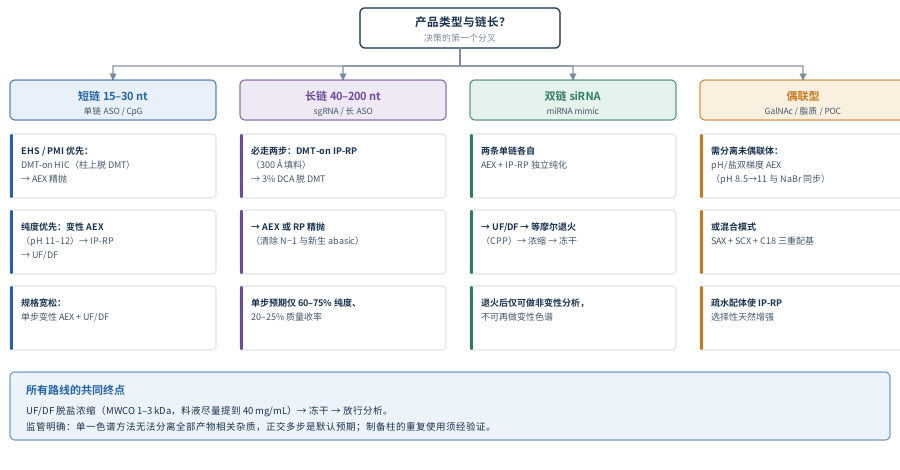
| separation | Sequence of steps | Where it applies and what matters |
|---|---|---|
| A The classic DMT-on route | DMT-on IP-RP coarse separation → acidic detritylation (3% DCA / AcOH) → a second RP or AEX polishing step | Long-chain ASOs; the first step removes capped failure sequences and the second removes N−1 and newly formed abasic species |
| B AEX → IP-RP | Denaturing AEX first to remove N−1/N−2 (aqueous, high loading) → IP-RP to remove P=O and hydrophobic impurities while partly desalting | The published route for a marketed GalNAc-siRNA; the two orthogonal dimensions give the widest coverage |
| C IP-RP → AEX | DMT-on reversed phase first to remove hydrophobic impurities → detritylation → AEX to refine length purity | Suits crude material with a high load of hydrophobic impurities |
| D The green route | DMT-on HIC (detritylation on the column) → AEX polishing → UF/DF | Fully aqueous, no acetonitrile; the best on EHS and PMI |
| E Single-step simplification | Denaturing AEX with UF/DF | Only for short chains, high coupling efficiency and relaxed specifications |
16.1 Published process information for marketed and clinical-stage drugs
| Product type | Published purification information |
|---|---|
| GalNAc-siRNA (marketed) | The sense strand is synthesized on a ligand-bearing support and the antisense strand on a modified nucleoside CPG → cleavage and deprotection → UF → two orthogonal chromatographies, AX-HPLC and IPRP-HPLC → a second UF to remove mobile phase components → equimolar annealing → concentration → Lyophilization. Impurities are controlled in groups by retention time window (deletion and insertion sequences, partly deprotected strands, P=O variants, ligand-related species) Regulatory disclosure |
| GalNAc-ASO (marketed) | Listed in the review as nine unit operations: packing the synthesis column with support → cyclic synthesis → cleavage and base deprotection → filtration to remove the support → Final purification → conjugation with the ligand precursor → final Lyophilization. IP-LC-UV-MS quantifies impurities, using a structural feature grouping strategy; ten commercial batches (six of them at commercial scale)Regulatory disclosure |
| The 2′-MOE PS-ASO platform | Commercial use One of, or a combination of, RP-HPLC / IEX / HIC; mean crude MS purity 92%, mean UV pure yield after synthesis 61%; ACN 872 L/kg (synthesis stage) and about 1320 L/kg across the plant; batches 10–40 kg, mean production cycle 67 days Platform data |
| LNA gapmer (in development) | A universal linker solid support (0.417 mmol/g) at 1.9 mmol scale;the TFF step uses 100 mM sodium acetate pH 3 with 40% ethanol to remove acid-labile protecting groups at the same time; preparative RP on C18, 5 → 90% ACN over 17 min at 23 °C;overall yield 42% (4.00 g), UV purity 88% Patent |
| Conjugated siRNA (continuous purification) | A peer-reviewed paper reports two-column AEX MCSGP continuous purification Full text restricted; the figures were not obtained |
Information gap:the specific purification conditions for most marketed siRNA and ASO products have no published source— the drug substance manufacturing section of a review report usually describes the unit operations without giving parameters. Targeted searching of a company's "process for the preparation" patent family is the only workable way to supplement this.
17The scale ladder, DAC and operating parameters
| Stage | Column ID | Typical configuration |
|---|---|---|
| Method Development | 4.6–10 mm | Analytical / semi-preparative columns, 2.5–5 μm media |
| Bench-scale preparative | 25–50 mm | Preparative columns of 25 / 50 / 100 mm ID |
| Pilot | 100–200 mm | Laboratory chromatography columns (bed height about 11 cm) → DAC 100 / 150 |
| Commercial · RP (DAC) | 200–600 mm | Dynamic axial compression columns reach 600 mm ID with a pressure rating of 70–100 bar |
| Commercial · AEX (soft gel) | 300–1000+ mm | Industrial chromatography columns scale to over 1 m ID |
Published industry reference: synthesis column configurations cover the full 100–800 mm range; the purification side has chromatography systems, industrial prep-HPLC, fully automated TFF and two-column chromatography systems (MCSGP); batch sizes of the order of 10 kg with annual capacity reaching ton scale Manufacturer's published information, not independently verified
17.1 Dynamic axial compression (DAC) columns
DAC keeps the bed compressed with a hydraulic piston, eliminating voids from solvent shock and settling, and is the only practical way to pack rigid small-particle (10–30 μm) media at industrial scale. Published measurement: 50 mm ID, 200 mm bed height, ODS 15 μm / 120 Å, 35% slurry concentration, 6.4 MPa packing pressure, with efficiency and column pressure essentially unchanged after seven cycles of repacking.
| Parameter | AEX (soft gel / polymer) | IP-RP(DAC,10–30 μm) | HIC |
|---|---|---|---|
| Bed height | 10–20 cm | 15–25 cm | 15–30 cm |
| Linear velocity | 100–150 cm/h | 180–360 cm/h | Loading 200 / wash 75–100 / elution 150–200 cm/h |
| Pressure drop | Typically below 1.5 bar at 350 cm/h; the grafted polymer type has a limit of 0.3 MPa | DAC design pressure 70–100 bar, with 20–60 bar in practice | Low (soft gel) |
| CIP | 0.5–1 M NaOH; some resins tolerate 1 N NaOH at 20 °C for a week | Polymer substrates tolerate pH 1–14; silica must be a base-stable grade | NaOH CIP is routine for soft gels |
An easily overlooked regulatory requirement on media lifetime
Regulatory guidance generally does not require process validation data for synthetic oligonucleotides (an exception relative to biologics), but it does state explicitly that"reuse of the preparative column must be appropriately validated". No published source gives a general cycle count for oligonucleotide-specific resins, so it has to be established product by product following biologics resin lifetime validation practice (small-column modelling with periodic performance confirmation). No published cycle count
18Chromatography media selection: from parameters to grades
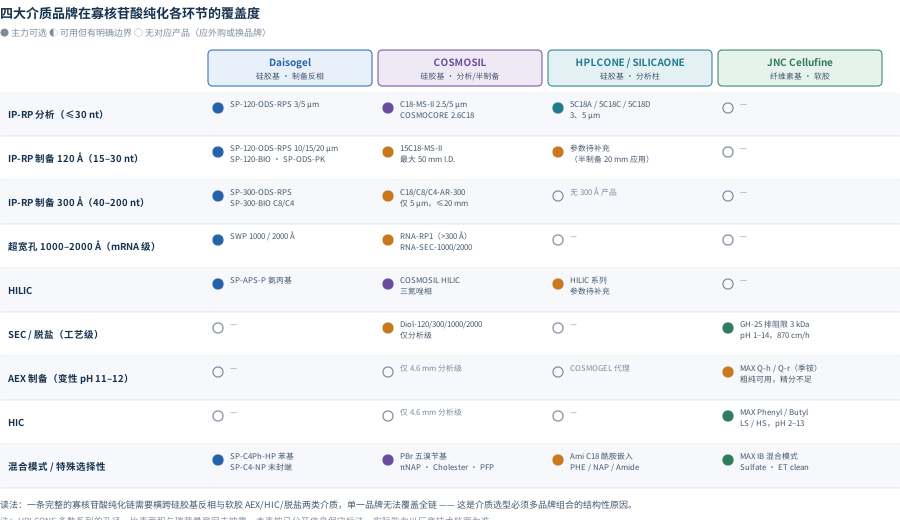
The preceding chapters give parameter windows (pore size, carbon load, capacity, pH tolerance, linear velocity). This chapter maps those parameters onto specific purchasable grades. One point has to be made first:no single brand covers the whole chain of oligonucleotide purification— silica-based media dominate the reversed-phase stage (IP-RP), while AEX, HIC and process-scale desalting must use soft gel or polymer media. Media selection is therefore inherently a multi-brand exercise.
18.1 Daisogel: the workhorse for silica-based preparative reversed phase
The Daisogel product structure follows two clear rules, and once these are understood selection can largely be done in one's head: pore size and surface area correspond in fixed pairs(60/100 Å→450,120→300,200→200,300→100,1000→25,2000→15 m²/g); carbon load falls as pore size rises(the ODS-RPS series: 60 Å 19% → 120 Å 17% → 200 Å 12% → 300 Å 7%). Particle sizes cover 3–5 µm (analytical), 7–20 µm (preparative) and 40–60 µm (coarse separation) — the only one of the four brands with a complete particle size range for industrial scale-up.
| Grade | Pore size Å | Surface area m²/g | Carbon load % | Particle size band µm | Position in oligonucleotide work |
|---|---|---|---|---|---|
| SP-120-ODS-RPS | 120 | 300 | 17 | 3/4/5/7/10/15/20/40–60 | The workhorse for IP-RP preparative work on short ASOs and siRNA single strands.Fully endcapped, reproducible between batches and mature in DAC scale-up. A 20mer (5–8 kDa) is not excluded from 120 Å pores |
| SP-ODS-PK | 100 | 320 | 18 | 8/10 | The base-stable flagship, mechanically strong with low fines generation. Suits commercial processes needing in-line NaOH regeneration and a high cycle count |
| SP-120-BIO (C18) | 120 | 300 | 20 | 5/8/10/15/20 | Wide pH (1.5–11) with NaOH regeneration.Ion-pair systems commonly run at pH 8–9.6, and ordinary silica has a sharply shortened life above pH 8 at 60 °C, so this grade is the safe choice |
| SP-120-BIO (C8 / C4) | 120 | 300 | 12 / 9 | 5/10/15/20 | A wide-pH grade with weaker retention, suiting sequences whose hydrophobicity has risen with modification |
| SP-200-ODS-RPS / BIO | 200 | 200 | 12 / 15 | 3–20 / 8–20 | The intermediate pore transition grade, for 30–50 nt or highly modified molecules |
| SP-300-ODS-RPS | 300 | 100 | 7 | 3/5/10/15/20/40–60 | Long chains (40–200 nt): sgRNA and long ASOs.The low carbon load suits rapid elution of large molecules and avoids irreversible adsorption |
| SP-300-BIO (C8 / C4) | 300 | 100 | 6 / 3 | 5/10/15/20 | The first choice for lipid and cholesterol conjugates— a strongly hydrophobic ligand needs a large pore with the lowest carbon load, or it is locked onto the column |
| SWP 1000 Å / 2000 Å | 1000 / 2000 | 25 / 15 | Bare silica | 3/5/7/10/15/20/40–60 | mRNA-scale very large molecules.The catalogue positions this explicitly for oligonucleotides and macromolecules |
| SP-ODS-P | 100 | 450 | 17 | 3/5/8/10/15 | High surface area and high loading, usable in 100% water, with proprietary endcapping. For high-load applications with short chains and synthetic intermediates |
| SP-ODS-HP | 100 | 450 | 24 | 3/5/10/15 | The highest carbon load and bonding density in the range, for critical pairs that are extremely hard to separate |
| SP-C4Ph-HP | 100 | 450 | 16 | 8/10/15 | A phenyl phase with π–π selectivity. GalNAc sugar clusters and aromatic labels (dyes, DMT) get recognition that C18 and C8 cannot provide |
| SP-C4-NP | 100 | 450 | 10 | 8/10/15 | Non-endcapped C4, where residual silanols give hydrogen bonding selectivity, for the particular cases conventional reversed phase cannot resolve |
| SP-APS-P | 60–300 | 450–100 | 2–5 | 3–60 | Aminopropyl, usable for HILIC or normal phase; an orthogonal method for short-chain, highly polar and hydrophilically modified molecules |
| The SP-P series of bare silica | 60–300 | 450–100 | — | 3–60 | Metal impurities below 10 ppm, a narrow particle size distribution and DAC scale-up; a substrate for normal phase and for in-house bonded phases |
Three structural advantages of Daisogel in the oligonucleotide line
- A complete particle size range:the same chemistry scales continuously from 3 µm analytical through 10/15 µm preparative to 40–60 µm coarse separation, so method transfer does not change selectivity. This is unique among the four brands.
- Pore sizes up to 2000 Å:five bands — 120 / 200 / 300 / 1000 / 2000 Å — cover everything from a 20mer to mRNA scale, so there is no "right pore size but wrong particle size" mismatch.
- A clear base-stable line:the BIO series (catalogue pH 1.5–11, NaOH regenerable) and the PK series (the base-stable flagship) match the actual operating window of pH 8–9.6 in ion-pair systems and the need for CIP.
Note: silica-based media generally do not have the full pH 1–14 tolerance of polymers; where a process explicitly depends on conditions above pH 11–12, this should be assessed honestly and polymer media considered.
18.2 COSMOSIL: a selectivity toolbox for the analytical and semi-preparative end
The strength of COSMOSIL is the diversity of its phase chemistry and its analytical-grade performance, including an RNA series developed specifically for nucleic acids. Naming rule: the number prefixing the grade is the particle size in µm — 5C18-MS-II is a 5 µm C18-MS-II.
| Grade | Pore size Å | Surface area m²/g | Carbon load % | Particle size µm | pH tolerance | Position in oligonucleotide work |
|---|---|---|---|---|---|---|
| C18-MS-II | 120 (130 for the 2.5 µm grade) | 300(330) | 16(18) | 2.5/3/5/15 | 2–10 | The only phase in the COSMOSIL range compatible with a basic TEA/HFIP (pH 8–8.5) ion-pair system. The 15 µm grade can be packed to 50 mm I.D. × 500 mm, the brand's only preparative-scale route |
| C18-AR-II | 120 | 300 | 17 | 3/5/15 | 1.5–7.5 | Polymeric bonding, strong in acidic mobile phases and with peptides; the pH ceiling of 7.5 means only TEAA at pH 7.0 can be run |
| C18-PAQ | 120 | 300 | 11 | 3/5/15 | 2–7.5 | Usable in 100% aqueous; nucleic acid metabolites, organic acids |
| COSMOCORE 2.6C18(core-shell) | 90 | 150 | 7 | 2.6 | 1.5–10 | The manufacturer already has a phosphorothioate oligonucleotide (PS-DNA) method: 100 mM TEAA / ACN, 10 → 25% B over 10 min, 50 °C, single-base resolution at 40 nt. Fast mass transfer in the core-shell format makes it a strong method development tool (not for preparative work) |
| RNA-RP1 | Ultra-wide pore, above 300 (exact value not disclosed) | Not disclosed | Not disclosed | 5 | 2–7.5 | A dedicated ultra-wide-pore reversed phase for nucleic acids. ssRNA 100–5000 nt, dsRNA 80–500 bp. Manufacturer's conditions: 100 mM TEAA pH 7.0 / ACN, 5 → 13% B over 20 min, 65 °C (40 °C for duplexes). Maximum 10 mm I.D., semi-preparative scale |
| C18 / C8 / C4 / Ph-AR-300 | 300 | 150 | 12 / 7 / 6 / 7 | 5 only | 1.5–7.5 | The four wide-pore siblings. C4-AR-300 (6% carbon) is the ideal low-retention phase for lipid conjugates; C8-AR-300 (7%) suits GalNAc conjugates. Limitations: 5 µm only, maximum 20 mm I.D., pH ≤7.5 |
| PBr (pentabromobenzyl) | 120 | 300 | 8 | 3/5 | 2–7.5 | The manufacturer lists oligonucleotides explicitly as a recommended application; the polarizability of the bromine atoms gives selectivity C18 does not have, and it also suits PEGylated products |
| πNAP / PYE / NPE / PFP | 120 | 300 | 11 / 18 / 9 / 10 | 3/5 | 2–7.5 | π–π and charge transfer selectivity; nucleobases and nucleosides, isomers, halogenated and fluorinated modifications |
| Cholester | 120 (130 for the 2.5 µm grade) | 300(330) | 20(21) | 2.5/3/5 | 2–7.5 | A cholesterol bonded phase with strong shape selectivity.Note: at 20% carbon it is far too retentive for lipid conjugates and should not be used for them |
| COSMOSIL HILIC | 120 (130 for the 2.5 µm grade) | 300(330) | Not disclosed | 2.5/5 | 2–7.5 | A triazole phase with weak anion exchange character; an orthogonal axis for short-chain and hydrophilically modified molecules, USP L104 |
| Diol-120 / 300 / 1000 / 2000-II | 120–2000 | Not disclosed | Diol | 5 | Not disclosed | SEC analysis: duplex integrity and aggregates. Analytical grade, not for process desalting |
| RNA-SEC-1000 / -2000 | 1000 / 2000 | Not disclosed | Hydrophilic bonding | 5 | 2–7.5 | Dedicated SEC for mRNA and long RNA; 20 mM phosphate buffer pH 7.0, 40–65 °C |
| C18-PREP / C18-OPN / SL-II PREP | 120(SL 60) | 300(500) | 19 (OPN, non-endcapped) | 40 / 50 / 75 / 140 | — | Bulk media at open-column grade, in 100 g–1 kg packs; for coarse separation and pretreatment, not high-resolution preparative work |
Two boundaries to know before using COSMOSIL for oligonucleotides
- A pH / pore size mismatch:the wide-pore phases best suited to large molecules (the four AR-300 grades, Protein-R, RNA-RP1) all have a pH ceiling of 7.5, so only TEAA at pH 7.0 can be run and the basic TEA/HFIP or HAA systems cannot; while the only phase tolerating pH 10, C18-MS-II, has narrow 120 Å pores. This means COSMOSIL has no answer for long chains in a basic system.
- A particle size / column diameter mismatch:the only 50 mm I.D. preparative column is a 15 µm, 120 Å phase; the 300 Å wide-pore phases come only in 5 µm at a maximum of 20 mm; RNA-RP1 comes only in 5 µm at a maximum of 10 mm. The better the pore size fits, the smaller the scale that can be reached. Bulk media of 5–20 µm are not sold openly (enquire case by case), and the manufacturer offers no DAC products or packing services.
Conclusion:COSMOSIL's reliable range in the oligonucleotide field is Analysis and method development(COSMOCORE 2.6C18, RNA-RP1, PBr, HILIC) together with small-scale preparative work on short chains (15C18-MS-II at 50 mm I.D.). Industrial preparative work on long chains has to move to the Daisogel 300 Å / SWP range.
18.3 HPLCONE / SILICAONE: analytical columns and method development
HPLCONE is a column brand built on SILICAONE ultra-pure spherical fully porous silica. The published substrate specifications are silica purity ≥99.99% with total metal impurities below 10 ppm, with 3 µm and 5 µm analytical particle sizes, and a usable pH range of 1.5–12 for the ODS stationary phase.
| Series | Chemical characteristics | Published parameters | Position in oligonucleotide work |
|---|---|---|---|
| 5C18A / C18A | ODS with a high surface area, giving high retention and high loading; usable with a 100% aqueous mobile phase | Particle size 3 / 5 µm | The manufacturer lists peptides and nucleotides explicitly as applications. Suits IP-RP analysis and method development for short oligonucleotides and nucleotide intermediates |
| 5C18C / C18C | High-density bonding with full endcapping, strongly acid and alkali resistant, regenerable with NaOH | Pore size 12 nm (120 Å), narrow particle size distribution | The base stability matches the pH 8–9.6 operating window of ion-pair systems and the need for alkaline CIP; 120 Å matches chains up to 30 nt |
| 5C18D / C18D | A special bonding chemistry keeps the alkyl chains extended, fully endcapped; very strong retention in aqueous conditions, suiting LC-MS | Not disclosed | The manufacturer lists nucleotides, oligosaccharides, small peptides and organic acids; suits LC-MS analysis of short-chain and highly polar molecules |
| Ami C18 | An amide-embedded C18 with hydrophobic, dipole and hydrogen bonding interactions combined; stable in 100% aqueous | Not disclosed | The embedded polar group improves peak shape for basic and chelating compounds; a selectivity alternative to conventional C18 |
| PHE / NAP / Amide / PH6-3 | Phenyl, naphthyl, amide and other specialty bonded phases | Not disclosed | π–π and hydrogen bonding selectivity, for critical pairs conventional reversed phase cannot resolve (probe products carrying aromatic labels) |
| HILIC | Hydrophilic interaction chromatography | Not disclosed | An orthogonal axis for short-chain, highly polar and hydrophilically modified molecules |
| SIL | Ultra-pure spherical fully porous bare silica, normal phase | Purity ≥99.99%, metals below 10 ppm, 3 / 5 µm | Normal-phase separation and a substrate for in-house bonded phases |
| NH PLUS | Polymer-based bonded amino | Not disclosed | Dedicated to carbohydrate analysis; longer-lived than a conventional amino column, alkali washable, with little retention drift. Relevant to analysis of the sugar components of GalNAc clusters |
| COSMOGEL | Non-silica-based ion exchange | Not disclosed | Ion exchange separation |
The current position of HPLCONE and the information gaps To be supplied
- On the published information, HPLCONE is positioned as an analytical column brand: particle sizes are 3 and 5 µm, and the application chromatograms show three formats — 4.6×150 mm, 4.6×250 mm and 20 mm I.D.×250 mm (semi-preparative).
- Parameters not disclosed by the manufacturer: surface area, carbon load and endcapping detail for each series (apart from 5C18C and 5C18D), pressure rating and efficiency figures; pore size for every series other than the 12 nm of 5C18C; and whether 10–20 µm preparative particle sizes, kilogram-scale bulk media and DAC packing capability are available.
- Whether there is a 300 Å or larger pore product is likewise undisclosed— and that band is exactly what long-chain oligonucleotides (40–200 nt) and conjugates require for purification.
We suggest completing the table above from the manufacturer's technical file or catalogue; no speculation is made here.
18.4 JNC Cellufine: filling in AEX, HIC and process-scale desalting
The first three brands are all silica-based reversed-phase systems. The three parts genuinely missing from the oligonucleotide purification chain — denaturing AEX, HIC and process-scale desalting — need soft gel media. Cellufine is a crosslinked cellulose substrate, and the trade-offs against agarose, polymethacrylate and PS-DVB need to be set out clearly.
| Grade | Particle size µm | Ligand / ionic capacity | Capacity and alkali tolerance | pH tolerance | Position in oligonucleotide work |
|---|---|---|---|---|---|
| Anion exchange (denaturing AEX must use a strongly basic quaternary ammonium type) | |||||
| Cellufine MAX Q-h | 40–130 | Q quaternary ammonium 0.13–0.22 meq/mL | BSA DBC 225 mg/mL (high for the industry); CIP with 0.5 M NaOH | 2–12 | The first choice for AEX coarse purification and capture:removing the cluster of failure sequences, process salt and residual protecting groups, or as a load-reducing step before reversed phase |
| Cellufine MAX Q-r | 40–130 | Q quaternary ammonium 0.10–0.20 meq/mL | BSA DBC 141 mg/mL | 2–12 | A high-recovery, high-durability type, replacing Q-h where recovery comes first |
| Cellufine MAX Q-hv | 40–130 (mean 90) | Quaternary ammonium 0.04–0.07 meq/mL (deliberately low) | BSA 120 mg/mL;0.5 M NaOH for 15 min repeated more than 100 times with no loss of performance;600 cm/h @0.3 MPa | 2–12 | Low ligand density, high flow rate and very strong alkali cycling tolerance; suits commercial processes with frequent CIP |
| Cellufine Q-500 (classic) | 40–130 | Quaternary ammonium QA 0.14–0.29 meq/mL | Exclusion limit above 500 kDa; unchanged after 30 days' immersion in 0.5 M NaOH with 1 M NaCl | 2–12 | The highest ionic capacity grade, with a pure cellulose skeleton giving more alkali margin than the MAX series |
| ⚠ MAX DEAE / A-200 / A-500 / A-800 | 40–130 | DEAE weak base tertiary amine | BSA 46–197 mg/mL | 2–12 (1–13 for A-800) | Not usable under denaturing conditions:the DEAE tertiary amine has a pKa of about 9–9.5 and is almost completely deprotonated at pH 11–12, losing its charge and unable to bind oligonucleotides. Usable only under non-denaturing, neutral conditions |
| Hydrophobic interaction chromatography (HIC) | |||||
| Cellufine MAX Butyl | 40–130 | Butyl | BSA ≥4–9 mg/mL; BSA elution recovery above 70% (the weakest binding); 0.5 M NaOH, 121 °C for 20 min | 2–13 | The low-retention grade for DMT-on HIC:the weakest binding with the highest recovery, suiting DMT-on crude material that is already strongly hydrophobic |
| MAX Phenyl / Phenyl LS | 40–130 | Phenyl / low-substitution phenyl | BSA ≥11 / ≥9 mg/mL; recovery above 35% / 65% | 2–13 | Grades with stronger binding; LS (low substitution) balances recovery against retention |
| Cellufine Phenyl EX | 40–130 | Phenyl | BSA adsorption 13 mg/mL; tolerates 0.5 M NaOH, 70% EtOH, 6 M guanidine, 6 M urea, 121 °C for 20 min; validated for over 60 reuses | 2–13 | The grade with the widest chemical compatibility, tolerating the presence of denaturants |
| Gel filtration / desalting | |||||
| Cellufine GH-25 | 40–130 | Crosslinked cellulose, exclusion limit 3 kDa (sharp) | pH 1–14; unchanged after 30 days in 0.1 M NaOH; no bed collapse at 870 cm/h on a large column (about twice that of an equivalent dextran gel); recovery 98–100%; no degradation over 250 days / 1000 cycles; 121 °C for 30 min | 1–14 | The product in the whole range that fits oligonucleotide processes best:oligonucleotides of 10mer and above pass in the void volume with full recovery; pH 1–14 covers every denaturing condition; urea, guanidine, SDS and organic solvents can all be removed at the same time. A direct replacement for classic dextran gel desalting media, with better rigidity and about twice the flow rate |
| Cellufine GCL-2000HF | 40–130 | Spherical crosslinked cellulose | Fractionation range about 1.4–660 kDa; tolerates 0.5 M NaOH, 8 M urea, 6 M guanidine | Swelling under a pH change below 3% | Wide-range gel filtration; preparative separation of duplexes and aggregates |
| Mixed mode and supporting units | |||||
| Cellufine MAX IB | Mean 90 | Polyallylamine with some butyl (primary amine plus hydrophobicity) | BSA ≥60 mg/mL;CIP 0.5 M NaOH | — | Mixed mode flow-through polishing; worth exploring for separations such as conjugated versus unconjugated species where the charge is the same but the hydrophobicity differs |
| Cellufine ET clean L / S | 40–130 | Poly-ε-lysine | LPS reduced from 1500–32000 to below 10 pg/mL with protein recovery of 95–98%; tolerates 0.2 M NaOH with 2 M NaCl | — | Endotoxin removal (of particular concern for CpG products).Note:the ligand is positively charged and will bind electrostatically to a strongly negative oligonucleotide, which is likely to cause product loss; verify at bench scale first |
Trade-offs of a cellulose substrate against the alternatives
| Dimension | Cellulose (Cellufine) | Agarose | Polymethacrylate | PS-DVB |
|---|---|---|---|---|
| Mechanical strength | Better than agarose (below 0.3 MPa, 500–600 cm/h), weaker than the other two | The weakest | Strong | The strongest, allowing 10–15 µm high-pressure columns |
| Alkali tolerance | Good: 0.5 M NaOH for routine CIP; the classic series unchanged after 30 days in 0.5 M NaOH with 1 M NaCl; GH-25 at pH 1–14 | 0.5 M NaOH is acceptable | A weakness: the ester bonds hydrolyse under strong alkali | The best: essentially inert to NaOH |
| Non-specific binding | An advantage: a hydrophilic polysaccharide skeleton with low NSB and few leachables | Good | Medium | A disadvantage: strongly hydrophobic, with appreciable NSB for oligonucleotides |
| Particle sizes available | A weakness: only one band, 40–130 µm | Several bands, 34 / 90 µm | Several bands, 20–75 µm | 10 / 15 / 30 µm |
| Cost | Low | Medium to high | Medium | High |
Three limitations that must be stated honestly when using Cellufine for oligonucleotides
- A single particle size band (40–130 µm, a distribution spanning more than threefold)— a structural limitation rather than a shortfall in specification. It cannot deliver the plate count needed to separate N−1, so Cellufine cannot be used for N−1/N fine separation, which requires a 15–30 µm high-resolution polymer Q resin. Cellufine's place is capture and coarse purification, not polishing.
- No oligonucleotide capacity data— every DBC is measured with proteins (BSA, lysozyme, IgG). Oligonucleotides have a far higher charge density, an extended rod-like conformation and entirely different pore accessibility, so protein DBC cannot be extrapolated, and any selection must start from scratch with capacity and recovery trials.
- pH 12 is the stated limit, not a comfortable operating point— because of the dextran scaffold, the MAX series has a pH ceiling of 12 (the classic pure cellulose series reaches 13). Running at pH 12 is at the stated edge with no safety margin; the published alkali tolerance data are all for short exposure or immersion at room temperature, and there is no support for prolonged continuous operation in hot, strong alkali. We suggest keeping the denaturing AEX operating pH at ≤11 to leave margin, or using the classic Q-500 rather than the MAX series.
18.5 Example media configurations for the whole chain, by product type
| Product type | Step 1 (capture / coarse purification) | Step 2 (polishing) | Desalting / buffer exchange | Analysis and QC |
|---|---|---|---|---|
| Short ASO 15–25 nt |
Cellufine MAX Q-h(AEX,pH ≤11) or Cellufine MAX Butyl (DMT-on HIC) |
Daisogel SP-120-ODS-RPS 10/15 µm or SP-120-BIO C18 (where alkaline cleaning is needed) |
Cellufine GH-25 | HPLCONE 5C18C / 5C18A(3 µm) COSMOCORE 2.6C18 (the manufacturer's PS-DNA method) |
| siRNA single strands 21–23 nt |
Cellufine MAX Q-h / Q-r (for each strand separately) | Daisogel SP-120-ODS-RPS or SP-ODS-PK (the base-stable flagship) | Cellufine GH-25 (once before and once after annealing) | Paired denaturing and non-denaturing methods: HPLCONE 5C18C; COSMOSIL Diol-300-II for SEC |
| GalNAc conjugates | Cellufine MAX Q-h (pH/salt dual gradient) or MAX IB mixed mode |
Daisogel SP-120-ODS-RPS SP-C4Ph-HP where π–π selectivity is needed |
Cellufine GH-25 | COSMOSIL PBr (the recommended oligonucleotide phase) HILIC as the orthogonal method: COSMOSIL HILIC / Daisogel SP-APS-P |
| Lipid / cholesterol conjugates | Cellufine MAX Butyl(HIC) | Daisogel SP-300-BIO C4 / C8 (large pore with the lowest carbon load) | Cellufine GH-25 | COSMOSIL C4-AR-300 (6% carbon) |
| Long-chain sgRNA 40–200 nt |
Daisogel SP-300-ODS-RPS(DMT-on) | Daisogel SP-300-BIO C8 or Cellufine MAX Q-h | Cellufine GH-25 / GCL-2000HF | COSMOSIL RNA-RP1(65 °C,TEAA) SEC:RNA-SEC-1000 |
| mRNA-scale very large molecules | Cellufine MAX Q-h | Daisogel SWP 1000 / 2000 Å | Cellufine GCL-2000HF | COSMOSIL RNA-SEC-1000 / -2000 |
| Labelled primers and probes | — | Daisogel SP-120-ODS-RPS(DMT-on) SP-C4Ph-HP is worth trying for aromatic dyes |
Cellufine GH-25 | HPLCONE 5C18A / PHE (dual-wavelength detection) |
| CpG ODN | Cellufine MAX Q-h (high-pH denaturing) | Daisogel SP-120-BIO C18 | Cellufine GH-25 Endotoxin: ET clean (oligonucleotide recovery must be verified first) |
HPLCONE 5C18C; denaturing AEX as the orthogonal method |
Note: this table is a selection suggestion based on each manufacturer's published parameters, intended to narrow the range for bench trials, and is not a performance commitment. All capacities, purities and yields must be calibrated at bench scale for the specific molecule and scale; the Cellufine DBC data are protein-based and must be re-measured for oligonucleotides.
Four hard constraints on media selection and substitution
- A different pore size band means no substitution— the highest-priority constraint. Small molecules and small peptides 60–120 Å; medium peptides 120–200 Å; proteins, large peptides and long-chain oligonucleotides above 300 Å; mRNA scale 1000–2000 Å.
- Substitute like for like— C18 for C18, C8 for C8; crossing phases means redeveloping the method.
- Carbon load within ±3%before claiming "similar selectivity"; a larger difference means "the method must be recalibrated".
- Genuine equivalent / approximate / no equivalent — distinguish the three honestly; where there is no genuine equivalent, offer an approximation and state the limitations. Technical honesty is a long-term asset. The explicit marking of each brand's boundaries and information gaps in this chapter is that principle in practice.
19A four-tier orthogonal framework
20IP-RP analysis: the ion-pair reagent system is the first decision
| System | Concentration / pH | Example gradient | Assessment |
|---|---|---|---|
| A. Pure UV purity analysis(superficially porous C18 2.1×50 mm / 2.7 μm, 65 °C, 0.6 mL/min, UV 260 nm) | |||
| TEAA | 100 mM equimolar, pH about 7 | 10 → 14% ACN / 10 min | The baseline reference, with the weakest resolution |
| HAA (hexylammonium acetate) | 100 mM equimolar, pH about 7 | 29 → 47% ACN / 10 min | Markedly better than TEAA, among the best for separating impurities |
| DBAA (dibutylammonium acetate) | 100 mM equimolar, pH about 7 | 28 → 48% ACN / 10 min | Comparable to HAA |
| TEA / HFIP | 15 mM TEA + 400 mM HFIP,pH 7.8–7.9 | 17 → 30% MeOH / 10 min | Better than TEAA with less sequence dependence; the industry reference standard |
| B. LC-MS systems | |||
| TEA / HFIP (classic) | 15 mM / 400 mM,pH 7.8–7.9 | 10 → 55% MeOH / 15 min | A large gain in sensitivity, but adducts remain |
| TEA / HFIP (medium) | 15 mM / 100 mM,pH 8.6–8.7 | 10 → 70% MeOH / 20 min | Stronger retention |
| TEA / HFIP (low HFIP) | 15 mM / 25 mM,pH 9.4–9.6 | 10 → 64% MeOH / 18 min | HFIP reduced eightfold, with comparable or better resolution |
| HA / HFIP | 15 mM / 25 mM,pH 9.4–9.6 | 10 → 64% MeOH / 18 min | The charge envelope shifts to higher charge states with fewer adducts |
| DBA / HFIP | 15 mM / 25 mM,pH 9.4–9.6 | 5 → 31% MeOH / 13 min | The cleanest spectra with the fewest adducts; but a high risk of system contamination |
Five IP-RP rules worth remembering
- The mechanism and benefit of HFIP:HFIP (pKa 9.3) is highly volatile and evaporates preferentially from the ESI droplet, raising the droplet pH so the ion pair dissociates and releases the oligonucleotide anion. An alkylamine-HFIP system gives LC-MS sensitivity two to three orders of magnitude higher than an acetate/ammonium system: TEA-HFIP can quantify about 250 fmol on a 2.1 mm bore column, whereas an acetate/ammonium system needs 5–20 pmol for a usable signal.
- The optimum pH window is 8–9; above pH 9.5 the proportion of protonated amine falls and retention collapses sharply. A low-HFIP (25 mM) system is already at pH 9.4–9.6, on the edge of collapse, and must be confirmed by measurement.
- Preparation:do not titrate an alkylammonium acetate to pH 7 with acetic acid (buffering capacity is lowest there and batch-to-batch pH drift is large); prepare at pH 8.0–8.5.
- Mobile phase shelf life of one week at most:HFIP and the amine evaporate, causing pH and retention drift, and sodium and potassium adducts increase markedly as the mobile phase ages.
- Empirical gradient slopes:premix mobile phase A = ACN/water 25/75 and B = ACN/water 75/25; with a hydrophilic ion-pairing reagent (TEA) the gradient can be as shallow as 0.1% ACN/min, and with a hydrophobic reagent (HA / DBA) use 0.25–0.5% ACN/min.
20.1 Column temperature, pore size and hardware
- Three reasons for a column temperature of 50–80 °C:(1) it breaks secondary structure (hairpins, G-quadruplexes), avoiding split and tailing peaks; (2) it raises mass transfer and lowers viscosity, improving efficiency for large molecules; (3) it makes N−1 and other homologues elute by chain length in an orderly way, reducing sequence dependence. A conventional single-stranded ASO defaults to 60 °C; GC-rich and G-rich sequences use 80–90 °C; siRNA denaturing methods use 75 °C and non-denaturing methods 40 °C or below (typically 20 °C). Note that high temperature with high pH accelerates stationary phase degradation: a silica-based column at pH 8.5–9.5 and 80 °C is at the tolerance boundary, so hybrid particles or a polymer substrate should be chosen.
- Manufacturers disagree on pore size To be measured: the general rule is "300 Å for biomolecules above 5 kDa", but oligonucleotide-specific guidance says "130 Å suits single strands of 2–100mer". In practice: use 130 Å for 16–25mer ASOs (the larger surface area usually gives better resolution); use 300 Å for non-denaturing siRNA analysis, sgRNA (about 100 nt) and lipid or GalNAc conjugates. The disagreement suggests 5 kDa is a conservative general boundary, and that the chain flexibility of an oligonucleotide lets it enter smaller pores than a globular protein of the same molecular weight — comparison by measurement on the specific molecule is advisable.
- Metal adsorption is a major problem:oligonucleotides have a high affinity for Fe³⁺ on stainless steel surfaces, causing peak tailing, low recovery, carryover between injections and a first-injection effect. Inert hardware (high-performance surface treatment / PEEK lining / bio-inert) brings carryover below the noise level — and over the last five years this has become standard understanding.
21AEX analysis, HILIC, SEC, LC-MS and CE
21.1 AEX analysis: the pellicular strong anion exchanger is the industry's most common platform
- Structure: an 8 μm non-porous solvent-compatible core with a 130 nm quaternary ammonium functionalized latex layer (5% crosslinked), column capacity about 40 μeq
- No restriction over pH 4–10; pH 2.5–4 and 10–12.5 require an equimolar co-ion; the recommended maximum for denaturing work is pH 12.4; temperature below 85 °C; pressure limit 4000 psi
- Non-denaturing gradient (pH 8): 20–25 mM Tris, NaClO₄ 70 → 202 mM over 22 min (about 5 mM/mL)
- Denaturing gradient (pH 12.4): 20 mM NaOH, NaCl 330 → 900 mM over 31.5 min (about 15 mM/mL), 1.2 mL/min; up to 100% ACN/MeOH can be added as an organic modifier
WAX with chemical derivatization: separating the two classes of impurity that MS cannot resolve
A DEAE weak anion exchange method with derivatization separates all three main classes of PS degradation product at once: column DEAE weak anion exchange 4.6×100 mm / 2.5 μm; A = water; B = 25–30% WAX stock with 50–70% methanol and 5–20% water; the WAX stock is 20 mM Na₃PO₄ with 1 M NaBr and 1 M guanidine hydrochloride at pH about 11.4; gradient 50 → 90% B over 20–30 min; 0.3–0.6 mL/min; the column temperature must be 20 °C or below(to prevent the derivative from degrading). Derivatization uses a polar cysteine analogue (with three ethylene glycol units, MW 266), 30 mM at 52 °C for 45 min at pH 4.91, forming a thiazolidine ring with the aldehyde of the abasic site. It separates depurination / abasic species (−117 and −133 Da), P=O (−16 Da) and deamination (+1 Da), with resolution of 1.66–2.72. Because it contains non-volatile salts it cannot be coupled to MS directly, and needs offline collection or two-dimensional LC-MS.
The +1 Da species overlaps the isotope peak and the −16 Da species is confounded with oxidation, so both must be resolved by orthogonal chromatography rather than MS alone.
21.2 HILIC and SEC
HILIC: an orthogonal axis without ion pairing
- Applies to: short chains (below 15mer), highly polar and hydrophilically modified species (2′-OMe / 2′-F / 2′-MOE / GalNAc clusters)
- The key advantage: no ion-pairing reagent — the system is not contaminated with alkylamine and can share LC-MS with small-molecule and peptide methods; no TEA/HFIP suppression
- Retention mechanism: partitioning into a water-enriched layer with hydrogen bonding and electrostatics, genuinely orthogonal to IP-RP
- Column: hybrid silica amide phase (HILIC), 300 Å, 1.7 μm, inert hardware
- LC-UV: A = 50 mM ammonium salt in water/MeCN 30/70; B = 50 mM ammonium salt in water/MeCN 90/10; 5 → 55% B over 10 min; 0.4 mL/min; column temperature 50 °C. Ammonium acetate, formate and bicarbonate perform equivalently
- LC-MS: sgRNA with 100 mM ammonium acetate and 1% ACN at 75 °C; lipid-conjugated ASO with 25 mM ammonium acetate and 0.25% ACN. The DoE conclusion is that reliable LC-MS is still obtained at an ionic strength as low as 25 mM
- The denaturing / non-denaturing temperature boundary: the duplex is stable below 55 °C and fully melted above 65 °C, so 60 °C is a broad transition zone to be avoided
- Drawback: alkali metal adducts increase appreciably, particularly above 25 nt; the pH is usually 5–7
SEC: duplex integrity and aggregates
- Column: ultra-high-performance SEC, 2 μm, 12.5 nm pores, two 4.6×300 mm columns in series
- Mobile phase: 50 mM phosphate pH 6.7 with 300 mM NaCl and 0.03% NaN₃, 0.2–0.3 mL/min, UV 260 nm
- Alternative SEC-MALS mobile phases: 0.5 M NaCl with 0.1 M EDTA pH 7.5; or 0.1 M Na₂SO₄ with 0.03% NaN₃ in 0.1 M phosphate
- High salt (300 mM NaCl or above) is essential— it screens ionic repulsion between the negatively charged backbone and any residual charge on the stationary phase, without which non-ideal retention appears on top of size exclusion
- Performance: resolves a 19-mer from a 20-mer
- Pore size selection: 12 nm → 10–40 mer; 20 nm → 30–80 mer (up to 100 mer); 30 nm → 60–120 mer and dsDNA of 150–300 bp. Anything above 50 bases cannot enter the small pores and elutes together at the exclusion limit
- Uses: siRNA duplex integrity (dsDNA of the same length elutes in a smaller volume than ssDNA), aggregates / HMWS, absolute molecular weight by SEC-MALS, SV-AUC
- LNP encapsulation efficiency: SEC can separate free from encapsulated siRNA The specific parameters were not obtained; the industry more commonly uses a fluorescent dye ± Triton lysis method
21.3 LC-MS and CE
| Platform | Key parameters | Typical result |
|---|---|---|
| ESI-TOF platform | Negative ion mode; capillary 0.8 kV; cone 40 V; source 120 °C; desolvation 400 °C / 6.5 bar N₂; mass range 400–5000 m/z; acquisition 2 Hz; Bayesian deconvolution. Method: hybrid silica Oligo C18, 1.7 μm, 130 Å, 2.1×100 mm; A = 40 mM HFIP + 7 mM TEA; B = 20 mM HFIP + 3.5 mM TEA in 50% methanol; 300 μL/min; column 60 °C, samples 6 °C | 14 impurities detected in a 21-mer sample, the smallest at 0.18% of the UV peak area; mass accuracy better than 15 ppm |
| QTOF | High-resolution MRM in negative mode, monitoring charge states −4 to −11 with CID fragmentation; 20 ppm mass tolerance, configured for 77 possible transformations. Method: hybrid silica Oligo C18, 2.1×150 mm, 1.7 μm, 70 °C; A = 15 mM DIEA + 35 mM HFIP in water; B = methanol; 5 → 50% B over 9 min plus a 2 min wash at 95% B; 0.3 mL/min; 0.2 μg loaded | 43 potential impurities detected.DIEA/HFIP is the recent trend replacing TEA/HFIP(a hindered amine, giving fewer adducts) |
| CGE capillary gel electrophoresis | Capillary: polyvinyl alcohol (PVA) coated 100 μm or weak anion exchange coated 100 μm; total length 33 cm, effective length 8.5 cm (short-end injection) or 24.5 cm; background electrolyte 200 mM Bis-Tris + 200 mM boric acid; sieving medium 27% PEG 35,000 (20% ACN may be added to improve resolution); voltage −25 kV; temperature 30 °C; injection −10 kV / 10 s; detection at 260 nm | Resolution of the 20-mer/21-mer critical pair R = 2.14–2.28; RSD below 1% over 12 consecutive injections; run time 8.5–14 min at the short end |
De-adduction strategy:Na⁺/K⁺ adducts are the main interference. In IP-RP the protonated alkylamine competes with alkali metals for backbone binding sites and suppresses adduct formation; more hydrophobic or more hindered amines (HA, DBA, DIEA) give fewer adducts; desalt during sample preparation (ethanol precipitation, desalting column, ultrafiltration); use low-sodium glassware or polypropylene throughout. An ageing mobile phase increases sodium and potassium adducts markedly — another reason for the one-week shelf life.
Sequence characterisation McLuckey nomenclature is used (the a/b/c/d and w/x/y/z series), with a-B and w ions dominating for DNA; fragmentation depends strongly on precursor charge state, chain length, chemical modification and collision energy, and must be optimised charge state by charge state; a modified backbone (full PS + 2′-MOE, for example) can be covered more completely with ECD / EThcD. Supplementary approaches include nuclease P1 digestion with LC-MS (to assess consistency of thiophosphate stereochemistry) and cyclic ion mobility (cIMS) (to separate isomeric impurities).
The place of CE:CGE separates by migration through a sieving medium according to charge-to-size ratio, which is different from both IP-RP (hydrophobicity) and AEX (charge) — a third orthogonal axis. Its advantages are high resolution of N−1/N+1, no organic solvent and a very small sample requirement; its drawbacks are quantitative precision slightly below HPLC, difficulty coupling directly to MS, and the need to normalise peak areas by migration time. cIEF has limited value for pure nucleic acids (no isoelectric point differences) and is used mainly for protein–oligonucleotide conjugates No authoritative literature was found for routine use on drug substance; we suggest not including it in routine release。
22A systematic review of the impurity profile
The classification framework in general industry use comes from a safety working group's recommendation: it divides impurities into A process-related impurity(residual solvents, metals, reagents, amidite-derived impurities, resin leachables, bioburden / endotoxin) and product-related impurities(sequence variants, backbone variants, modification variants, degradation products).
| Impurity type | Chemical nature | Mass difference | Best method of detection |
|---|---|---|---|
| N−1 / N−x deletions | A single coupling failure with incomplete capping; or incomplete detritylation followed by coupling failure | −1 nucleotide unit (about −300 to −350 Da for PS-2′-MOE) | Denaturing AEX (pH 12) is best; IP-RP can separate them; CGE is orthogonal. The N−1 level is a diagnostic indicator of detritylation and coupling efficiency |
| N+1 / long chains | Double coupling (excess amidite / over-detritylation), dimer impurities in the amidite | +1 nucleotide unit | AEX、IP-RP、CGE |
| Depurination / abasic | Cleavage of the A/G glycosidic bond under acidic detritylation → an abasic site, which can undergo further β-elimination and chain scission | −117 / −133 Da | Abasic species almost co-elute with the main peak in IP-RP → WAX with aldehyde derivatization, or AEX, is needed; confirm by MS |
| P=O desulfurization impurity | Incomplete sulfurization (sulfur transfer reagent), P=S → P=O | −16 Da | AEX is best (differences in charge and pKa); IP-RP resolves them poorly; on MS they are confounded with oxidation. ³¹P NMR quantifies the degree of sulfurization |
| Rp/Sp diastereomers | Each PS linkage is a chiral phosphorus centre, so n linkages → 2ⁿ isomers | 0 (isomeric) | Not separated, only characterised: ³¹P NMR with principal component analysis, circular dichroism, NP1 digestion LC-MS, metal ion complexation chromatography, RP-SAX in series, cIMS. Treated as a comparability attribute rather than an impurity |
| Incomplete deprotection | Residual base protecting groups (G isobutyryl, A benzoyl, C acetyl); residual cyanoethyl CNET (added to the O4/N3 of T); 5′-DMT-on | Each with a characteristic mass increment | IP-RP (hydrophobicity rises markedly and DMT-on retention is greatly extended) plus HRMS |
| Deamination | C → U,5-Me-C → T | +1 Da | Chromatography is essential (it overlaps the isotope peak and MS alone cannot resolve it); the WAX method can separate it |
| Oxidation / adducts | Base oxidation (8-oxo-G), Michael adducts, resin / reagent adducts | Variable | IP-RP-HRMS |
| Depyrimidination | Cleavage of the pyrimidine glycosidic bond (far slower than depurination) | Similar to abasic species | As for depurination |
| Residual siRNA single strands | Stoichiometric deviation during annealing | Different chain lengths / sequences | Non-denaturing IP-RP (20 °C), non-denaturing AEX, SEC, HILIC below 55 °C |
| Mismatched duplexes | Annealing side products (SS:SS, AS:AS) | Variable | Non-denaturing IP-RP / non-denaturing AEX |
| Conjugation-related impurities | Unconjugated species, partial conjugation (1× or 2× rather than 3×), linker degradation, acetyl groups not removed from the sugar | Masses corresponding to each arm | IP-RP-UV/MS (large hydrophobicity differences); on the preparative side, mixed mode or a dual pH/salt gradient AEX is needed |
| Elemental impurities | Fe, Ni, Cr (stainless steel), Pd (coupling catalysis), Na, Mg, Cu remaining from synthesis / purification | — | ICP-MS (ICH Q3D applies) |
| Residual solvents | ACN, pyridine, toluene, dichloromethane, trichloroacetic acid, ethanol, methanol, THF | — | GC headspace (ICH Q3C applies): ACN 410 ppm, pyridine 200 ppm, toluene 890 ppm, DCM 600 ppm (all Class 2) |
| Endotoxin / bioburden | Introduced by raw materials, the water system or purification | — | LAL / rFC (USP <85>), microbial limits (USP <61>/<62>); limits calculated from route of administration and maximum daily dose No general value |
Estimating the N−1 level theoretically
With coupling efficiency η and chain length n, full-length product ≈ η(n−1); total N−1 series ≈ (n−1)·(1−η)·η(n−2). For a 20mer at η = 99.5%, full length ≈ 90.9% and the N−1 total ≈ 8.6% (before any removal by capping and purification). This is why purification after synthesis is essential, and why N−1 is usually the largest single impurity.
23The release testing panel
| Item | Method | Point |
|---|---|---|
| Description / appearance | Visual | White to off-white lyophilised solid / powder |
| Identification | Chromatographic retention time matching the reference standard, plus intact molecular weight by LC-HRMS (deviation below 15–20 ppm, or an absolute criterion of ±1–2 Da) | MS-based identification is a regulatory expectation that distinguishes oligonucleotides from small molecules; MS/MS sequencing or a UV spectrum may be added |
| Level | UV A260 with the extinction coefficient | Base composition method ε₂₆₀ = (nA×15.4 + nC×7.4 + nG×11.5 + nT×8.7)×0.9×10³ M⁻¹cm⁻¹ (7.2 for C and 9.9 for U in RNA), where 0.9 is the base stacking correction factor; the nearest-neighbour method is preferred as more accurate. Duplexes need a hypochromicity correction: h = 0.059·fGC + 0.287·fAT(typically about 0.2). Note that PS and 2′ modifications change ε, which must be calibrated experimentally or taken from supplier data |
| Purity / impurities | IP-RP-UV at 260 nm (primary) plus AEX (orthogonal) plus CGE (optional) | Report main peak area %, largest single impurity % and total impurities % |
| Water content | Karl Fischer (volumetric / coulometric) | The sodium salt is strongly hygroscopic and water content is often 5–15%, so assay results must be reported on a dried basis |
| Residual solvents | GC headspace (ICH Q3C) | See the impurity table |
| Elemental impurities | ICP-MS or ICP-OES (ICH Q3D) | Pd, Fe/Ni/Cr and Cu in particular |
| Counter-ion | Ion chromatography (cation exchange with conductivity) or ICP-OES / ICP-MS / AAS | Report the stoichiometric ratio of Na⁺ to phosphorus (in theory one Na⁺ per backbone linkage), used to correct assay and confirm batch-to-batch consistency |
| pH | Measured in aqueous solution (10 mg/mL, for example) | — |
| Duplex-specific | UV melting Tm / DSC / microfluidic modulation spectroscopy; SEC-UV, SEC-MALS, SV-AUC | Indicators of duplex integrity and conformation; aggregates and HMWS |
| Bacterial endotoxin / microbial limits | LAL / rFC (USP <85>); USP <61>/<62> or <71> | Drug substance for injection is usually controlled for bioburden |
| ³¹P NMR | Quantifies the degree of sulfurization (PS vs PO) and consistency of the Rp/Sp distribution | The pharmacopoeial amidite reference standard is itself characterised for Rp/Sp by ³¹P NMR |
| Method validation | USP <1225> / ICH Q2(R2) | USP <1225> has been revised to align with the ICH Q2(R2) and Q14 lifecycle concept. Validation elements: specificity, system suitability, LOQ, LOD, linearity and range, precision, accuracy, robustness |
24The regulatory view: which ICH guidelines apply and which do not
| Guideline | Applies? | Notes |
|---|---|---|
| ICH Q3A (impurities in new drug substances) | Explicitly excluded from scope | Its principles are often referred to but not strictly enforced |
| ICH Q3B (impurities in new drug products) | The same reasoning By inference | Derived from the Q3A system |
| ICH Q6A (specifications: chemical entities) | Explicitly excluded from scope | — |
| ICH Q6B (specifications: biotechnological products) | Framework borrowed | A chemically synthesised oligonucleotide is not a biotechnological product, so Q6B does not apply directly; but its classification framework of "product-related substances / product-related impurities / process-related impurities" is widely borrowed |
| ICH Q3C (residual solvents) | Suited to | Controlled by GC headspace |
| ICH Q3D (elemental impurities) | Suited to | Controlled by ICP-MS |
| ICH Q11 (development and manufacture of drug substances) | Suited to | A commercially purchased amidite with a defined impurity profile can usually serve as a starting material |
| ICH Q2(R2) / Q14 | Suited to | Method validation and method development |
The four-class impurity proposal and thresholds — distinguish "industry proposal" from "current regulation"
The four classes(proposed by an industry safety working group in 2017): Class I impurities that are also major metabolites (truncated species, for example) → regarded as already qualified, needing no safety assessment; Class II impurities containing only natural nucleic acid building blocks → no assessment needed, as they occur endogenously; Class III sequence variants (n−1, n+1) → no formal study needed (levels are too low to produce a pharmacological effect); Class IV impurities containing novel structural units (abasic sites, CNET and so on) → formal toxicological qualification required.
Threshold proposal:a reporting threshold of 0.20% (against 0.05% in ICH Q3A for small molecules) and an identification threshold of 1.0%. The rationale is that oligonucleotide impurities "are often difficult to separate chromatographically" and that solid-phase synthesis "offers almost no opportunity to remove impurities".
But it must be stated clearly: these thresholds have not been set by the FDA or EMA. Matters are still handled case by case, and the regulators have not adopted the limits proposed by industry.
Three regulatory requirements a chromatography engineer should remember
- "A single method generally cannot technically separate all product-related impurities" → orthogonal multiple methods are the default expectation.
- "Where N−1 / N+1 together exceed 1.5%, they must be characterised separately."
- "Reuse of the preparative column must be appropriately validated"; the annealing conditions for siRNA (buffer composition, time, temperature) must be specified, and the volume ratio of the two single strands optimised to minimise unhybridised excess single strand — annealing is listed as a critical process step.
Key points of the control strategy:(1) define diagnostic specified impurities (the N−1 level as an indicator of complete detritylation, for example) and list them separately in the specification; (2) set intermediate specifications and hold times; (3) justify the amidite as a starting material under ICH Q11 and control its reactive impurities; (4) base impurity qualification on stability data, safety data, the proposed clinical dose and impurity levels in the toxicology batches.
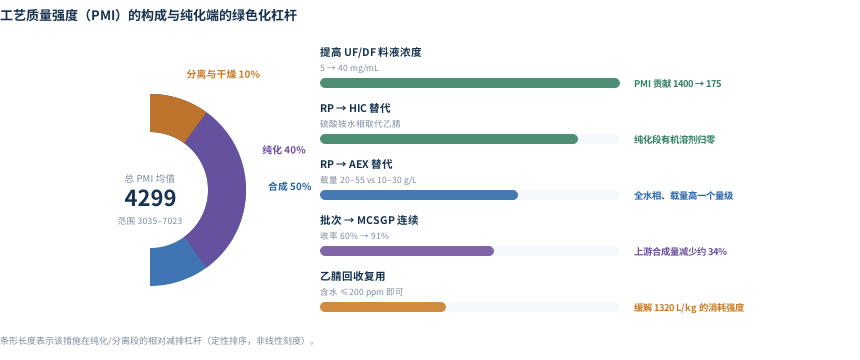
Materials are about 51% water and about 49% organic (of which wash solvents account for half);detritylation alone accounts for nearly half the material in the synthesis stage。
25How to read the yield figures correctly
| Stage | Typical value | Notes |
|---|---|---|
| UV pure yield after synthesis | Mean 61% | Platform-level data (5-10-5 MOE gapmer) |
| Single-step AEX preparative (20mer) | 74–90%(94–97% purity) | Consistent published data from four suppliers |
| Single-step IP-RP (20mer) | 85–95%(96–99.9% purity) | Manufacturer application literature |
| Single-step IP-RP (60mer) | 20–25%(purity only 62–70%) | Direct evidence that a single step is not viable for long chains |
| Batch chromatography AEX (91.9% purity target) | 60.2% | The batch baseline in the continuous chromatography comparison |
| LNA gapmer, whole process | 42% overall yield(1.9 mmol → 4.00 g, 88% UV purity) | A published patent example |
Clarifying "typical purification yield 40–70%"
This range describes the cumulative yield of multi-step orthogonal purification(two steps at 70–80% each → 49–64% cumulative; batch chromatography baseline 60%), and does not describe single-step purification of a short chain(a single step is usually 75–95%). Confusing the two in process discussions or economic modelling leads to serious misjudgement.
26Green chemistry levers (in order of effect)
| No. | Measure | Quantified effect | Notes |
|---|---|---|---|
| 1 | Raise the feed concentration for UF/DF | PMI contribution 1400 → 175 | 5 mg/mL (200 L/kg) → 40 mg/mL (25 L/kg), on seven diavolumes. Moving to continuous diafiltration saves about 30% more water. The largest single effect and the easiest to implement |
| 2 | Replacing RP with HIC | Organic solvent in the purification stage goes to zero | Aqueous ammonium sulfate replaces acetonitrile; on-column detritylation also saves a unit operation |
| 3 | Replacing RP with AEX | Loading rises by about an order of magnitude | AEX is fully aqueous with a loading of 20–55 g/L against about 10–30 g/L for RP; the cost is that the desalting burden moves to TFF |
| 4 | Batch → MCSGP continuous chromatography | Yield 60% → 91%, solvent −30 to −75% | A yield gain at the same purity means about 34% less upstream synthesis is needed, indirectly cutting the largest block of PMI |
| 5 | Acetonitrile recovery and reuse | — | Reusable at 200 ppm water or below |
Acetonitrile supply is a strategic bottleneck
Acetonitrile is a by-product of acrylonitrile manufacture and has been in global short supply several times historically. At a consumption intensity of 1320 L/kg API, acetonitrile supply directly constrains oligonucleotide capacity — which is precisely the commercial driver behind the HIC and AEX routes. Inference This assessment is based on consumption data and general industry knowledge; the sources retrieved did not discuss supply chain risk directly.
27MCSGP multi-column countercurrent gradient purification
The principle is a two-column cycle in which the mixed front- and back-shoulder fractions are recycled continuously between the columns rather than collected and reprocessed, breaking the purity–yield trade-off. Its greatest engineering advantage is that it requires no change of resin or buffer, so an existing batch method can be carried over directly.
| Criterion | Batch baseline | MCSGP(300 cm/h) | Condition |
|---|---|---|---|
| Yield | 60.2% | 91.2% | Column: Q-type agarose, 0.77 cm ID; 10 cm bed height for batch, 2×10 cm (2×5 mL) for MCSGP; gradient 10 → 90% B over 24 CV; elution linear velocities of 150 / 300 / 450 cm/h tested |
| Purity | 91.9% | 91.9% (the same) | |
| Productivity | 3.7 g/L/h | 5.89 g/L/h | |
| Buffer consumption | 2.4 L/g | 2.7 L/g |
In an optimised single-column comparison MCSGP reached 94% yield against 60% for batch. The manufacturer's overall claims (to be treated with caution): an absolute yield gain of 10–50% at the target purity, with typically above 90% recovery at 92% purity for oligonucleotides; solvent consumption −75%, in-process testing −96%, production time −40 to −70%. Peer-reviewed evidence: a dedicated paper on two-column AEX MCSGP continuous purification of a conjugated siRNA, and a methodology study using dynamic UV control to improve robustness.
Be sure to distinguish MCSGP from SMB
In the oligonucleotide field, SMB (simulated moving bed) has no reported industrial application— SMB is fundamentally an isocratic binary separation, whereas oligonucleotides require gradient elution and are complex multi-component mixtures. MCSGP (gradient multi-column) is the technology that fits. SMB's established territory is chiral small-molecule separation. Confusing the two terms in a technical discussion immediately reveals a lack of expertise.
28TFF, drying and single use
- TFF is the industry standard desalting unit:in the processes of marketed products there is one UF after synthesis and another after chromatography (specifically to remove mobile phase components). Membrane cut-off is set at 1/3–1/5 of the target molecular weight, that is 1–3 kDa MWCO (5 kDa is usable for an siRNA duplex)Inference。
- TFF doubles as a reaction unit:a published patent uses 100 mM sodium acetate pH 3 with 40% ethanol as the TFF buffer, removing acid-labile protecting groups while desalting; the example scale is a 0.1 m² membrane cassette processing 4.2 L, with an acetate concentration range of 50–250 mmol/L.
- Lyophilisation is the industry default final state:the drug substance of every marketed siRNA and ASO finishes with lyophilisation. Spray drying is discussed as a continuous alternative (with clear advantages in energy use and cycle time), but no published evidence was found of a marketed oligonucleotide drug substance using spray drying。
- Single-use chromatography has limited applicability in this field Inference: (1) commercial batches are 10–40 kg with column volumes of tens of litres, so single-use cost is uneconomic; (2) the RP route uses a high proportion of acetonitrile, limiting the compatibility of single-use plastics; (3) oligonucleotides carry no biological contamination risk, so single use's main selling points (eliminating cross-contamination and cleaning validation) are worth less. No industrial case of single-use preparative chromatography for oligonucleotides was found.
29A decision table for purification process development
| Application | Preferred route | Starting point for the key parameters |
|---|---|---|
| 15–25 nt PS-ASO Optimising for PMI and cost |
DMT-on HIC (detritylation on the column) → AEX polishing → UF/DF → lyophilization | HIC: phenyl / hexyl methacrylate, (NH₄)₂SO₄ 1.5 M → 10 mM, loading 25–45 g/L, bed height 20 cm; AEX: pH 11–12, NaCl 0 → 1 M over 20 CV, loading 20–40 g/L, 120 cm/h |
| 15–25 nt Optimising for maximum purity | Denaturing AEX → IP-RP → UF/DF | AEX as above; RP: C18 or PS-DVB 10 μm / 120 Å, 0.1 M TEAA pH 7, 2 → 20% ACN, 180–360 cm/h |
| 40–200 nt ASO / sgRNA | DMT-on IP-RP (300 Å) → detritylation (3% DCA) → AEX or RP polishing | 300 Å media, 100 mM HAA pH 7, 30 → 63% ACN, 60 °C. Expect only 60–75% purity from a single step, so plan for two |
| GalNAc and other conjugates (where unconjugated species must be separated) |
Dual pH/salt gradient AEX, or mixed mode (SAX+SCX+C18) | 20 mM Na₂HPO₄ + 15% ACN, pH 8.5 → 11 with NaBr 0 → 1 M at the same time |
| Duplex siRNA | AEX + IP-RP on each single strand → UF/DF → equimolar annealing → concentration → lyophilisation | Annealing ratio, temperature and time are listed as CPPs. Denaturing chromatography cannot be run after annealing, so single-strand purity must meet specification first |
| Aptamers / G-quadruplex sequences | Low-temperature AEX (below 35 °C) or a monolithic column → IP-RP → refolding | 20 mM Na₂HPO₄ + 10% ACN pH 8.5, NaBr 0 → 1 M, 0 → 55% B over 15 min; avoid high temperature and high pH, which destroy the active conformation |
| An existing batch AEX method needing higher yield | Transfer the existing method directly to two-column MCSGP | Same resin, same buffer; expect yield 60% → 91% and solvent −30 to −75% |
30A quick reference for choosing analytical methods
| Analytical objective | First choice | Orthogonal confirmation |
|---|---|---|
| Routine release purity (ASO) | IP-RP-UV,130 Å C18,1.7 μm,60 °C,TEA/HFIP | Denaturing AEX pH 12 (NaCl/NaBr gradient) |
| Maximum N−1 resolution | AEX pH 12.4,NaCl 330 → 900 mM / 31.5 min | IP-RP + CGE |
| P=O impurity (−16 Da) | AEX (IP-RP will not do) | ³¹P NMR to quantify the degree of sulfurization |
| Depurination / abasic | WAX with cysteine-analogue derivatization, 20 °C or below | LC-MS confirmation of −117 / −133 |
| Deamination (+1 Da) | Chromatography is essential (WAX) | High-resolution MS as support |
| Confirmation of intact molecular weight | IP-RP-HRMS (HFIP/TEA or HFIP/DIEA) | HILIC-MS (orthogonal, no ion pairing) |
| Sequence | MS/MS(CID / ECD / EThcD) | Nuclease ladder digestion with LC-MS |
| Residual siRNA single strands | Non-denaturing IP-RP, 20 °C, HA/HFIP | Non-denaturing AEX, SEC, HILIC below 55 °C |
| siRNA single-strand purity | Denaturing IP-RP, 75 °C | Denaturing AEX pH 12 |
| Aggregates | SEC(≥300 mM NaCl) | SEC-MALS / SV-AUC |
| Short chains / highly polar species | HILIC-MS (25–50 mM ammonium acetate) | IP-RP |
| Consistency of PS stereochemistry | ³¹P NMR with principal component analysis | CD, NP1 digestion LC-MS, cIMS |
| Consistency of aptamer conformation | Circular dichroism with UV melting | Non-denaturing SEC / IEX |
| Fully orthogonal purity | CGE (Bis-Tris / boric acid / PEG 35000) | — |
31Principal information gaps (marked as such)
In writing this document we systematically recorded 10 places where published information is genuinely insufficient —5 on the process side、5 on the analytical side, covering industrial-scale loading and resin lifetime, the specific purification conditions of marketed products, the breakdown of solvent usage, conflicting statements on pore size boundaries, calibration of extinction coefficients for modified species, release limits and recommended membrane MWCO values. At these points no inferred values have been used as filler; each is marked instead as "published information insufficient or from a single source". The item-by-item description of each gap and its scope of impact is an internal record and requires a passcode to view.
The list of information gaps · passcode required
To see the specific content of these 10 gaps, their scope of impact and the suggested in-house verification approach, you may , or to obtain it.
Appendix Principal source categories
The technical parameters and process information throughout this document are drawn from five categories of published source, totalling 42 items:Regulatory and pharmacopoeial documents(4)、 Peer-reviewed literature(13)、Patent literature(5)、Chromatography and media manufacturers' application notes / technical white papers(13)、 Industry analyses and reference works(7). All content comes from published regulatory review documents, patents and the published literature, and involves no non-public information from any particular company. The item-by-item source list (journal titles, patent families and document origins) is an internal record and requires a passcode to view.
Source index enquiry
To check the original source of a particular statement, you can , or . The passcode is the same as the one for the source index in Appendix B of "DAC Column Packing Troubleshooting".
Recommended configuration for an oligonucleotide laboratory
The core setup from IP-RP analysis through to preparative purification — once you have read this document, our technical team will map it to specific grades for your sequence, modification profile and target scale