Modified silica and peptide purification: a full analysis reorganized by structural class, separation handle and surface parameters
The difficulty in peptide purification lies not in the target molecule but in how closely the impurities resemble it structurally. The text follows one axis throughout: structural class → critical impurities → separation handle → modified silica → process parameters. It first explains the six adjustable parameters of modified silica and how to derive the separation handle, then works through the impurity profile, surface parameter combination and process notes for seven classes of peptide structure, then draws out the selection rules for pore size, chain length, endcapping and metal content, and finally arrives at process parameter ranges, scale-up and the mapping to Daisogel grades.
Summary Ten core conclusions
1Starting materials and sources of impurities
The difficulty in preparative peptide purification lies not in the target molecule but in how closely the impurities in the crude resemble it structurally. Understanding which step generates each impurity determines which property to look for a difference in.
1.1 Three main source routes
| Source route | Representative products | Order of crude purity | Main impurity types |
|---|---|---|---|
| Solid-phase synthesis (SPPS) | Leuprorelin, triptorelin, cetrorelix, the semaglutide backbone | Crude purity usually 50%–75% | Deletion peptides, truncated peptides, racemates, residual side-chain protecting groups, trifluoroacetylation adducts |
| Recombinant expression | Insulin and its analogues, some fusion peptides | Depends on expression and initial capture | Host protein, misfolded species, enzymatic cleavage by-products, deamidation variants |
| Fermentation and semi-synthesis | Daptomycin, micafungin, telavancin | Fermentation broth is coarsely fractionated on resin before polishing | Lipid chain homologues, pigments, isomerization products, fermentation impurities |
1.2 How small the difference between impurity and main peak is
Most impurities from a synthetic route differ from the target peptide by only one residue, one acyl group or one chiral centre. For a deletion peptide, the change in hydrophobicity from one missing non-polar residue may correspond to only a few percentage points of organic phase in reversed phase; a racemate has exactly the same molecular formula, and its reversed-phase retention difference is often near the limit of detection. This is why preparative peptide work generally uses gradients of the order of 0.1 %B/min — resolution has to be bought from gradient slope and column efficiency.
Impurities close in hydrophobicity to the main peak
- Deletion and truncated peptides: one or more residues short
- Trifluoroacetylation adducts: TFA residues from cleavage and lyophilization forming amides with side-chain amines
- Mono- and di-acylation by-products and lipid chain isomers of lipidated peptides
- Lipid chain homologues of fermentation peptides (differing by one or two carbons)
Impurities barely differing in hydrophobicity
- Racemates and diastereomers: same molecular formula, different configuration
- Scrambled disulfides: same sequence, different disulfide topology
- Deamidation variants: Asn→Asp / iso-Asp, changing one charge only
- Conformational isomers and cyclic dimers of macrocyclic peptides
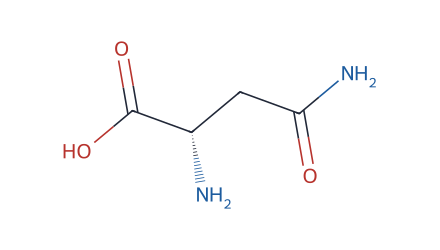
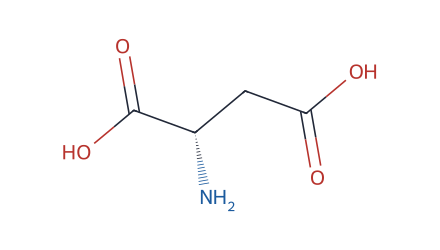
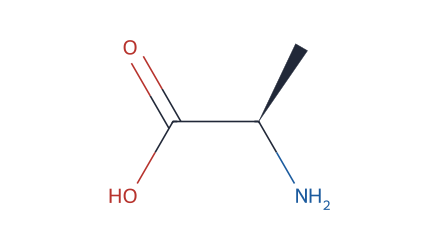
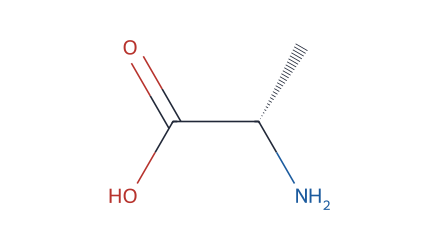
Fig. 1 Four residue-level examples. The middle pair is deamidation before and after: a neutral amide becomes a carboxyl, changing reversed-phase retention little but altering the net charge, so ion exchange resolves it. The right pair is a pair of enantiomers: neither reversed phase nor ion exchange resolves them, so a chiral column or pre-column derivatization is needed. The structures show only the backbone and key functional groups; stereochemistry follows the original literature.
2The role of each substrate: silica, polymer and soft gel
Silica is not the only substrate for preparative chromatography. Choosing it is not a default but a consequence of the pressure, packing scale and resolution required in preparative peptide work.
| Substrate type | Mechanical strength | pH tolerance | Efficiency | Position in a peptide process |
|---|---|---|---|---|
| Spherical porous silica (bonded phase) | Withstands industrial DAC packing pressure | Conventional products about pH 2–8; base-stable grades extend to pH 1.5–11 | High, with particle sizes down to 3 μm | The mainstay of preparative and polishing work; all 59 preparative steps collected fall into this category |
| Polymer microspheres (PS-DVB) | Pressure resistant, with solvent-dependent swelling | pH 1–13 throughout | Lower than silica of the same particle size | Cleaning under strongly alkaline conditions and applications needing special selectivity |
| Macroporous adsorption resin | Soft, low-pressure operation | Wide | Low | Coarse fractionation and decolorization of fermentation broth, as a volume-reduction step before polishing |
| Agarose / dextran soft gels | Low, requiring a low-pressure column | Wide | Low | Affinity capture, IEX and SEC polishing of conjugates |
Why silica dominates peptide polishing
- Efficiency matches a shallow gradient.A gradient of the order of 0.1 %B/min only converts into resolution when efficiency is high enough, and the efficiency of spherical silica at 5–15 μm is beyond what soft gels and resins can reach.
- It withstands DAC packing.Industrial scale requires dynamic axial compression to keep the bed uniform, so the substrate must not fracture under compression and operating pressure.
- The surface chemistry can be tuned finely.Chain length, bonding density, endcapping and pore size can be combined independently, giving a matched surface for each structural class.
- Batch consistency is controllable.Pore size distribution, surface area and metal content can be characterized batch by batch, which suits process validation and regulatory filing.
The limits of a silica substrate are equally clear: a conventional bonded phase run above pH 8 for long periods hydrolyses the siloxane skeleton; where alkaline conditions are required, use a base-stable product or move to a polymer substrate. See Chapter 18.
3Six adjustable parameters of surface modification
In process terms, "modified silica" resolves into six parameters that can be specified independently. These six form the coordinate system for every selection discussion that follows.
| Parameter | Usual values | Direct effect | How it shows in a peptide process |
|---|---|---|---|
| Pore size | 60 / 100 / 120 / 200 / 300 Å, ultra-wide 1000 / 2000 Å | The upper molecular size that can enter the pores, and the surface area | Too small a pore broadens peaks and reduces recovery; too large a pore reduces loading |
| Particle size | Analytical 3–5 μm; preparative 7–20 μm; coarse fractionation 30–50 μm | Efficiency and column pressure | Halving the particle size raises efficiency and roughly quadruples pressure drop, and must match the bed length and the equipment's pressure rating |
| Alkyl chain length | C18 (ODS) / C8 / C4 / alkyl phenyl / aminopropyl | The strength and type of hydrophobic retention | Determines whether the target peptide's retention window falls at a workable organic proportion |
| Bonding density (carbon load) | About 3%–24% | Retention strength, loading, compatibility with aqueous conditions | High carbon load raises loading and retention; low carbon load suits hydrophilic peptides and fully aqueous mobile phases |
| Endcapping | Fully endcapped / non-endcapped | The accessibility of residual silanols | Endcapping suppresses tailing of basic residues; non-endcapped provides additional hydrogen bonding selectivity |
| Substrate metal content | Ultra-high-purity grades keep Al+Fe+Ti+Zr below 10 ppm | Metal catalysis and competition for chelation | A prerequisite for suppressing on-column exchange in disulfide peptides and for maintaining specific activity in radiopeptides |
3.1 What the surface groups actually look like
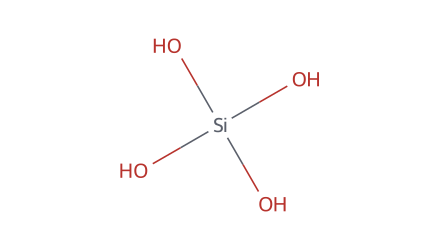
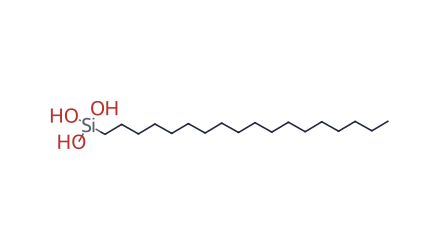
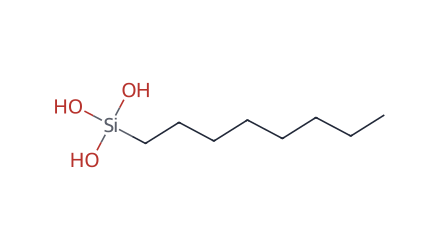
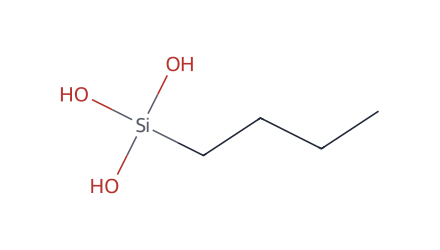
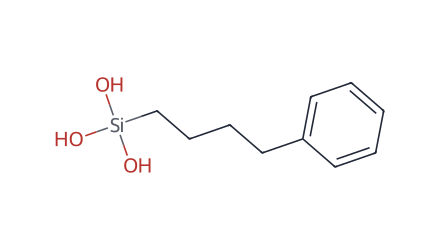
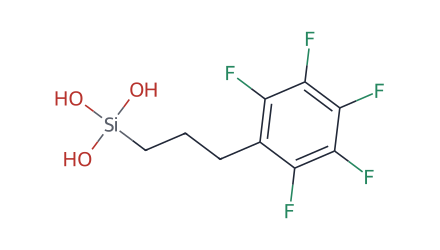
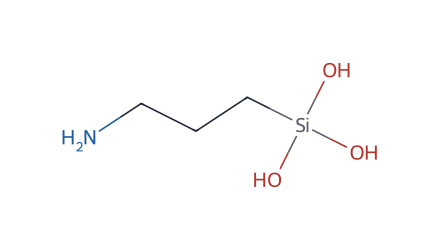
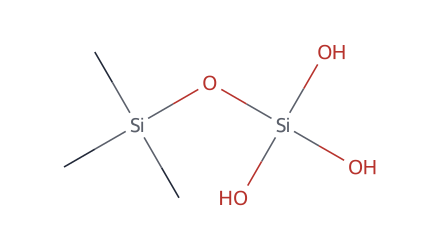
Fig. 2 Eight surface groups. The grafting anchor is drawn throughout as (HO)₃Si–, the convention used across this site: in the real material that silicon is linked to the silica surface network by one to three Si–O–Si bonds, and no free trihydroxysilane exists. All structures are rendered by RDKit from SMILES and have passed molecular formula and ring count assertions. Product parameters are at the Daisogel product pageandChromatographic Silica Fundamentals。
4Deriving the separation handle
The "separation handle" is the physicochemical difference between the target peptide and its main impurities that chromatography can amplify. Fixing the separation handle amounts to fixing which class of surface modification to use.
| Separation handle | The difference amplified | Corresponding chromatographic mode | Corresponding surface modification | Typical impurities addressed |
|---|---|---|---|---|
| Hydrophobicity | Non-polar surface area | Reversed phase (RP) | C18 / C8 / C4 | Deletion peptides, truncated peptides, acylation by-products |
| Net charge | The number and pKa of ionizable groups | Ion exchange (IEX) | Strong and weak anion and cation exchange groups | Deamidation variants, charge variants |
| Molecular size | Hydrodynamic radius | Size exclusion (SEC) | Wide-pore and ultra-wide-pore substrates | Aggregates, dimers, large truncated fragments |
| Hydrophilicity | Density of polar groups | HILIC | Bare silica / aminopropyl / amide / zwitterionic | Hydrophilic short peptides, glycosylation variants, salts |
| Configuration and shape | Spatial arrangement, with the same molecular formula | High-selectivity reversed phase / chiral phases | Pentafluorophenyl, phenyl, polysaccharide chiral selectors | Epimers, diastereomers, conformational isomers |
| Hydrogen bonding accessibility | Donors and acceptors able to interact with silanols | Non-endcapped reversed phase / normal phase | Non-endcapped C4, diol | Near-isomers that conventional reversed phase cannot resolve |
How to use the derivation in four steps
- Step 1 List the impurities.Enumerate the possible impurities from the synthetic or fermentation route, without letting the chromatogram prejudge it.
- Step 2 Find the difference.For each impurity, decide which of the six properties above differs from the target peptide.
- Step 3 Rank them.Take the separation handle for the impurity at the highest level, or with the strictest regulatory limit, as the main handle for the first process step.
- Step 4 Add an orthogonal step.For impurities the first step cannot resolve, pick a different separation handle for the second. See Chapter 6 and conclusion 9.
5The reversed-phase backbone: system distribution across 59 preparative records
The statistics below come from mobile phase records for 59 preparative steps across 21 products. The basis is "this component appears in the mobile phase of this step"; one step may contain several components, so the percentages sum to more than 100%. This section gives only the system distribution and parameter ranges, not the complete gradient for each product.
| Aqueous component | Number of steps | Share of 59 | Function |
|---|---|---|---|
| Phosphoric acid / phosphate | 27 | 46% | Strong buffering with a wide controllable pH range and a low UV cut-off |
| Acetic acid | 23 | 39% | Volatile and relatively easy to remove in work-up; a weak ion-pairing agent |
| Trifluoroacetic acid (TFA) | 21 | 36% | A strong ion-pairing agent that improves peak shape, but residues form the trifluoroacetate salt |
| Triethylamine (as counter-ion) | 20 | 34% | Paired with an acid to set pH, while also shielding residual silanols |
| Ammonia (pH adjustment) | 13 | 22% | Moves the system to neutral or weakly alkaline, changing the elution order |
| Ammonium salts (ammonium acetate / sulfate) | 7 | 12% | Volatile or semi-volatile systems at neutral pH, common as the second step |
| Formic acid | 4 | 7% | MS-friendly; for oral products and where on-line MS monitoring is needed |
| Citric acid | 2 | 3% | A low-pH buffer with weak chelating action |
| Tris | 1 | 2% | Buffering on the weakly alkaline side, used as an orthogonal system in a second step |
| Perchloric acid | 1 | 2% | A strong ion-pairing agent, used for particular cyclic peptides |
Strong eluent
Acetonitrile 57 / 59 Methanol 2 / 59
The low viscosity and low UV absorbance of acetonitrile make it more stable over long shallow gradients; methanol appears only in a few steps, used to change selectivity.
pH distribution
The pH values recorded:1.8 / 2.0 / 2.1 / 2.25 / 2.3 / 2.5 / 3.0 / 3.5 / 6.0 / 6.5 / 7.0 / 7.5 / 8.0
These fall clearly into two clusters, acidic (1.8–3.5) and neutral to weakly alkaline (6.0–8.0); two-step processes commonly switch between the clusters, rearranging the elution order.
Gradient and duration
Median slope of the main elution segment 0.10 %B/min, interquartile 0.089–0.233, extremes 0.067–0.44
Median total step duration 71 min, range 40–160 min. Most processes use a three-part form: an isocratic equilibration segment → a rapid step increase → a shallow elution gradient.
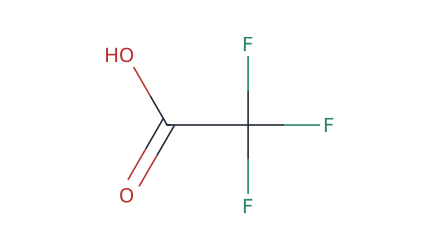
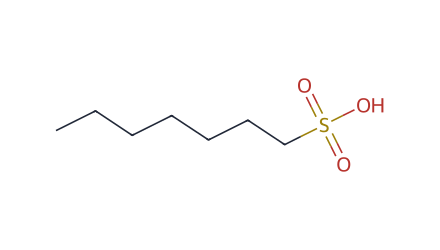
Fig. 3 Two classes of ion-pairing agent. TFA is a volatile acid: strongly effective, but salt formation must be considered in work-up; alkylsulfonic agents are non-volatile, with a marked retention effect but a corresponding demand on downstream desalting.
6Orthogonal axes: where IEX, HILIC, SEC and normal phase fill the gaps
Reversed phase deals with most differences in hydrophobicity; the remaining impurities need a different separation handle. Which orthogonal axis to choose is determined by the type of impurity left.
| Residual impurity | Recommended orthogonal axis | Stationary phase | Point |
|---|---|---|---|
| Deamidation variants, charge variants | Ion exchange (IEX) | Strong and weak anion and cation exchange groups | A salt or pH gradient, resolving a difference of one charge unit |
| Aggregates, dimers | Size exclusion (SEC) | Wide-pore and ultra-wide-pore spherical silica | Isocratic operation; the pore size must cover the size range of both target and aggregates |
| Hydrophilic impurities, salts, glycosylation variants | HILIC | Bare silica / aminopropyl / amide / zwitterionic | Start at high organic and elute by lowering it; the elution order is roughly the reverse of reversed phase |
| Epimers, diastereomers | High-selectivity reversed phase | Pentafluorophenyl, phenyl | π–π and dipole interactions superimposed on hydrophobicity; small changes in column temperature amplify the selectivity difference |
| Conformational isomers, hydrophobic impurities | Normal phase | Bare silica, diol, aminopropyl | Non-aqueous or low-water systems, with selectivity weakly correlated to reversed phase |
| Near-isomers that conventional reversed phase cannot resolve | Non-endcapped reversed phase | Non-endcapped C4 | Silanol hydrogen bonding superimposed on weak hydrophobicity, forming a second interaction |
Orthogonal does not mean changing the column
In most of the recorded two-step processes, the stationary phase type was not changed at all; the mobile phase system was switched: an acidic ion-pair system in step one and a near-neutral ammonium salt in step two. The peptide's net charge differs at the two pH values, so its interaction with the stationary phase changes and the elution order is rearranged — which already constitutes effective orthogonality. Changing the stationary phase chemistry is one way of achieving orthogonality, not the only way. The test is whether the elution orders of the two steps are decorrelated, not whether the hardware changed. Record statistics
The seven classes below follow the order "structural features determine the separation difficulty, and the difficulty determines the modified silica". Each gives the structural difficulty, the recommended combination of surface parameters, and the system and parameter ranges obtained from the preparative records. The Daisogel grades and specifications cited are the stated values from theproduct pageson this site.
7A · Linear lipidated metabolic peptides
Representative products Semaglutide, tirzepatide, retatrutide, cagrilintide, liraglutide, mazdutide
7.1 Structural difficulty
What these have in common is a C16–C20 fatty diacid side chain on the backbone, usually attached through a γ-Glu and AEEA linker. The lipid chain has two consequences: the molecule is far more hydrophobic than an ordinary peptide of the same length and is over-retained on C18; and it tends to self-associate in aqueous solution, forming aggregates at the column head and within the bed, showing as peak broadening, reduced loading and unstable recovery. The impurities closest in properties to the target are mono- and di-acylation by-products, des-AA deletion peptides and lipid chain positional isomers, all three differing very little from the target in polarity.
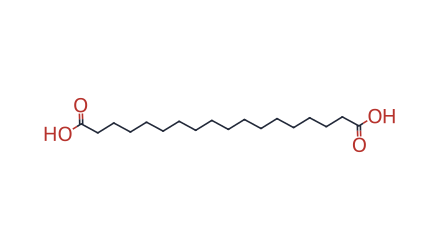
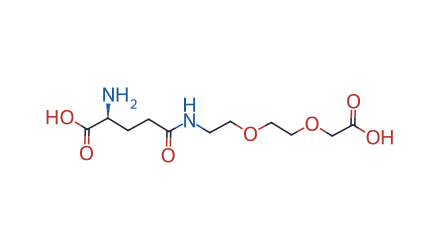
Fig. 4 The two parts of the lipidated side chain. The hydrophobic end and the hydrophilic linker together determine how these molecules behave in reversed phase: the hydrophobic end provides strong retention while the linker reduces the tendency to aggregate.
7.2 Modified silica selection
Parameter combination
- Alkyl chain length C8 or C4, not C18. A shorter chain reduces excessive retention of the lipidated side chain and suppresses on-column aggregation
- Pore size Most products (4–5 kDa) transfer mass adequately at 100–120 Å; those with a marked tendency to aggregate, or larger, move to 200 Å
- Particle size 8–10 μm is usual in preparative work, balancing efficiency against pressure drop on an industrial column
- Endcapping Fully endcapped, to suppress tailing from residual silanols
- Bonding density High bonding density to maintain loading, compensating for the lower retention of a shorter chain
Corresponding Daisogel grade
- SP-100-8-C8-PK 100 Å / 8 μm / 320 m²·g⁻¹ / 11.0% carbon. The PK series is the base-stable, high-strength flagship, suiting semaglutide, retatrutide and similar Manufacturer data
- SP-100-10-C8-PK The 10 μm grade in the same series, for larger column diameters or where pressure drop must be reduced
- SP-100-8-C4-NP 100 Å / 8 μm / 450 m²·g⁻¹ / 10.0% carbon, non-endcapped C4. Silanol hydrogen bonding provides selectivity C8 does not have, suiting cagrilintide and similar
- SP-200-10-C8-BIO The 200 Å wide-pore, pH-tolerant grade, for larger molecules or products needing alkaline cleaning
Grades and specifications are in the Daisogel product page"III. C8 series" and "V. C4 series".
7.3 Process notes
| Item | Value and practice | Basis |
|---|---|---|
| Mobile phase system | Acidic side: TFA, or TFA with acetic acid, adjusted to about pH 2 with triethylamine or ammonia; neutral side: phosphoric acid with acetic acid, or a low-concentration ammonium salt at pH 6–8 | Record statistics |
| Two-step combination | The two steps switch between acidic and neutral systems. More alternative schemes were recorded for this class than for any other, with several systems often screened in parallel for the same product | Record statistics |
| Gradient | A step increase to the starting B%, then a shallow gradient; the main elution slope for this class mostly falls between 0.09 and 0.14 %B/min, with steps of 66–100 min | Record statistics |
| Anti-aggregation measures | Urea or isopropanol added to the load to suppress on-column aggregation; the concentration must be established by measurement for each product | To be measured |
| Column temperature | A moderately raised column temperature improves mass transfer and peak shape, with the upper limit set by the stability of the target peptide | Industry consensus |
| Loading | Below the stated loading of the same medium for conventional peptides, since aggregation reduces effective capacity; must be calibrated batch by batch | To be measured |
8B · Disulfide and cyclic disulfide peptides
Representative products Linaclotide, octreotide, bivalirudin, etelcalcetide, somatostatin, terlipressin, carbetocin
8.1 Structural difficulty
Peptides with one to three disulfide bonds generate scrambled disulfide isomers during oxidative folding: identical in sequence, differing only in disulfide topology, with the same molecular formula and almost identical hydrophobicity. These impurities are both hard to resolve and liable to keep forming during chromatography — neutral to alkaline conditions and transition metals both promote on-column disulfide exchange. The process constraint is therefore not only resolution but "do not create new impurities".
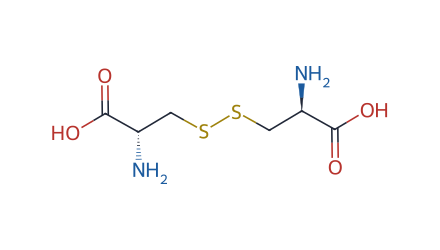
Fig. 5 The two concerns with disulfide peptides: the disulfide bridge itself, and the metals in the substrate that may catalyse its exchange.
8.2 Modified silica selection
Parameter combination
- Alkyl chain length Mainly C18, since these are mostly short to medium peptides for which conventional hydrophobic retention is sufficient
- Pore size 100–120 Å
- Particle size 5–10 μm; a shallow gradient needs adequate efficiency
- Metal content An ultra-high-purity substrate, to suppress on-column disulfide exchange
- pH tolerance A wide-pH product makes alkaline regeneration convenient, but the operating segment should still stay on the acidic side
Corresponding Daisogel grade
- SP-120-10-ODS-BIO 120 Å / 10 μm; the BIO series has improved high-density bonding and full endcapping, with a stated pH stability range of 1.5–11 and regeneration with aqueous NaOH Manufacturer data
- SP-100-10-ODS-P 100 Å / 10 μm / 450 m²·g⁻¹ / 17% carbon. P denotes the ultra-high-purity grade, with total Al, Fe, Ti and Zr below 10 ppm
- SP-120-10-ODS-RPS 120 Å / 10 μm, the general-purpose reversed-phase mainstay with good acid resistance, suiting processes that run on the acidic side for long periods
- SP-100-10-ODS-HP 24% carbon and 450 m²·g⁻¹ surface area, for folding isomers that are very hard to resolve, trading stronger retention for selectivity
8.3 Process notes
| Item | Value and practice | Basis |
|---|---|---|
| pH control | Keep the operating segment acidic. The aqueous pH recorded for this class clusters at 1.8–2.5, with TFA, phosphoric acid and phosphate as the main acids | Record statistics |
| Column temperature | Run on the low side, to slow disulfide exchange; the exact temperature must be established together with the peptide's on-column stability | Industry consensus |
| Gradient | Folding isomers need a shallower gradient. The main-segment slope recorded for this class is mostly 0.10–0.13 %B/min, with steps of the order of 70 min | Record statistics |
| Metal control | Choose an ultra-high-purity substrate; where necessary add a low concentration of chelating agent to the mobile phase, after assessing its effect on detection and work-up | To be measured |
| Oxidative folding | Carried out in dilute solution to suppress intermolecular mispairing; the dilution factor and the volume burden are the trade-off point between yield and throughput | Industry consensus |
| Release confirmation | The collected fraction must have its disulfide connectivity confirmed by native mass spectrometry or peptide mapping; reversed-phase purity alone does not prove the topology is correct | Industry consensus |
9C · Macrocyclic and synthetic macrocyclic peptides
Representative products Oral PCSK9 macrocyclic peptides, complement inhibitor macrocycles, synthetic macrocycles containing D-amino acids
9.1 Structural difficulty
A macrocyclic backbone restricts conformational freedom, giving two characteristic impurity types: conformational isomers, which interconvert slowly on the chromatographic timescale and therefore appear as several peaks; and cyclic dimers and epimers. Oral products carry a further constraint: the limits on deletion peptides and potential genotoxic impurities are usually stricter, and the method must be MS-compatible for on-line confirmation.
9.2 Modified silica selection
Parameter combination
- Main phase C18 or C8, 5 μm / 100–120 Å
- High-selectivity phase Pentafluorophenyl (PFP) resolves epimers and conformational isomers better than a conventional alkyl phase; alkyl phenyl provides π–π interaction
- Normal phase support Bare silica or a diol phase, for orthogonal confirmation of conformational isomers
- Choice of acid Formic acid rather than TFA for oral products and on-line MS
Corresponding Daisogel grade
- SP-100-8-C4Ph-HP 100 Å / 8 μm / 450 m²·g⁻¹ / 16.0% carbon, alkyl-phenyl bonded, giving π–π recognition in addition to hydrophobic interaction Manufacturer data
- SP-100-10-C4Ph-HP The 10 μm preparative grade in the same series
- SP-120-5-ODS-RPS 120 Å / 5 μm, for method development and semi-preparative work
- SP-120-10-P (bare silica) Ultra-high-purity spherical bare silica, for normal phase and as support in resolving conformational isomers
Pentafluorophenyl is not in the current Daisogel bonded phase range; where required it can go through Custom Bonded Phasesassessment; one racemate separation step in the preparative records used a pentafluorophenyl column.
9.3 Process notes
- System The reversed-phase aqueous component is low-concentration formic acid or TFA. The recorded racemate separation used a low-pH ammonium salt aqueous phase on a pentafluorophenyl column, run isocratically at low organic — isocratic rather than gradient, which indicates the separation relies on selectivity rather than eluting strength. Record statistics
- Column temperature Configurational selectivity is temperature sensitive, and a small change in temperature can widen or narrow the resolution of epimers; this is the main optimization variable for this class.
- Orthogonality Reversed phase resolves configuration and normal phase resolves conformation; the two correlate weakly, which suits them to cross-checking release purity.
10D · Peptide radioconjugates
Representative products ¹⁷⁷Lu-labelled somatostatin receptor and PSMA-targeting peptide conjugates
10.1 Structural difficulty
These molecules comprise a targeting peptide, a linker and a chelator (of the DOTA class), and purification faces three constraints at once: the chelator is highly sensitive to trace metals, and any metal from the substrate, reagents or containers occupies coordination sites and lowers specific activity; the radionuclide half-life is limited, so everything after labelling must be completed within hours; and purification of the cold precursor and purification after labelling are two different kinds of step.
10.2 Modified silica selection
Parameter combination
- Cold precursor preparation C18, 100–120 Å, 5–10 μm, on an ultra-high-purity, low-metal substrate
- Post-labelling purification A C18 SPE cartridge to remove free radionuclide and reducing agent quickly, in a matter of minutes
- Metal control Metal removal across the whole chain: substrate, mobile phase, tubing and containers
Corresponding Daisogel grade
- SP-100-10-ODS-P The ultra-high-purity grade, with total metal impurities below 10 ppm, for cold precursor preparation Manufacturer data
- SP-120-10-ODS-BIO Wide pH tolerance, allowing alkaline regeneration between batches to clear residual metal
- SPEONE SPE Cartridges Rapid post-labelling purification and solvent exchange; see SPE cartridges on the product page
10.3 Process notes
- Labelling buffer A sodium acetate system at weakly acidic pH, with an antioxidant to suppress radiolysis. Concentration and temperature are set by the radionuclide and chelator.Industry consensus
- Time budget The whole sequence from labelling to release must fit within the window allowed by the radionuclide half-life, so chromatographic steps should be as short and as few as possible.
- Metal removal Metal leaching from glassware, corrosion products from stainless steel tubing and the metal background of mobile phase reagents must each be assessed separately.
11E · Peptide–protein and PEG conjugates
Representative products Antibody–peptide conjugates, PEGylated complement inhibitor peptides, peptide–Fc fusions
11.1 Structural difficulty
The finished product is a biomacromolecule, and the quality attributes shift from "peptide purity" to conjugation degree distribution, PEG polydispersity, aggregates, host protein and endotoxin. The peptide chemistry exists only before conjugation: the peptide fragment itself still goes through reversed-phase preparative work, while purification after conjugation moves into the protein process paradigm.
11.2 Modified silica selection
| Stage | Mode | Base matrix | Notes |
|---|---|---|---|
| Peptide fragment preparation | Reversed phase | C18 / C8,100–200 Å | As for a conventional synthetic peptide; residual solvent and ion-pairing agent must be controlled before conjugation |
| Capture | Affinity | Protein A class soft gels | Non-silica substrates |
| Polishing | Ion exchange / hydrophobic interaction | IEX and HIC media | Resolves the conjugation degree distribution and charge variants |
| Final polishing | Size exclusion | Wide-pore and ultra-wide-pore spherical silica | Removal of aggregates, run isocratically |
Corresponding Daisogel grade
- SP-300-10-C4-BIO 300 Å / 10 μm, low carbon load C4, for reversed-phase separation of denatured proteins and large peptide fragments Manufacturer data
- SP-300-20-C4-P 300 Å / 20 μm, listed on the product page as suitable for erythropoietin (EPO) purification
- SWP ultra-wide-pore series Two grades, SP-1000 and SP-2000 (1000 Å / 2000 Å), surface area 15–25 m²·g⁻¹, particle sizes 3–20 μm, available as bare silica and as bonded phases, for biomacromolecules that conventional narrow-pore silica cannot separate
- JNC Cellufine Cellulose Media Soft gel capture and polishing; see product pages
12F · Fermentation-derived peptides and lipopeptides
Representative products Micafungin, telavancin and daptomycin-class cyclic lipopeptides
12.1 Structural difficulty
Fermentation-derived material has two characteristics: the lipid chain homologue profile varies between batches, with homologues differing by only one or two carbons, so reversed-phase retention differences are small but numerous; and the broth itself contains pigments, endotoxin and a large impurity load, so the burden on the crude is far higher than for a synthetic peptide. Some products also have characteristic chemical instability, requiring limits on temperature, light and pH.
12.2 Modified silica selection
Parameter combination
- Initial purification Coarse fractionation and decolorization on macroporous adsorption resin, reducing the volume before polishing
- Polishing C18, pore size 200–300 Å to accommodate the size of cyclic lipopeptides, particle size 10–15 μm
- Supporting Normal-phase bare silica to remove fat-soluble impurities
- Batch consistency Requires a substrate with consistent pore size distribution and carbon load between batches, or homologue resolution will drift with the medium lot
Corresponding Daisogel grade
- SP-200-10-ODS-RPS 200 Å / 10 μm; the product page notes that this pore size balances surface area, separation speed and solvent consumption Manufacturer data
- SP-200-15-ODS-RPS The 15 μm preparative grade, for larger column diameters
- SP-300-15-ODS-BIO 300 Å / 15 μm, with wide pH tolerance for alkaline cleaning between batches, suiting the column regeneration needs of fermentation material
- SP-200-15-P (bare silica) Normal phase for removing fat-soluble impurities
12.3 Process notes
- System The aqueous phases recorded for this class are mainly low-concentration ammonium salts or organic acids, with single steps running to 90 min or more and main-segment slopes of the order of 0.14 %B/min; there are also two-step processes that switch both the acid and the strong eluent at once. Record statistics
- Stability limits Products prone to isomerization need defined temperature limits, protection from light and pH control, with the limits set by that product's stability studies.To be measured
- Batch variation Variation in the homologue profile of fermentation material requires margin in the process, usually absorbed by multidimensional chromatography and dynamic adjustment of the collection window.
13G · Short peptides, D-amino acid and hydrophilically modified peptides
Representative products Thymopentin, thymalfasin, difelikefalin, gonadorelin, carbetocin, synthetic peptides containing several D-amino acids
13.1 Structural difficulty
Three separate problems: short and hydrophilic peptides are barely retained on conventional C18 and co-elute with salt; products containing D-amino acids have diastereomers with the same molecular formula and similar hydrophobicity; and short peptides are hard to desalt, because their retention window overlaps that of the salt.
13.2 Modified silica selection
| Question | Solution | Modified silica | Daisogel equivalent |
|---|---|---|---|
| Weak retention of hydrophilic peptides | Raise the surface area and carbon load | High-surface-area C18 | SP-100-10-ODS-P(450 m²·g⁻¹ / 17%C)、SP-100-10-ODS-HP(450 m²·g⁻¹ / 24%C) |
| Weak retention of hydrophilic peptides | Ion-pair enhancement | Conventional C18 plus an alkylsulfonic agent | SP-120-10-ODS-RPS |
| Phase collapse in a fully aqueous mobile phase | Hydrophilically modified low carbon load C18 | Low carbon load hydrophilically modified C18 | SP-120-10-ODS-BP(carbon content 10%–15%; the product page states it can be used in 100% aqueous mobile phase) |
| A hydrophilic separation handle | HILIC | Aminopropyl / bare silica | SP-120-10-APS-P、SP-60-5-APS-P、SP-100-10-P Bare silica |
| Diastereomers | High-selectivity reversed phase | Alkyl phenyl / pentafluorophenyl | SP-100-8-C4Ph-HP; the pentafluorophenyl phase requires a custom assessment |
| Desalting short peptides | Reversed-phase desalting or solid phase extraction | Low carbon load C18 | SP-120-10-ODS-BP, SPEONE SPE cartridges |
The product page's technical note on the BP series
The ODS-BP series uses a bonding method that keeps the long C18 chains extended even in low-alcohol solutions, with a carbon content of 10%–15% and a stated ability to run in 100% aqueous mobile phase, maintaining baseline stability at neutral pH without buffer salts or ion-pairing agents. The typical applications listed on the product page include oligosaccharides, amino acids, small peptides, nucleotides and organic acids. Manufacturer data
13.3 Process notes
- System Two approaches were recorded for this class: pushing the pH to the alkaline side to enhance retention differences between short peptides, with main-segment slopes as low as the order of 0.08 %B/min; and keeping the same acid system across both steps while moving the pH from acidic to near neutral, achieving orthogonality through the change in net charge. Record statistics
- Column temperature Diastereomers and hydrophilic peptides are often separated at a lower column temperature, to amplify the selectivity difference.Industry consensus
- Ion-pair residues Non-volatile ion-pairing agents create a downstream desalting burden; confirm the removal scheme before choosing one.
14Master matrix: seven structural classes × eight dimensions
| Category | Main impurities | Separation handle | Alkyl phase | Pore size | Particle size | Key secondary attribute | Daisogel first choice |
|---|---|---|---|---|---|---|---|
| A Linear lipidated metabolic peptides | Mono/di-acylation, des-AA, lipid chain isomers | Hydrophobicity (aggregation suppressed) | C8 / C4 | 100–200 Å | 8–10 μm | Fully endcapped, high bonding density | SP-100-8-C8-PK SP-100-8-C4-NP |
| B Disulfide and cyclic disulfide peptides | Scrambled disulfide isomers | Hydrophobicity + conformation | C18 | 100–120 Å | 5–10 μm | Ultra-high-purity, low metal, acid resistant | SP-120-10-ODS-BIO SP-100-10-ODS-P |
| C Macrocyclic and synthetic macrocyclic peptides | Conformational isomers, cyclic dimers, epimers | Configuration and shape | C4Ph / C18 / PFP | 100–120 Å | 5–10 μm | π–π selectivity, MS-friendly acid | SP-100-8-C4Ph-HP SP-120-5-ODS-RPS |
| D Peptide radioconjugates | Free radionuclide, dechelated species | Hydrophobicity (fast) | C18 | 100–120 Å | 5–10 μm | Metal removal across the whole chain, time budget | SP-100-10-ODS-P SPEONE solid phase extraction |
| E Protein and PEG conjugates | Conjugation degree distribution, aggregates, host protein | Charge + size | Mainly C4, with the bulk of the work outside reversed phase | 300 Å and above | 10–20 μm | Wide pore and ultra-wide pore | SP-300-10-C4-BIO SWP series |
| F Fermentation-derived peptides and lipopeptides | Lipid chain homologues, pigments, isomerization products | Hydrophobicity (homologues) | C18 | 200–300 Å | 10–15 μm | Batch consistency, alkaline regeneration | SP-200-10-ODS-RPS SP-300-15-ODS-BIO |
| G Short peptides and hydrophilically modified peptides | Co-elution with salt, diastereomers | Hydrophilicity / configuration | High-surface-area C18 / BP / APS | 60–120 Å | 5–10 μm | High carbon load or hydrophilically modified | SP-100-10-ODS-HP SP-120-10-ODS-BP |
The grades in the table are starting points matched on parameters, not the only answer. Actual selection should take account of crude purity, the pressure rating of the available equipment, the target loading and the work-up scheme, and be confirmed at bench scale. Full specifications are at the Daisogel product page, and documentation at 。
Read across the seven classes and the selection rules converge to four: pore size scales with molecular size, chain length is chosen by the separation difficulty rather than by hydrophobicity alone, endcapping and bonding density set the balance between peak shape and loading, and metal content and pH tolerance are prerequisites that decide whether a medium can be used at all.
15The pore size ladder: from 60 Å to 2000 Å
The purpose of pore size is to let the target move freely in and out of the pores. When the molecule's hydrodynamic radius approaches the pore size, intraparticle diffusion is impeded, showing as peak broadening and reduced recovery; when the pore is far larger than the molecule, surface area falls geometrically and loading falls with it. Bigger is therefore not better; the pore should just cover the molecule.
| Pore size | Stated Daisogel surface area | Suited to | Corresponding structural class in this text |
|---|---|---|---|
| 60 Å | About 450 m²·g⁻¹ | Small molecules and very short peptides, normal phase and HILIC | The HILIC step for class G short peptides |
| 100 Å | 320–450 m²·g⁻¹ | Conventional synthetic peptides, lipidated metabolic peptides, disulfide peptides | A / B / C / D |
| 120 Å | About 300 m²·g⁻¹ | The general-purpose reversed-phase mainstay, 10–40 residue peptides | B / C / F / G |
| 200 Å | About 200 m²·g⁻¹ | Insulin-type molecules, cyclic lipopeptides, molecules prone to aggregation | A / F |
| 300 Å | About 100 m²·g⁻¹ | Denatured proteins, large peptide fragments, oligonucleotides | E / F |
| 1000 / 2000 Å(SWP) | 15–25 m²·g⁻¹ | Biomacromolecules that conventional narrow-pore silica cannot separate | E |
The surface areas are the ranges stated on the Daisogel product pages; different grades at the same pore size differ.Manufacturer data
The trade-off between pore size and loading
Moving from 100 Å to 300 Å reduces surface area to roughly a third, and the usable adsorption area per unit mass of medium falls with it. If the target peptide has no mass transfer problem at 100 Å, choosing a large pore simply because the molecule "is fairly big" usually loses loading and throughput for nothing. The basis for the decision should be the measured peak shape and recovery, not the molecular weight.
16Alkyl chain length and carbon load
Chain length determines the type and strength of hydrophobic retention, and carbon load determines the depth of retention and the loading at a given chain length. The two must be read together: a low carbon load C18 does not necessarily retain more strongly than a high carbon load C8.
| Bonded phase | Daisogel carbon content range | Retention characteristics | Suited to | Not suited to |
|---|---|---|---|---|
| C18(ODS) | 7%–24%, banded by grade | The strongest hydrophobic retention | Conventional synthetic peptides, disulfide peptides, fermentation peptides, hydrophilic short peptides (choosing a high carbon load grade) | Lipidated metabolic peptides (over-retained, promoting aggregation) |
| C8 | 6%–15.5% | Moderate hydrophobicity | Lipidated metabolic peptides, insulin-type molecules, samples over-retained on C18 | Hydrophilic short peptides (insufficient retention) |
| C4 | 3%–10% | Weak hydrophobicity | Denatured proteins, large peptide fragments, very hydrophobic samples | Conventional short to medium peptides (insufficient retention) |
| Alkyl phenyl (C4Ph) | 16.0% | Hydrophobicity plus π–π | Peptides containing aromatic residues, epimers and diastereomers | Samples with no aromatic structure and no configurational problem |
| Aminopropyl (APS) | 2%–5% | Hydrophilic interaction / normal phase | Hydrophilic short peptides, carbohydrates, HILIC steps | The main preparative step for hydrophobic peptides |
Where a high carbon load is used
The Daisogel HP series C18 has 24% carbon and 450 m²·g⁻¹ surface area, extending retention while raising loading; the product page positions it for "small molecules and peptides with more demanding separation requirements, and for improving selectivity on very difficult separations". Used for hydrophilic short peptides and for resolving near-isomeric impurities.Manufacturer data
Where a low carbon load is used
The BP series C18 has 10%–15% carbon, with a bonding method that keeps the C18 chains extended in low-alcohol solutions, stated to be usable in 100% aqueous mobile phase and to maintain baseline stability at neutral pH without buffer salts or ion-pairing agents. Used for hydrophilic peptides, desalting and where LC-MS compatibility is needed.Manufacturer data
17Endcapping, bonding density and residual silanols
The bonding reaction cannot cover every silanol on the silica surface, and what remains are the "residual silanols". Endcapping uses a small silylating reagent after bonding to occupy those sites. Whether to endcap is a directional choice in peptide purification.
Endcapped products
- Suppress ionic interaction between basic residues (Lys, Arg, His) and silanols
- Peak symmetry improves and the tailing factor falls
- Batch-to-batch selectivity is more consistent, because it does not depend on the distribution of residual silanols
- The Daisogel PK, P, HP, BIO and RPS series are all endcapped products
Non-endcapped products (NP series)
- The retained surface silanols provide hydrogen bonding, a second selectivity beyond hydrophobicity
- Suited to near-isomers that conventional C18 / C8 cannot resolve
- The product page positions C4-NP as "separation through silanol interaction where a distinctive selectivity is needed"Manufacturer data
- The cost is that basic peptides may tail, which has to be compensated by a mobile phase counter-ion such as triethylamine
Fig. 6 The difference between endcapped and non-endcapped is what remains on the surface besides the alkyl chain. The process criterion is whether the separation needs that hydrogen bonding interaction.
Triethylamine in the mobile phase does the same job
Twenty of the 59 preparative steps collected contain triethylamine. Besides setting pH, its other role is to compete with residual silanols, reducing tailing of basic peptides. This means "degree of endcapping" and "mobile phase counter-ion" are two solutions to the same problem, which can substitute for or be combined with one another. Which to use depends on how much non-volatile material the work-up can tolerate. Record statistics
18Metal content and pH tolerance
18.1 Metal content
The Daisogel "P" grade denotes ultra-high-purity silica, with total Al, Fe, Ti and Zr below 10 ppm; the BIO and HSA series, although not marked P, also use an ultra-high-purity silica substrate. The manufacturer analyses metal impurities by XRF and ICP and provides the data to customers.Manufacturer data
| Mechanism by which metals act | Consequence | Structural classes affected |
|---|---|---|
| Transition-metal catalysed disulfide exchange | New scrambled disulfide isomers form on the column, and purity falls with residence time | B disulfide peptides |
| Metals occupying chelation sites | Specific activity falls and free chelator increases | D radioconjugates |
| Metals coordinating to acidic residues | Peak tailing, retention drift, reduced recovery | Peptides with several Asp / Glu residues |
| Metal-catalysed oxidation | Secondary impurities such as Met oxidation and Trp degradation | Products with readily oxidized residues |
18.2 pH tolerance and column regeneration
A conventional bonded silica normally runs at pH 2–8. The Daisogel BIO series product page states a pH stability range of 1.5–11, regenerable by flushing with aqueous NaOH; the alkali tolerance data given for the PK series is that the bare silica withstands more than 170 column volumes of dilute NaOH flushing before the particles dissolve.Manufacturer data
What alkali tolerance is actually for in a peptide process
- Column regeneration.Fermentation material and low-purity synthetic crude accumulate strongly retained impurities on the column, and alkaline cleaning is the usual way to clear them.
- Selectivity on the alkaline side.Thirteen of the recorded steps use ammonia to push the pH to 6.0–8.0, and running on the alkaline side requires a substrate that can take it.
- Column life and cost per unit of throughput.Whether alkaline cleaning is possible directly affects the number of usable cycles, and at kilogram-scale industrial purification this carries considerable weight in cost.
Note that alkali tolerance means the substrate and bonded layer do not degrade appreciably under the cleaning conditions; it is not a recommendation to run at high pH for long periods. The operating pH should still be set by the stability of the target peptide and the separation required.
19Gradient, column temperature and loading
19.1 Gradient form: three segments
The 59 preparative steps collected are highly consistent in gradient form, which resolves into three segments:
① Isocratic equilibration
Hold the starting B% for 5–10 min, to let the sample focus at the column head after loading and the baseline settle. The recorded starting B% ranges from 2% to 20%.
② Step increase
Raise B% over 1–5 min to close to the elution point of the target peptide. This segment flushes weakly retained impurities away quickly and shortens the total run time.
③ Shallow elution gradient
The main separation segment. Median slope 0.10 %B/min, interquartile range 0.089–0.233 %B/min. Resolution is produced here.
| Parameter | Summary statistics (57 steps with a resolvable gradient segment) | Notes |
|---|---|---|
| Main-segment slope | Minimum 0.067, Q1 0.089, median 0.100, Q3 0.233, maximum 0.44 %B/min | The more structurally similar impurities there are, the shallower the slope |
| Total step duration | Minimum 40 min, median 71 min, maximum 160 min | Including the equilibration and step segments |
| Starting B% | 2%–20% | Hydrophilic peptides at the low end, lipidated peptides and cyclic lipopeptides at the high end |
| Final B% | 9%–66% | Directly related to the hydrophobicity of the target peptide |
| Strong eluent | Acetonitrile in 57 steps, methanol in 2 | Methanol is used to change selectivity |
The above are summary statistics from the preparative records of 21 products; complete methods for individual products are not published. Gradient design for a new product can start from these ranges, but the actual slope must be set by the resolution obtained at bench scale. Record statistics
19.2 Column temperature
Column temperature is a two-way variable in preparative peptide work: raising it improves mass transfer, lowers viscosity and column pressure, and improves peak shape; lowering it suppresses on-column chemistry (disulfide exchange, isomerization, epoxide opening) and may amplify configurational selectivity. The direction is set by the on-column stability of the target peptide, not by mass transfer efficiency alone.
| Preference | Applicable classes | Purpose |
|---|---|---|
| Higher column temperature | A lipidated metabolic peptides, F fermentation cyclic lipopeptides | Suppresses on-column aggregation, improves mass transfer and peak shape |
| Lower column temperature | B disulfide peptides, C epimers, G diastereomers and chemically unstable products | Suppresses on-column chemical change and amplifies configurational selectivity |
| Ambient | Conventional synthetic peptides | The default where there is no particular constraint |
The exact temperature must be established from the product's on-column stability studies; no general figure is given here.To be measured
19.3 Loading
Loading depends on crude purity, target purity, the acceptable yield loss and the surface area of the medium; it is not an inherent constant of the medium. The usable loading on the same column can differ several fold between crude at 50% and at 75% purity. In practice the inflection point is found from a bench-scale loading curve, then scaled linearly by column volume, with margin left for industrial batches. To be measured
Three checks that often get skipped
- Matching the solvent strength of the load to the mobile phase.Where the load has a higher organic proportion than the starting B%, the sample does not focus at the column head, showing as a broadened front — easily overlooked when isopropanol is used to suppress aggregation of lipidated peptides.
- Extra-column volume.The tubing, flow cell and collection valves of a preparative system add extra-column volume that dilutes components already separated, which matters appreciably over a long shallow gradient.
- The basis for the collection window.Collecting by time and collecting by signal threshold behave differently under batch variation; state which governs and record it.
20From the analytical column to the industrial DAC column
A substantial part of the resolution in preparative peptide work comes from the quality of the bed rather than from the medium. The same lot of medium can give very different resolution in a uniform bed and in a non-uniform one, and this becomes more pronounced at large column diameters.
| Scale | Typical column diameter | Particle size | Packing method | What matters |
|---|---|---|---|---|
| Method Development | 4.6–10 mm | 3–5 μm | Slurry packing | Establishing resolution and selectivity, fixing the system and gradient |
| Semi-preparative | 20–50 mm | 5–10 μm | Slurry or axial compression | Loading curve, collection window, recovery |
| Pilot | 100–200 mm | 10–15 μm | Dynamic axial compression (DAC) | Bed uniformity, pressure drop, efficiency acceptance |
| Industrial | 200–600 mm and above | 10–20 μm | DAC | Batch consistency, column life, solvent recovery |
What is held constant on scale-up
- Bed length (which sets the plate number)
- Linear velocity in cm·h⁻¹ (not volumetric flow rate)
- Gradient slope expressed in column volumes (%B per CV), not in time
- Loading per unit mass of medium, mg·g⁻¹
What changes on scale-up
- The share of extra-column volume falls, so peak shape usually improves
- Pressure drop changes with column diameter and particle size, so equipment margin must be recalculated
- Packing uniformity carries more weight, and the DAC compression factor must be calibrated
- Solvent consumption and recovery cost enter the decision and may in turn change the choice of system
Efficiency acceptance and problem diagnosis
After packing, a DAC column should be accepted on theoretical plate number and peak asymmetry, with reduced plate height h as the usual criterion. Where the packing fails, first distinguish between a medium problem, a packing process problem and a system extra-column effect before deciding whether to repack. This site provides DAC Packing Support、 DAC Packing Problem Diagnosisand Column Packing Service; piston seals and frits are covered at Piston sealsand Piston frits。
21Structural class → Daisogel grade mapping
This chapter maps the parameter conclusions above back onto the Daisogel specifications available on this site. The parameters listed are the stated values from the product pages, and grades are read under the coding rule "SP-pore size-particle size-bonded phase-grade". Manufacturer data
21.1 The Daisogel coding rule at a glance
| Code segment | Meaning | Value |
|---|---|---|
| ① Shape | Particle form | SP (spherical) |
| ② Pore size | In Å | 60 / 100 / 120 / 200 / 300; SWP ultra-wide 1000 / 2000 |
| ③ Particle size | In μm | 3 / 4 / 5 / 7 / 8 / 10 / 15 / 20 / 30 / 40 / 50 |
| ④ Bonded phase | Stationary phase type | ODS / C8 / C4 / C1 / C4Ph / APS; no marking means bare silica |
| ⑤ Grade | Purity and process grade | P (ultra-high purity) / PK / HP / RPS / BP / BIO / NP |
| ⑥ Endcapping | Silanol state | (NE) means non-endcapped; no marking means an endcapped product |
"P" denotes ultra-high-purity silica with total Al, Fe, Ti and Zr below 10 ppm; the BIO and HSA series, although not marked P, also use ultra-high-purity silica. The full rule and all specifications are at the Daisogel product page。
21.2 Grades by structural class
| Structural class | First choice grade | Pore size / particle size | Surface area · carbon content | Reason for selection |
|---|---|---|---|---|
| A Linear lipidated metabolic peptides | SP-100-8-C8-PK | 100 Å / 8 μm | 320 m²·g⁻¹ · 11.0% | A shorter chain suppresses over-retention and on-column aggregation; PK is the base-stable, high-mechanical-strength flagship series |
| SP-100-8-C4-NP | 100 Å / 8 μm | 450 m²·g⁻¹ · 10.0% | Non-endcapped C4, where silanol hydrogen bonding provides selectivity C8 does not have | |
| SP-200-10-C8-BIO | 200 Å / 10 μm | About 200 m²·g⁻¹ · 6%–12% | A larger pore with wide pH tolerance, for products prone to aggregation or needing alkaline cleaning | |
| B Disulfide and cyclic disulfide peptides | SP-120-10-ODS-BIO | 120 Å / 10 μm | About 300 m²·g⁻¹ · 8%–20% | High-density bonding with full endcapping, stated pH 1.5–11, regenerable with NaOH |
| SP-100-10-ODS-P | 100 Å / 10 μm | 450 m²·g⁻¹ · 17% | An ultra-high-purity substrate with metal impurities below 10 ppm, suppressing on-column disulfide exchange | |
| SP-100-10-ODS-HP | 100 Å / 10 μm | 450 m²·g⁻¹ · 24% | Very high carbon content, for folding isomers that are extremely hard to resolve | |
| C Macrocyclic and synthetic macrocyclic peptides | SP-100-8-C4Ph-HP | 100 Å / 8 μm | 450 m²·g⁻¹ · 16.0% | Alkyl-phenyl bonded, adding π–π recognition to hydrophobicity, for epimers and conformational isomers |
| SP-120-5-ODS-RPS | 120 Å / 5 μm | About 300 m²·g⁻¹ · 17% | General-purpose reversed phase for method development and semi-preparative work | |
| D Peptide radioconjugates | SP-100-10-ODS-P | 100 Å / 10 μm | 450 m²·g⁻¹ · 17% | An ultra-high-purity substrate, reducing competition from metals for the chelation sites |
| SP-120-10-ODS-BIO | 120 Å / 10 μm | About 300 m²·g⁻¹ | Wide pH tolerance, for alkaline cleaning between batches to clear residues | |
| E Protein and PEG conjugates | SP-300-10-C4-BIO | 300 Å / 10 μm | About 100 m²·g⁻¹ · 3%–9% | Large-pore, low carbon load C4, matched to denatured proteins and large peptide fragments |
| SP-300-20-C4-P | 300 Å / 20 μm | About 100 m²·g⁻¹ | Listed on the product page as suitable for EPO purification | |
| SWP series (SP-1000-10 / SP-2000-10 and others) | 1000 / 2000 Å / 3–20 μm | 15–25 m²·g⁻¹ | Ultra-wide-pore bare and bonded silica, for biomacromolecules that conventional narrow-pore silica cannot separate | |
| F Fermentation-derived peptides and lipopeptides | SP-200-10-ODS-RPS | 200 Å / 10 μm | About 200 m²·g⁻¹ | The product page notes that 200 Å balances surface area, separation speed and solvent consumption |
| SP-300-15-ODS-BIO | 300 Å / 15 μm | About 100 m²·g⁻¹ | Large pore with wide pH tolerance, matched to the size of cyclic lipopeptides and to frequent alkaline cleaning | |
| SP-200-15-P (bare silica) | 200 Å / 15 μm | About 200 m²·g⁻¹ | Normal phase for removing fat-soluble impurities | |
| G Short peptides and hydrophilically modified peptides | SP-100-10-ODS-HP | 100 Å / 10 μm | 450 m²·g⁻¹ · 24% | High surface area and high carbon load, enhancing retention of hydrophilic short peptides |
| SP-120-10-ODS-BP | 120 Å / 10 μm | About 300 m²·g⁻¹ · 10%–15% | Hydrophilically modified, low carbon load, usable in 100% aqueous mobile phase, suiting desalting and LC-MS | |
| SP-120-10-APS-P | 120 Å / 10 μm | About 300 m²·g⁻¹ · 2%–4% | Aminopropyl phase, for HILIC and normal-phase separation of hydrophilic peptides | |
| SP-100-8-C4Ph-HP | 100 Å / 8 μm | 450 m²·g⁻¹ · 16.0% | High-selectivity separation of diastereomers |
21.3 Supporting product lines
| Stage | Product or service on this site | Purpose |
|---|---|---|
| Method Development | COSMOSIL columns、HPLCONE Columns | Establishing resolution and selectivity at the analytical and semi-preparative stage |
| Stationary phase screening | Daisogel COMPASS pre-screening kit | Rapid orientation across several bonded phases and pore sizes |
| Preparative media | The full Daisogel range、SilicaOne | The main media for preparative and industrial purification |
| Special selectivity | Custom Bonded Phases | Phases not covered by the current range (pentafluorophenyl, for example) can be assessed for customization |
| Packing and scale-up | Column Packing Machines、Packing Service、DAC Packing Support | Bed uniformity and efficiency acceptance |
| Composition confirmation | Multifunctional Peptide Cleavage Systems、DL-Amino Acid Kits | Amino acid composition analysis and calibration of the D/L ratio |
| Contract process work | Process Development、Impurity Preparation、Custom Services | Method development, impurity reference standard preparation and custom manufacture |
| Metal removal | Metal scavenging solutions | Control of residual catalyst metals in synthetic peptides |
22One-page reference and data basis
22.1 One-page reference: from symptom to action
| Observation | Possible cause | First action | See |
|---|---|---|---|
| Broad target peak and low recovery, with a hydrophobic sample | On-column aggregation or over-retention | Move from C18 to C8 / C4; add an anti-aggregation component to the load; raise the column temperature moderately | Chapters 7 and 16 |
| Peak tailing, with a sample containing several basic residues | Ionic interaction with residual silanols | Switch to a fully endcapped product, or add triethylamine to the mobile phase | Chapter 17 |
| Purity falling with run time, with disulfide bonds present | On-column disulfide exchange | Lower the column temperature, move the pH to the acidic side, switch to an ultra-high-purity substrate | Chapters 8 and 18 |
| The target peptide is barely retained and co-elutes with salt | Strongly hydrophilic, with insufficient hydrophobic retention | Move to a high carbon load C18; or add an alkylsulfonic ion-pairing agent; or switch to HILIC | Chapter 13 |
| Two peaks that never separate, with the same molecular formula | Configurational or conformational isomers | Switch to an alkyl phenyl or pentafluorophenyl phase; fine-tune the column temperature; consider normal phase as an orthogonal step | Chapter 9 |
| Reversed-phase purity passes but IEX shows extra peaks | Deamidation or charge variants | Add IEX as a second step, or adjust the pH of the first step | Chapter 6 |
| Resolution after scale-up is below bench scale | A non-uniform bed, or extra-column volume | Check the packed efficiency and pressure drop, and quantify the extra-column volume | Chapter 20 |
| Column pressure rising batch by batch with falling efficiency | Accumulation of strongly retained impurities | Establish an alkaline regeneration procedure; requires a base-stable substrate | Chapter 18 |
22.2 Data basis
| Marking | Meaning | What it covers in this text |
|---|---|---|
| Industry consensus | Common practice in published textbooks and reviews | Pore size to molecular size correspondence, the direction of column temperature, principles of orthogonal combination |
| Record statistics | Summary statistics from 59 preparative steps across 21 products | Mobile phase system distribution, gradient slope ranges, pH distribution, proportion using two steps |
| Manufacturer data | Stated catalogue values | Daisogel pore size, particle size, surface area, carbon content, pH range and metal impurity limits |
| To be measured | Varies considerably; must be established at bench scale | Loading, exact column temperature, anti-aggregation agent concentration, stability limits |
22.3 Scope
- The parameter statistics in this text are based on 21 products, mostly synthetic peptides with some fermentation peptides, and cannot represent every peptide product; the slope and duration ranges are a starting point for design, not a specification.
- The seven structural classes are divided by separation difficulty, and one product may fall into two classes at once (both a disulfide peptide and containing D-amino acids, for example); in that case the separation handle for the first step should be set by the impurity present at the highest level or with the strictest limit.
- The grades listed are starting points matched on parameters and do not constitute a process recommendation for any particular product; actual selection must take account of the properties of the crude, the equipment available and the regulatory requirements, and be confirmed at bench scale.
- The pentafluorophenyl phase is not in the current Daisogel range; what is said about it here comes from published literature and one instance in the preparative records, and it can go through a bonded phase customization assessment if required.
Appendix Principal source categories
| Category | Notes |
|---|---|
| Preparative record summary | Mobile phase systems and elution gradients for 59 preparative steps across 21 products. Only the system distribution and parameter ranges are published here; complete methods for individual products are not, and no specific condition is tied to any specific product |
| Process parameters by structural class | Stationary phase, mobile phase, gradient, flow rate and column temperature, loading and key control points, compiled for the seven structural classes |
| Manufacturer product data | Pore size, particle size, pore volume, surface area, carbon content, pH range, metal impurity limits and coding rules as stated in the Daisogel catalogue |
| Published textbooks and reviews | Common practice for reversed phase, ion exchange, HILIC and size exclusion in peptide separation |
| Existing content on this site | Chromatographic Silica Fundamentals、Column Fundamentals、DAC Packing Support、Pharmacopoeia |
Applying the overview to your product
Send us the structural class, crude purity, batch size and purity requirement for your target peptide, and we will reply with a media selection and process route proposal